
Reviewed · TOURS IN PORT STEPHENS
Anna Bay: Irukandji Entry Pass with Shallows Encounter
The unusual part of Irukandji Shark & Ray Encounters is simple: you do not watch marine life through glass. You step into the shallow edges of two lagoons, let rays glide over your feet, and offer food to sharks from a feeding stick. It is hands-on without being a full swimming session.
I like the close contact and the strong family appeal. I also like that the keepers explain how to handle the animals, then stay beside you during the feeding areas. The main catch is the Entry Pass’s limited water access. If you want more than wet feet and ankles, plan on hiring a wetsuit or upgrading to a deeper encounter.
Key points to know before you go
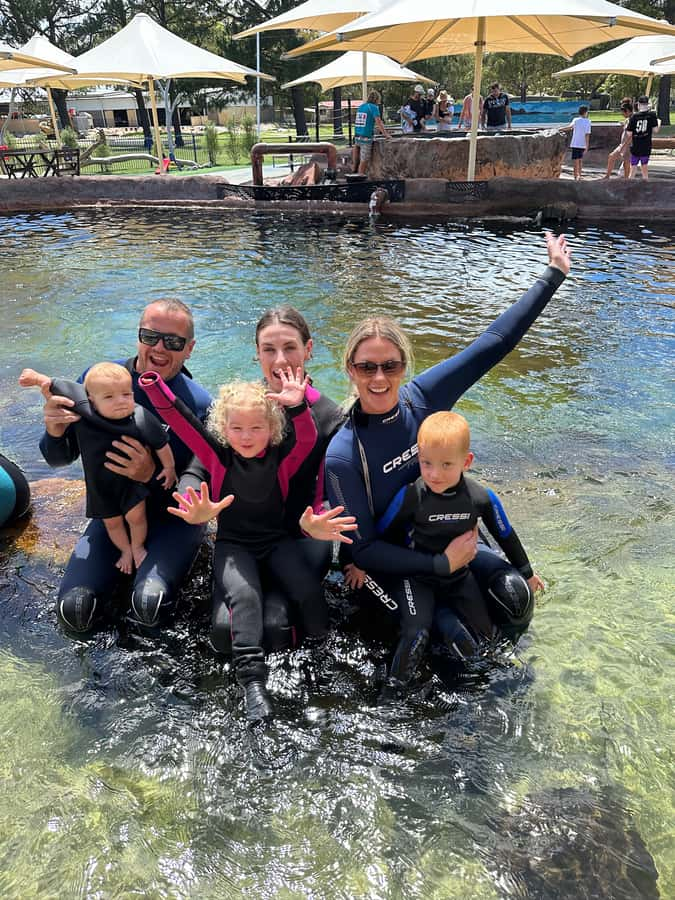
- Two lagoons, two different encounters: Fingill Lagoon is the main ray encounter, while Tropical Lagoon includes rays, zebra sharks, brown-banded bamboo sharks, and larger sharks during the Big Shark Talk.
- The $29 pass is a shallow-water ticket: You can wade barefoot and interact with the animals, but swimming is not allowed and normal entry does not take you far into the lagoon.
- A wetsuit changes the experience: The Discovery Pass upgrade lets you go farther into the water and gives you more contact with the marine life.
- Feeding is part of the admission: Food and feeding sticks are provided at several locations, with keepers explaining what each animal eats.
- Plan for roughly two hours: Tours run from 9 AM to 5 PM, but arrive by 3:30 PM if you want the full experience.
- This works well for mixed-age families: Children under 12 must have an adult in the water, and unaccompanied minors are not permitted.
Getting into the lagoons at Anna Bay
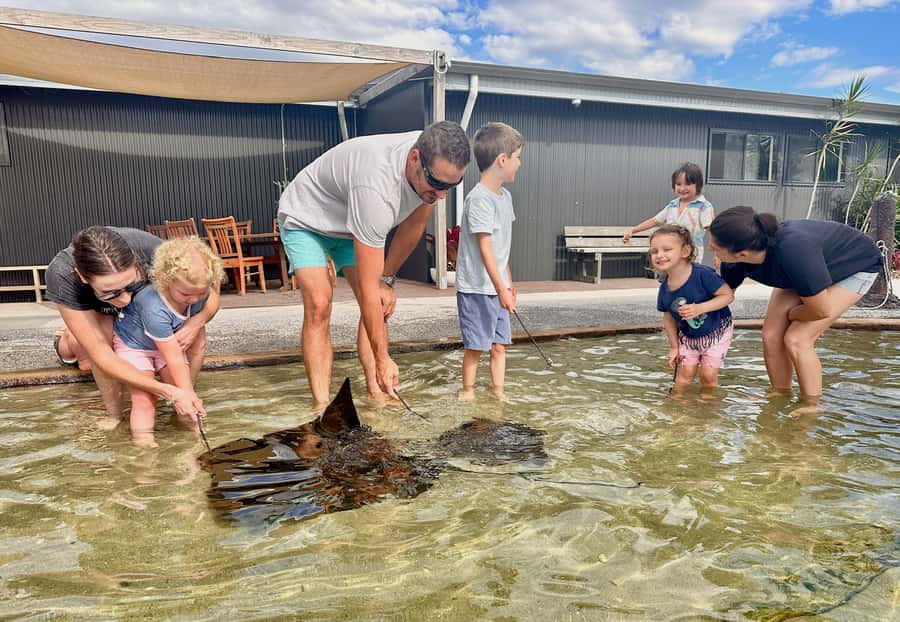
Irukandji offers a different kind of aquarium visit. Instead of walking from tank to tank while looking through glass, you enter the shallows and meet the animals at water level. You first receive instructions on safe interaction, then get the equipment needed for feeding and wading.
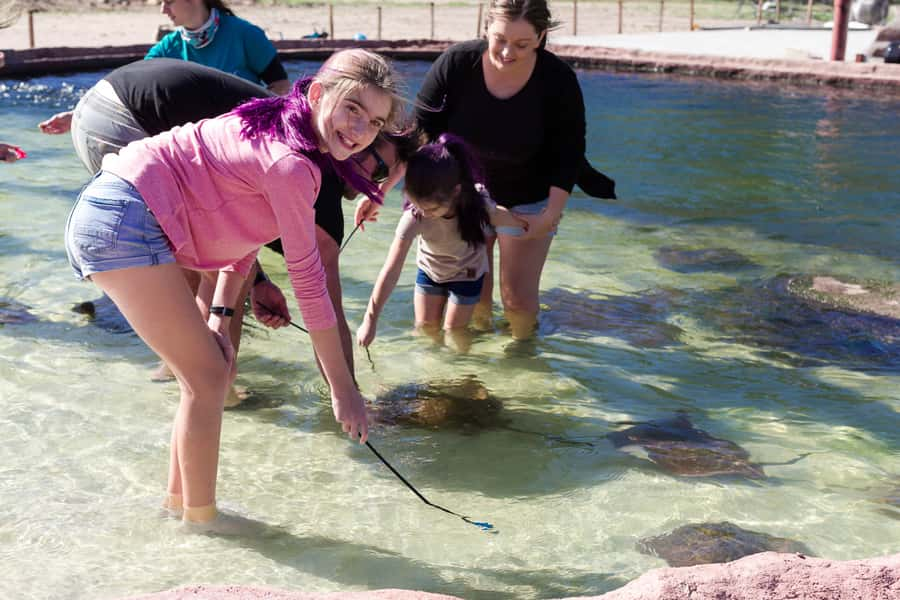
The basic Entry Pass is designed for people who want to keep most of their clothes dry. You wear clothes over your swimwear, remove your shoes, and enter barefoot. The water reaches your feet and ankles, though the exact access can feel limited in parts of the lagoon. One visitor found that even the ankles were not fully covered with the standard pass.
That detail matters if you are booking this for children who expect a proper water activity. The pass gives you direct contact, but it is not a swim. You are wading only, and swimming is not permitted.
You can also cover your toes with a pair of wear-and-keep souvenir socks. The lagoon itself can only be entered without shoes, so leave ordinary footwear outside the water.
The staff guide you through the process, and keepers remain with the animals during the interactions. That makes the activity feel controlled rather than chaotic, especially when several rays gather around the feeding sticks.
Other trips people book in Australia:
- Sydney: Opera House Guided Tour with Entrance Ticket
★ 4.8 · 8,312 reviews - All Inclusive Blue Mountain,Scenic World,Lunch,Koalas,ferry
★ 5.0 · 7,832 reviews - Great Ocean Road Small-Group Eco Tour from Melbourne
★ 5.0 · 6,607 reviews
Fingill Lagoon and the friendly rays
Fingill Lagoon is the gentlest introduction to the experience. This pool is home to a large group of rays that move across the shallows and often glide over your feet while looking for food.
You receive a feeding stick and suitable food, then reach toward the water as the rays come close. You can feed them and gently touch their skin. The sensation is part of the lesson: rays do not feel like smooth aquarium fish, and each species has its own texture and body shape.
This is likely to be the favorite section for younger children. The rays are visible at close range, their movement is easy to follow, and the feeding action gives children something to do while they listen. A toddler can take part with close adult help, although very young children still need careful supervision around the water.
I like this lagoon because it replaces fear with familiarity. Many people know rays mainly from beach warnings or nature programs. Seeing one glide calmly past your legs gives you a better sense of its size, movement, and behavior.
The activity is not rushed into a single photo opportunity. Keepers move you around the pool and explain how to interact safely. You should still expect a shared setting rather than a private animal encounter, especially during busy periods.
Tropical Lagoon and smaller shark species
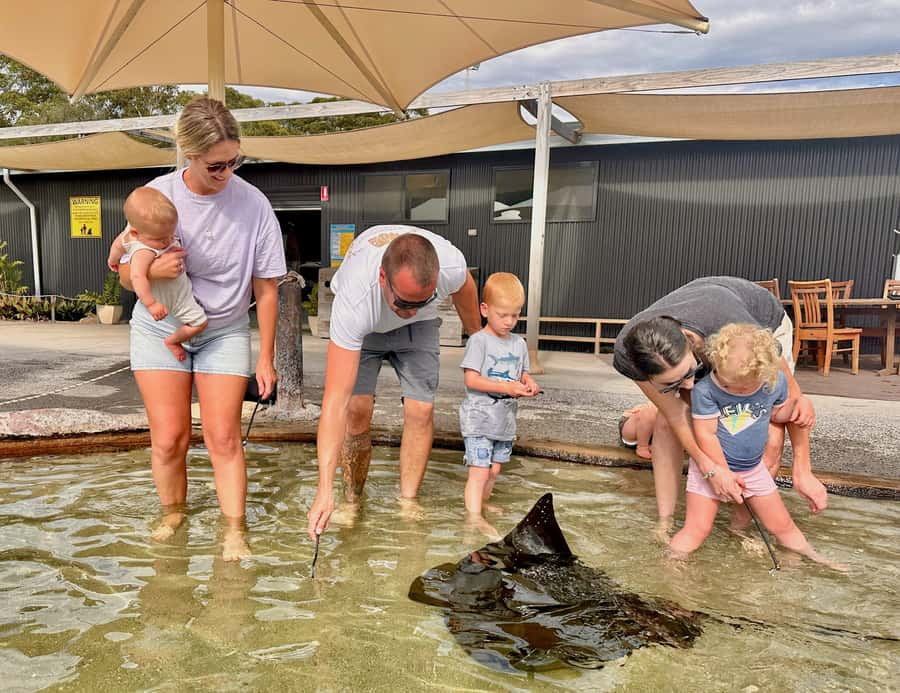
The Tropical Lagoon adds more variety. Here you find additional rays along with zebra sharks and brown-banded bamboo sharks. These smaller shark species are well suited to close observation in shallow water, and the feeding stations give you a practical reason to watch how they move.
The keepers provide food and information at each pool. This is useful because the animals do not all behave in the same way. Some may come right to your feeding stick, while others may pass nearby or take longer to approach.
You can reach into the water and interact with the animals as they swim around their lagoon. That contact is carefully managed, and the keepers are there to answer questions and explain the right way to touch and feed.
This section works well for anyone who feels nervous around sharks but still wants a safe introduction. You see the animals at close range, yet the setting remains shallow and supervised. The experience gives you a clearer picture of sharks as living animals with different habits, rather than treating every shark as the same threat.
The standard pass limits how far you can go into the water. If you want better access to the sharks, the wetsuit option makes more sense. One practical tip is to choose the wetsuit at the beginning if you already know you want closer contact. Switching arrangements later can cost time and leave children waiting.
The Big Shark Talk with larger sharks
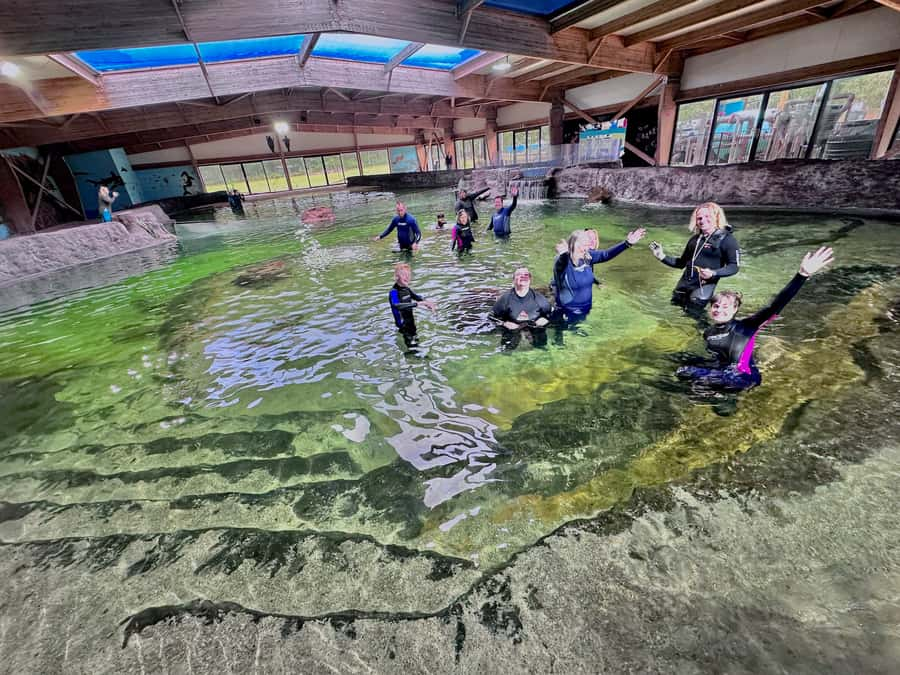
At the Big Shark Talk, keepers invite you into the shallows while larger Tawny Nurse Sharks and Whitetip Reef Sharks are brought into view. This is the point where the activity feels most dramatic, even though you are still wading rather than swimming.
The talk adds useful context to the physical encounter. You are not only feeding an animal and moving on. The keepers discuss sharks, rays, and marine conservation, helping you understand why these animals matter and how human behavior affects them.
The large sharks may be the moment children remember most, but the presentation style will not suit every child equally. Some children want constant action and can lose interest during a longer talk. If your family has a short attention span, treat the talks as an important part of the visit, but be ready for younger children to need a little help staying focused.
On colder days, the water and outdoor setting can feel chilly. Wetsuits are available to hire, and that option becomes especially useful in winter or when the weather turns cool. The warm showers afterward are a welcome practical touch.
Same base, a different sort of day:
- From Melbourne: Great Ocean Road, 12 Apostles, Wildlife Tour
★ 4.7 · 6,020 reviews - Ocean Rafting: Whitehaven Beach, Snorkelling & Hill Inlet Lookout
★ 5.0 · 4,777 reviews - Laid back, Yarra Valley Wine Tour: Wine, Cider, Gin, Beer + Choc
★ 5.0 · 4,552 reviews - From Sydney: Blue Mountains Full-Day Trip
★ 4.5 · 4,471 reviews
How the two-hour visit is likely to feel
The advertised duration is two hours, and that gives you time to complete the safety briefing, visit the lagoons, join the talks, and rinse off afterward. The attraction runs from 9 AM to 5 PM, but you should arrive by 3:30 PM to allow enough time for the full experience.
The schedule is not described as one tightly timed group from start to finish. Once inside, you may need to follow the available feeding locations and time slots. Some visitors found the opening process less clear than expected, so listen carefully to the first instructions and ask where you should go next.
That small piece of preparation can save frustration. If you have children waiting in wetsuits, or if you have booked several activities, you will want to understand the order of the lagoon visits before heading into the water.
The activity can feel more relaxed than a standard guided tour because you spend time at the pools rather than marching through a fixed route. The tradeoff is that the flow may seem informal. Ask the staff for a clear plan if you are unsure.
Clothing, wetsuits, and staying comfortable
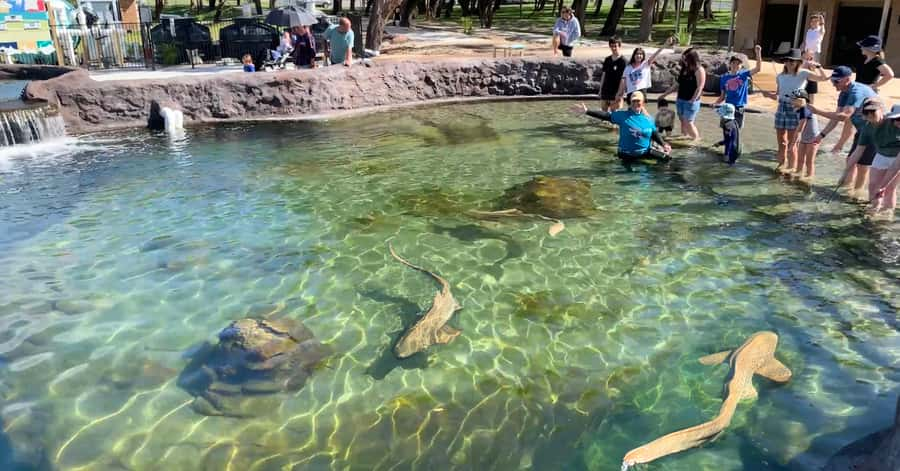
Wear swimwear underneath clothing, since clothes must be worn over your swimwear. With the basic pass, expect your feet and lower legs to get wet while the rest of your clothing stays mostly dry.
A wetsuit is worth considering for three reasons. It keeps you warmer, allows greater water access, and gives you a better chance to interact with the animals beyond the very edge of the pool. This is not just a comfort upgrade. It changes how much of the lagoon you can use.
The standard pass remains suitable if you mainly want to feed rays, touch the animals, and watch the talks. It is also a sensible choice if someone in your group does not want to get wet beyond the feet.
Only reef-friendly sunscreen is permitted. Apply it before you arrive and check that it meets this rule. You will need to enter the lagoons barefoot, and swimming is not allowed.
Afterward, you can use the hot showers and towels before changing. The gift shop carries sustainable gifts, soft toys, snacks, and cold drinks, so allow a little extra time if you are visiting with children.
Is the $29 price good value?
At $29 per person, the Entry Pass is fairly priced for a two-hour activity that includes aquarium admission, access to the lagoon shallows, animal food, feeding sticks, talks, hands-on interaction, and hot showers.
The value comes from the contact. A conventional aquarium may give you more species behind glass, but it will not normally let you stand in the water while rays pass over your feet or offer food directly to sharks.
The limitation is that the base price does not give you the full wetsuit experience. If you add a wetsuit or choose the Discovery Pass, your final cost will be higher. Check exactly what your chosen option includes, since the different packages can be confusing.
I would choose the $29 ticket for a family that wants a short, memorable marine activity without committing to a full swim. I would pay for the wetsuit upgrade if the main goal is close contact with the sharks or if you are visiting during cool weather.
The experience also offers more than entertainment. The talks about sharks, rays, and conservation give the price extra value for families who want children to leave with a better understanding of marine life.
Who will enjoy this experience most
This is a strong choice for families, especially those with children who learn best by touching and doing. The combination of feeding, petting, and short keeper talks keeps the visit active while adding useful information.
It also suits adults who want something unusual to do near Anna Bay on a non-beach day. The attraction gives you a close look at Australian marine animals without requiring swimming skills.
Children under 12 must have an adult in the water at all times. Unaccompanied minors are not allowed, so an adult needs to take an active role rather than simply watch from the side.
The activity is wheelchair accessible, though the lagoon rules and water access still apply. If anyone in your group needs specific assistance, contact the provider before arrival so you understand how the accessible facilities fit with the water activity.
What I would do differently on the day
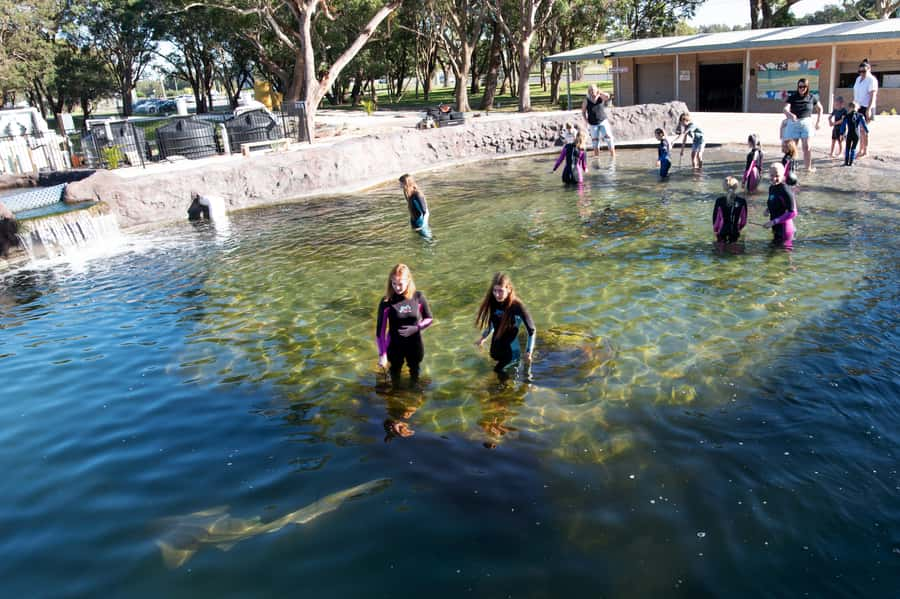
I would arrive with swimwear already underneath suitable clothing and use reef-friendly sunscreen. I would also decide before check-in whether wet feet are enough or if a wetsuit is essential.
For families, I would put the most water-ready adult beside children under 12. That adult can help with the feeding stick, keep the child steady, and make sure the interaction remains gentle.
I would listen closely to the opening instructions. The schedule can feel loose, and understanding the feeding locations at the start helps you avoid wasted time.
Finally, I would not rush the talks. The rays and sharks are the obvious attraction, but the conservation message gives the close contact a useful purpose. If young children lose interest, keep them involved by having them watch for the next animal or help hold the feeding stick when appropriate.
Should you book the Irukandji Entry Pass?
Book it if you want a family-friendly, hands-on shark and ray experience and are happy to wade rather than swim. The rays at Fingill Lagoon are the star for many people, while the Tropical Lagoon and Big Shark Talk add variety and larger sharks.
Choose the basic $29 pass when keeping most of your clothes dry matters. Choose the wetsuit option if you want greater water access, warmer conditions in cool weather, or a closer encounter.
I would skip it only if you expect a long swim, a large aquarium collection, or a private animal session. For direct contact, thoughtful keeper talks, and a memorable two hours near Anna Bay, this is a strong value.
FAQ
How much does the Irukandji Entry Pass cost?
The Entry Pass costs $29 per person.
How long does the experience last?
The activity lasts about two hours.
Can I swim in the lagoons?
No. Swimming is not permitted. You can wade in the shallow water only.
Will I stay dry?
The standard Entry Pass lets you keep most of your clothing dry, but your feet and ankles will get wet. You must wear clothes over your swimwear.
Can I hire a wetsuit?
Yes. You can hire a wetsuit or choose the Discovery Pass upgrade for deeper water access and greater contact with the animals.
What animals will I see?
You can see and interact with rays, zebra sharks, brown-banded bamboo sharks, Tawny Nurse Sharks, and Whitetip Reef Sharks. The exact interaction varies by lagoon and feeding session.
Can I feed the sharks and rays?
Yes. Food and feeding sticks are provided at various feeding locations, and keepers guide you through the process.
Can children take part?
Yes. Children are welcome, but anyone under 12 must have an adult with them in the water at all times. Unaccompanied minors are not permitted.
What should I wear?
Wear swimwear under your clothes. Lagoon entry is barefoot, and only reef-friendly sunscreen is permitted.
What time should I arrive?
The attraction runs from 9 AM to 5 PM. Arrive by 3:30 PM to allow enough time for the full two-hour experience.
Just added in Australia
- 6-Day Tasmanian Explorer Adventure Tour from Hobart★ 5.0 · 66 reviews
- 3 day Tasmanian highlights tour – Hobart, Port Arthur and Bruny Island★ 5.0 · 41 reviews
- 7-Day Super Value Tour of Tasmania: Explore Tasmania’s West and East Coasts★ 5.0 · 77 reviews
- 4 Day Wild Tasmania Tour / Wildlife, Nature, Hiking / Inc. Accom★ 5.0 · 126 reviews
- A Day At Wineglass Bay★ 5.0 · 33 reviews
- Bruny Island Wilderness Cruise from Adventure Bay, Bruny Island★ 5.0 · 293 reviews
- 5-Day Best of Tasmania Tour from Hobart★ 5.0 · 184 reviews
- Enjoy a VIP Booth Shared Experience From Gympie★ 4.5 · 22 reviews
Tours in Port Stephens, compared.





Browse the lists this tour appears in