
Reviewed · FARMS
Bundaberg: Monsoon Aquatics Coral Farm Guided Tour
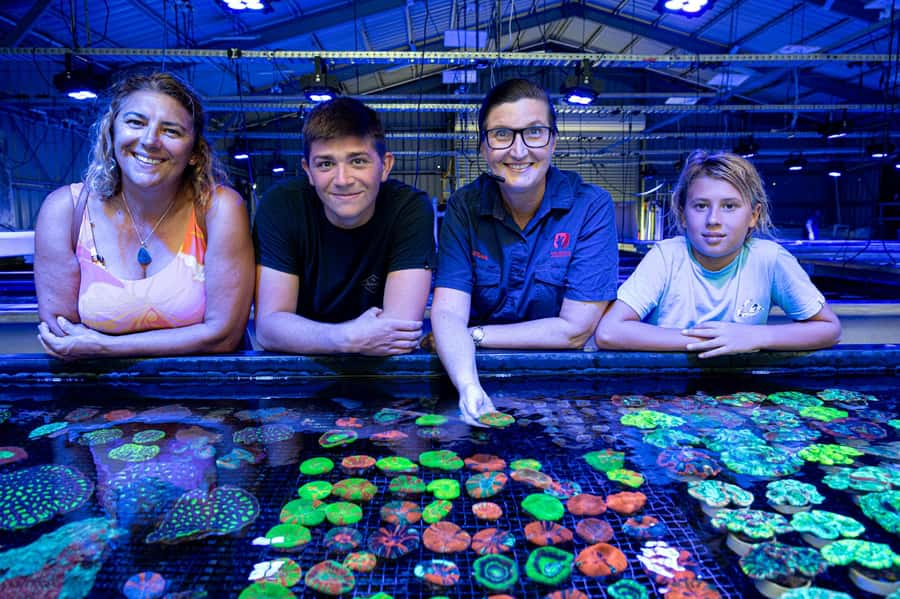
Australia’s largest coral farm is not a public aquarium with huge tanks and theatrical lighting. It is a working farm, where thousands of coral colonies grow in long tanks and staff study how to support damaged reefs. That behind-the-scenes setting is the main attraction.
I like the small-group feel and the chance to ask questions as you go. I also like the live coral-feeding demonstration, which helps you see these animals as living creatures rather than colorful decoration. The main consideration is that this is an educational tour, not a sea-life show, so very young children may find the tanks and explanations less gripping than a large aquarium.
- 70,000 corals and 200 marine species: See an unusually broad collection sourced from around Australia.
- Live feeding demonstration: Watch how coral is cared for and learn what keeps it healthy.
- Working farm, not a standard aquarium: Expect long growing tanks, coral fragments, and practical explanations.
- Reef restoration research: Find out how coral cultivation may help support Australia’s reefs.
- Clownfish finale: Finish with a look at the collection’s much-loved Nemo fish.
- Easy Bundaberg outing: The farm is about 20 minutes from central Bundaberg, with parking onsite.
Inside Bundaberg’s working coral farm
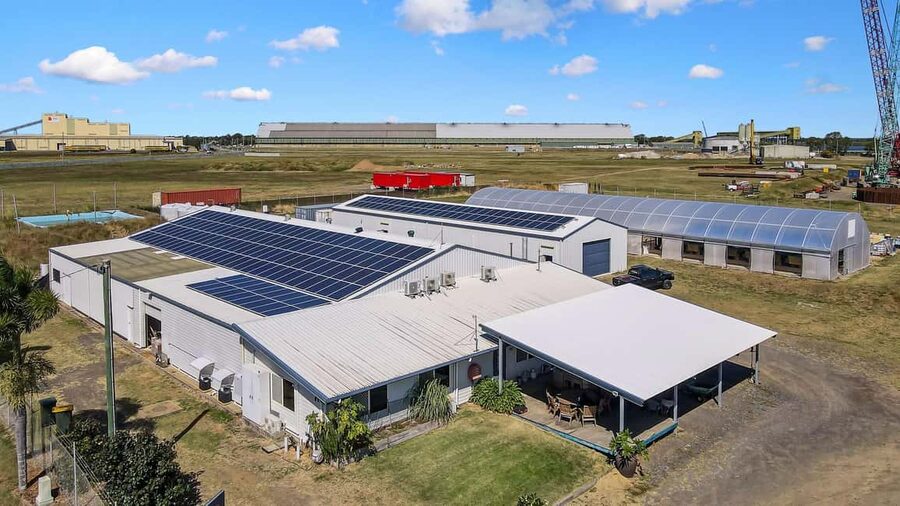
Monsoon Aquatics Coral Farm sits at the Port of Bundaberg on the Burnett River, roughly 20 minutes from the center of town. You meet your guide on the veranda, then enter the farm for a fully guided tour lasting about one hour.
The setting matters. You are not simply looking at a finished reef display. You are seeing coral at different stages of growth, learning how it is raised, and watching staff care for it in a controlled environment.
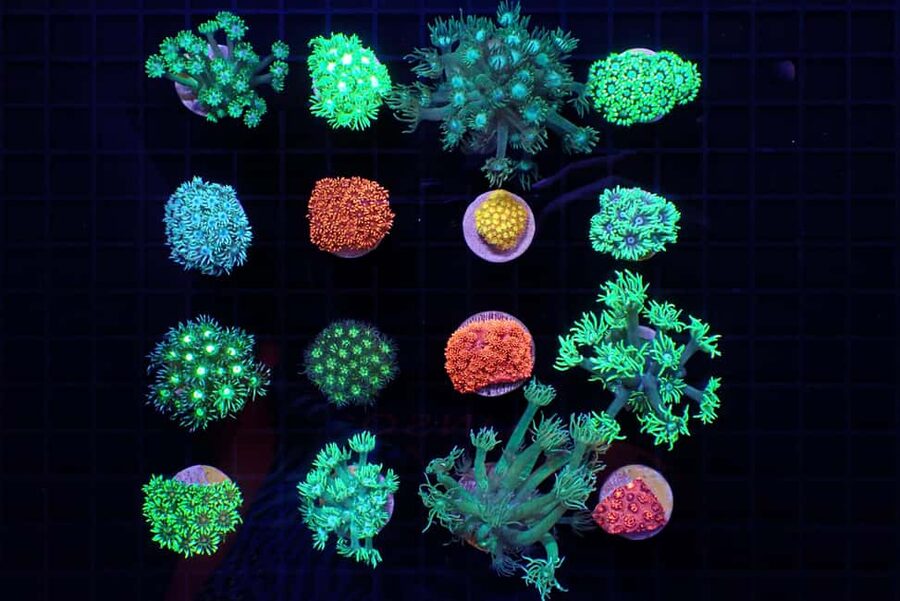
The farm contains more than 70,000 corals and around 200 marine species sourced from around Australia’s coastline. That scale gives the visit real substance, even though the tour itself is short.
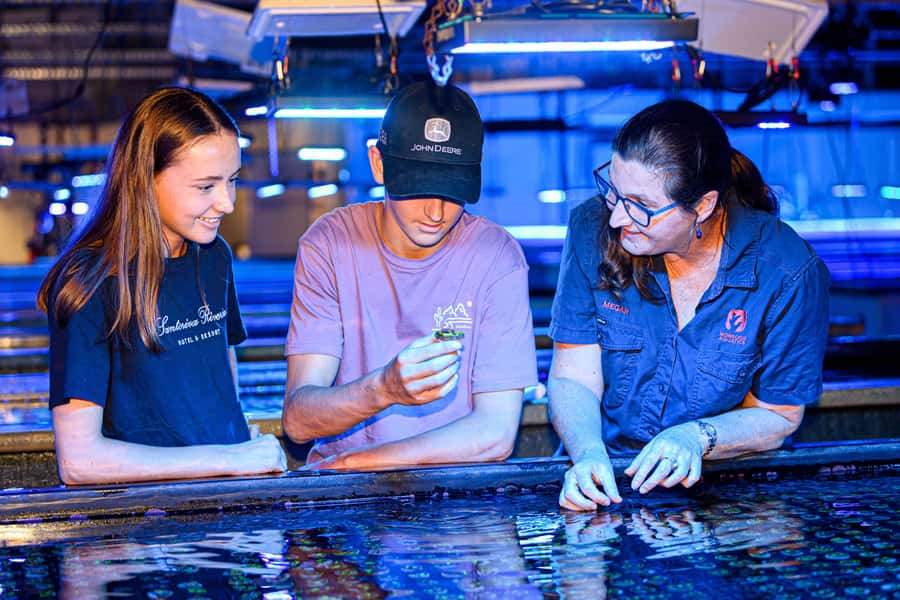
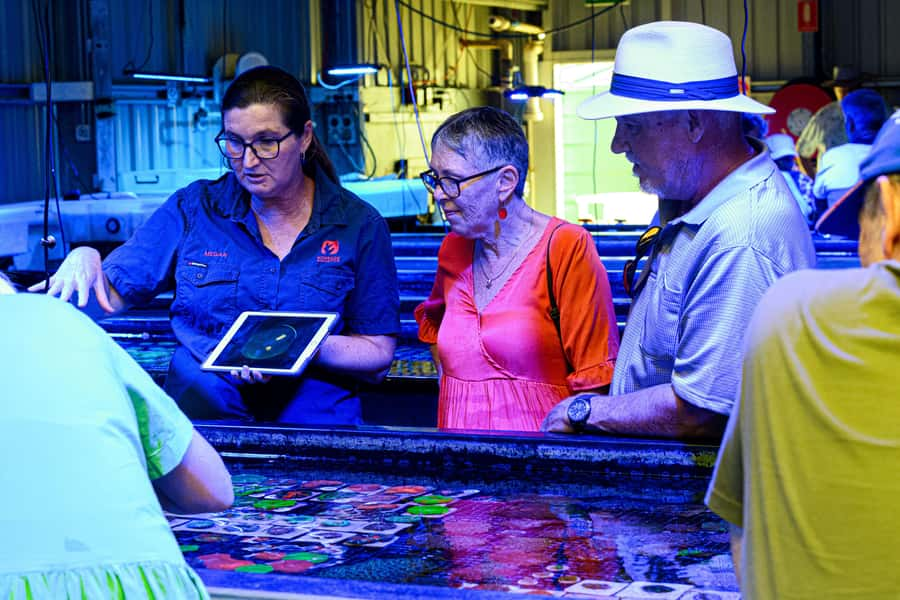
Your guide leads the group through the growing areas and explains the work in plain language. The guides are enthusiastic about marine life, and the strongest part of the experience is the way they make technical ideas understandable for both adults and children.
That personal approach is important here. A row of tanks can look repetitive if you do not know what you are seeing. With a guide pointing out coral types, growth stages, and care methods, the farm becomes a working laboratory and nursery rather than a collection of containers.
Coral on tiles, tanks, and careful daily work
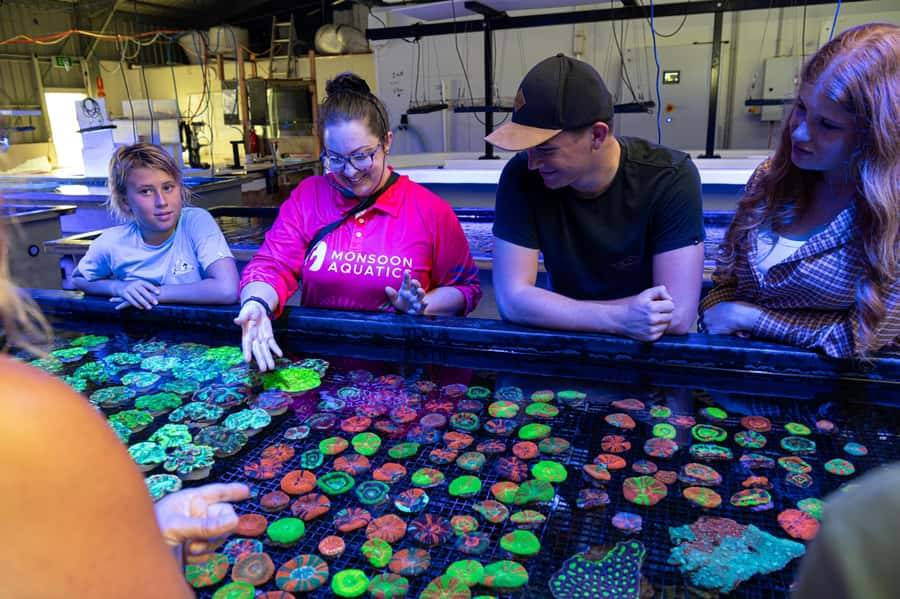
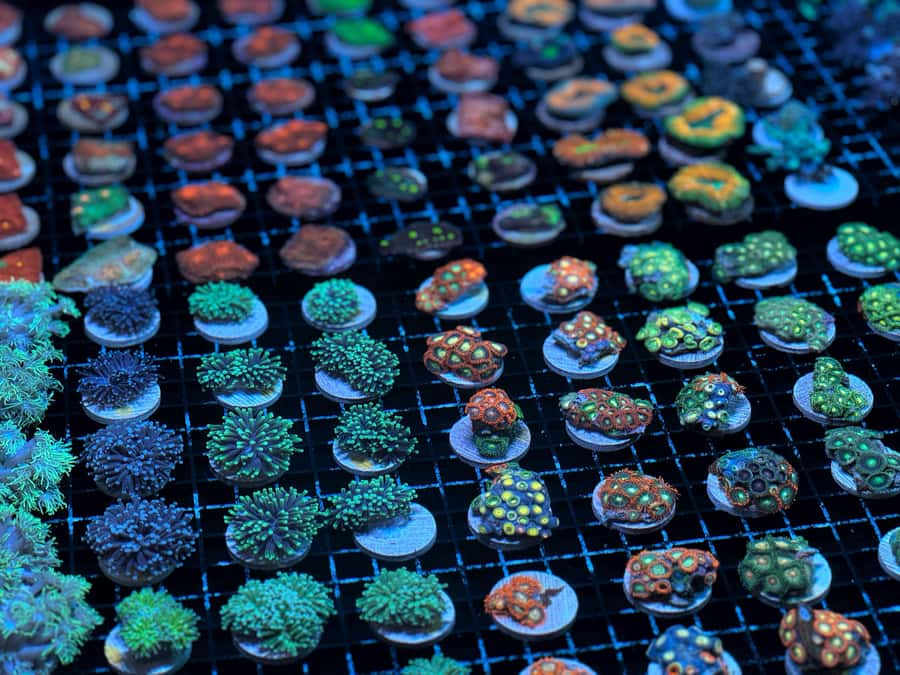
One of the most useful things you will learn is how coral is cultivated. The tour shows coral colonies growing on small tiles, with different pieces at different stages of development.
This is a practical view of coral care. You see that reef growth is slow, deliberate work. Staff must provide suitable conditions, monitor the colonies, and give them regular care. The process combines science with a good deal of patient, hands-on attention.
The setting also helps correct a common misunderstanding. Coral is not a rock or a plant. It is made up of tiny living animals, and the farm’s work depends on understanding their needs.
The guided explanations connect the small tiles in front of you with the much larger question of reef health. A single growing coral may look modest, but thousands of carefully raised colonies can contribute to research and restoration efforts.
Do not expect every tank to look like a mature reef. Much of what you see is coral being grown, sorted, and cared for. That means the displays may seem spare compared with an aquarium full of large fish and established coral heads.
For me, that is also the point. You get to see the work behind the finished reef scene. If you want a polished spectacle, this may feel restrained. If you want to understand how coral is cultivated, it offers much more.
A few more things to do in Australia worth a look
- Amazing Yarra Valley Wine Tour + Chocolate, Farm Fresh, Gin
★ 5.0 · 1,566 reviews - Hidden Gems: Boutique Full-Day Wine, Farm & Lunch Tour
★ 5.0 · 881 reviews - Melbourne: Yarra Valley Wine, Choc, Farm Fresh, Gin Tour
★ 4.9 · 258 reviews
The live coral-feeding demonstration
The feeding demonstration gives the tour a useful change of pace. Rather than only hearing about coral care, you watch a live example of how the farm looks after its colonies.
This is a good moment to pay close attention to the guide’s explanation. Coral feeding shows that these organisms are active and responsive, not just colorful shapes fixed to the bottom of a tank.
The demonstration also puts the farm’s daily routine into view. Coral cultivation is not a one-time project. It relies on regular care, observation, and controlled conditions.
Because the tour is guided, you can ask questions as the demonstration unfolds. That makes a difference for families. Guides have used simple language that children can follow, while still offering enough detail for adults who want to understand the process.
The tour’s strongest praise has gone to this human element. The guides are described as enthusiastic, willing to answer questions, and good at adjusting their explanations for children. One guide even offered to take family photos, a small courtesy that can be useful when everyone wants to be in the picture.
No guide names are provided for this experience, so you should not expect a particular named guide when booking. You can expect an English-speaking guide throughout the visit.
Reef restoration, with a hopeful message
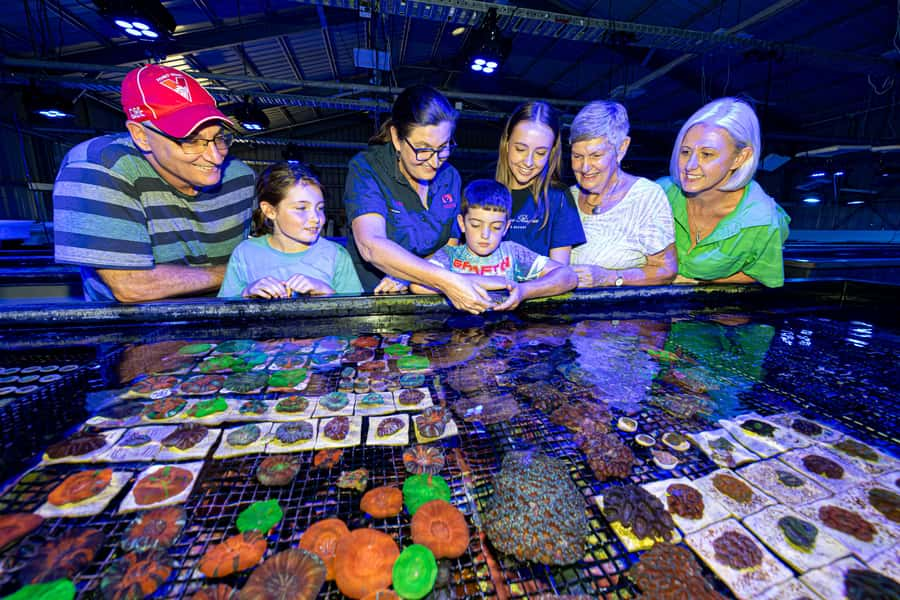
The farm’s work connects to reef restoration research. The tour explains how growing coral can support efforts to help reefs recover, giving you a better sense of why a coral farm matters beyond its collection.
This is not a promise that one visit will solve the problems facing Australia’s reefs. The value is more practical. You see one part of a larger effort: raising coral, studying its growth, and building knowledge that may support restoration work.
I appreciate that the tour presents coral care as a long-term task rather than a quick fix. It gives you a reason to care about the small details in the tanks, from the coral fragments to the conditions needed for growth.
The subject is especially worthwhile if you have seen reefs while snorkeling or visiting the coast. After the tour, you can look at a coral colony with a better understanding of what it is and how much time and care may go into maintaining it.
The farm also offers a welcome counterpoint to gloomy reef news. You learn about the problems, but you also see people working on practical responses. The tone is hopeful without needing to turn the experience into a grand promise.
Finishing with clownfish and marine life
The tour ends with a look at the clownfish collection, a clear crowd favorite. These fish provide an easy, familiar point of connection after the more technical sections on coral growing.
For children, the clownfish may be the most immediately exciting part. For adults, they add movement and personality to a tour that mainly focuses on coral colonies and growing tanks.
Still, keep your expectations in check. The experience is not designed as a full aquarium visit. One particularly useful point is that you should not expect several giant tanks filled with large fish and mature coral scenery.
Instead, the appeal comes from access to a specialist working facility. You see coral in production, hear about the cultivation process, and finish with a popular marine species that most children recognize.
That distinction helps you decide if the tour fits your day. If your family needs constant motion and large animal displays, an aquarium-style attraction may be a better match. If you enjoy learning how marine life is cared for, this more focused visit should hold your attention.
Same base, a different sort of day:
- Sydney: Opera House Guided Tour with Entrance Ticket
★ 4.8 · 8,312 reviews - All Inclusive Blue Mountain,Scenic World,Lunch,Koalas,ferry
★ 5.0 · 7,832 reviews - Great Ocean Road Small-Group Eco Tour from Melbourne
★ 5.0 · 6,607 reviews - From Melbourne: Great Ocean Road, 12 Apostles, Wildlife Tour
★ 4.7 · 6,020 reviews
Is one hour enough?
One hour is a sensible length for this experience. It gives you time to see the farm, follow the explanations, watch feeding, learn about research, and visit the clownfish without turning the tour into an all-day commitment.
The short format also works well as part of a Bundaberg outing. You can visit the farm in the morning or afternoon and still leave room for other plans around the region.
A shorter tour does mean the experience stays focused. You will not have hours to wander independently, and the supplied details do not describe a self-guided option. You follow the guide through the working areas and receive the information as the tour progresses.
That guided format is a plus if you want context. It is less useful if you prefer to move at your own speed or spend a long time photographing individual coral colonies.
Plan to listen closely, especially during the explanations of coral growth and restoration. The farm’s value comes from what the guide adds to what you see.
The $22 price and what you receive
At $22 per person, this is a reasonably priced specialist experience. You are paying for a one-hour guided visit inside a working coral farm, not simply admission to a viewing room.
The price makes sense if you value access, explanation, and conservation education. You see a large coral collection, watch a feeding demonstration, learn about cultivation, and hear about research linked to reef restoration.
It is less compelling if you judge value only by the number of large displays or animals you can see. The farm’s tanks are primarily for growing coral, and the visit is not built around theatrical aquarium presentation.
For families, the cost can work well if your children are old enough to ask questions and follow a guided explanation. The experience may be less satisfying for very young children who mainly want big fish, bright displays, or lots of free movement.
There is also a gift shop onsite, along with Bundaberg Brewed Drinks and local top-grade macadamias. Food and drinks are not allowed on the tour itself, but these onsite extras can make the visit easier to fit into a day out.
Practical details before you go
Wear closed-toe, non-slip shoes. The floors may be slippery, and open-toed shoes and bare feet are not allowed.
You may bring water, but other drinks and food cannot go on the tour. That is worth knowing before you arrive, especially with children.
Parking is available onsite for cars and RVs. Caravan parking is available outside the gate. Use Apple Maps or Google Maps for directions, since older car GPS systems may send you to the wrong address.
The tour runs year-round, rain or shine, which makes it a dependable option in Bundaberg’s changeable weather. Check the available starting times when booking, since the tour lasts one hour and operates at set times.
The activity is wheelchair accessible. Because the floors may be slippery, it is sensible to think about footwear and movement needs in advance.
You can cancel up to 24 hours before the experience for a full refund. A reserve-now, pay-later option is also available, which can help if your Bundaberg schedule is still shifting.
Who will enjoy Monsoon Aquatics most?
I would recommend this tour to reef lovers, families with school-age children, aquarium fans, and anyone curious about conservation work. It is also a good choice if you want something educational near Bundaberg that does not require a full day.
It suits adults who enjoy seeing how a specialist operation works. You are close to the process, and the guide can explain details that would be easy to miss on your own.
Older children should get more from it than toddlers. The tour uses accessible explanations and welcomes questions, but the central sights are growing coral in long tanks, not large theatrical displays.
You should also consider it if you want an experience with a clear environmental purpose. Your visit supports a facility involved in coral reproduction and reef-related research, giving the outing more meaning than a standard photo stop.
I would be more cautious if your main goal is to see a large public aquarium. The farm may feel plain in places, and the coral is often shown in growing stages rather than as fully developed reef scenes.
Should you book this coral farm tour?
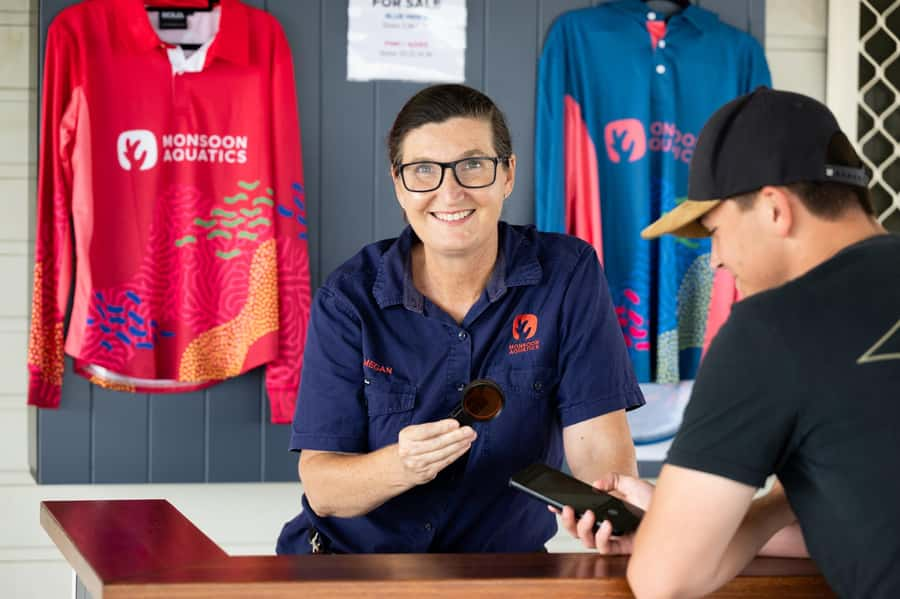
Book it if you want a close look at coral cultivation, a friendly English-speaking guide, and a useful introduction to reef restoration. The combination of live feeding, 70,000 corals, 200 marine species, and clownfish gives the one-hour visit plenty of substance for its price.
Skip it if you need a large aquarium experience with big tanks and constant animal activity. The farm is a working facility first, and its appeal comes from learning how coral is raised rather than simply admiring finished displays.
For most curious families and reef-minded adults in Bundaberg, I think it is a smart, good-value stop. Wear proper shoes, arrive ready to listen, and treat the hour as a lesson in the patient work behind a healthy reef.
FAQ
Where is Monsoon Aquatics Coral Farm located?
The farm is at the Port of Bundaberg on the Burnett River, about 20 minutes from the heart of Bundaberg, Queensland.
How long does the coral farm tour last?
The guided tour lasts one hour.
How much does the tour cost?
The listed price is $22 per person.
What will I see during the tour?
You will see coral growing in a working farm, more than 70,000 corals, around 200 marine species, coral-care demonstrations, reef restoration research, and a collection of clownfish.
Is the tour guided?
Yes. The tour is fully guided in English by a live tour guide.
What should I wear?
Wear closed-toe, non-slip shoes. Open-toed shoes and bare feet are not allowed because the floors may be slippery.
Can I bring food or drinks?
Food and drinks are not allowed on the tour. You may bring water only.
Is parking available?
Yes. Parking is available onsite for cars and RVs. Caravan parking is available outside the gate.
Is the experience wheelchair accessible?
Yes, the activity is listed as wheelchair accessible. Keep in mind that the floors may be slippery.
Can I cancel my booking?
Yes. You can cancel up to 24 hours in advance for a full refund. A reserve-now, pay-later option is also available.
Just added in Australia
- 6-Day Tasmanian Explorer Adventure Tour from Hobart★ 5.0 · 66 reviews
- 3 day Tasmanian highlights tour – Hobart, Port Arthur and Bruny Island★ 5.0 · 41 reviews
- 7-Day Super Value Tour of Tasmania: Explore Tasmania’s West and East Coasts★ 5.0 · 77 reviews
- 4 Day Wild Tasmania Tour / Wildlife, Nature, Hiking / Inc. Accom★ 5.0 · 126 reviews
- A Day At Wineglass Bay★ 5.0 · 33 reviews
- Bruny Island Wilderness Cruise from Adventure Bay, Bruny Island★ 5.0 · 293 reviews
- 5-Day Best of Tasmania Tour from Hobart★ 5.0 · 184 reviews
- Enjoy a VIP Booth Shared Experience From Gympie★ 4.5 · 22 reviews
Farms, compared.

Amazing Yarra Valley Wine Tour + Chocolate, Farm Fresh, Gin
Read our review →
Hidden Gems: Boutique Full-Day Wine, Farm & Lunch Tour
Read our review →
Experience Coffin Bay Oyster Farm and Bay Tour
Read our review →
Rockhampton: Koorana Crocodile Farm Guided Tour
Read our review →
Hidden Gems Margaret River: Authentic Wine & Farm Experience
Read our review →
Cygnet Bay Pearl Farm Behind-the-Scenes Tour & Live Harvest
Read our review →
Barossa & Maggie Beers Farm (4 wine Tastings & Lunch included)
Read our review →Browse the lists this tour appears in