
Reviewed · PORT ARTHUR & CONVICT HISTORY
Fremantle: Convicts, Culture, and Street Art
Fremantle’s best stories are not all found behind museum glass. This two-hour walk links the Roundhouse, Whaler’s tunnel, boat harbour, and West End with tales of convict escapes, hard-living sailors, new migrants, and the forced removal of Indigenous people to Rottnest Island. It is history with muddy boots on, not a dry lecture.
I like the relaxed pace and the way the tour mixes big events with odd local characters. I also like the street-art angle, since the art gives you another way to read Fremantle’s past. The main drawback is simple: you are outside for two hours, and winter rain or cold can make the walk less comfortable.
Key points at a glance
- Convict stories with a sharp edge: Learn why almost 10,000 men were transported from Great Britain and Ireland, and how convicts helped build their own prison.
- A walk through several sides of Fremantle: The route links Kings Square, the cappuccino strip, boat harbour, West End streets, High Street, the Whaler’s tunnel, and the Roundhouse.
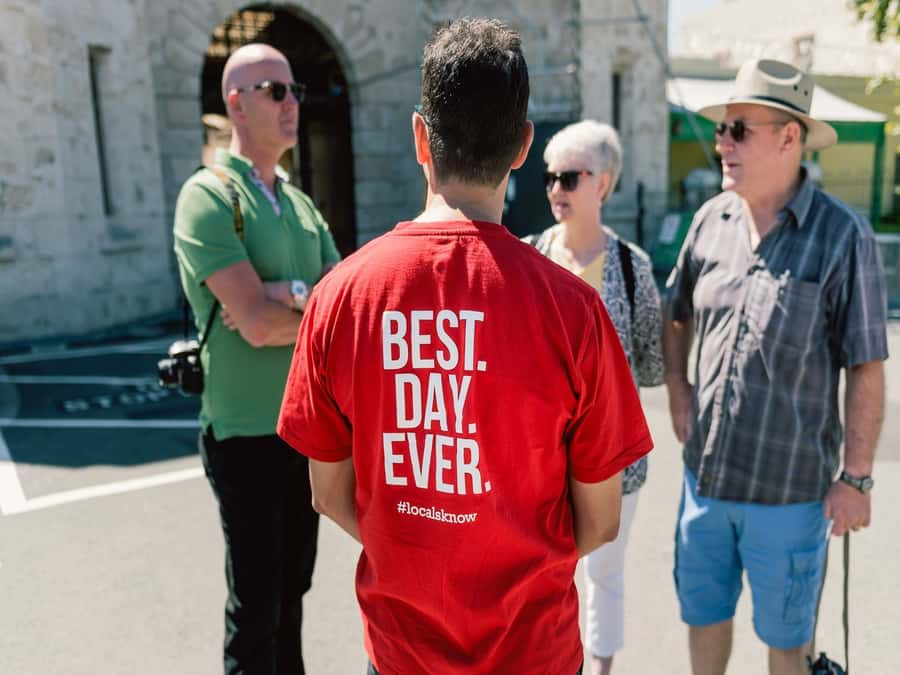
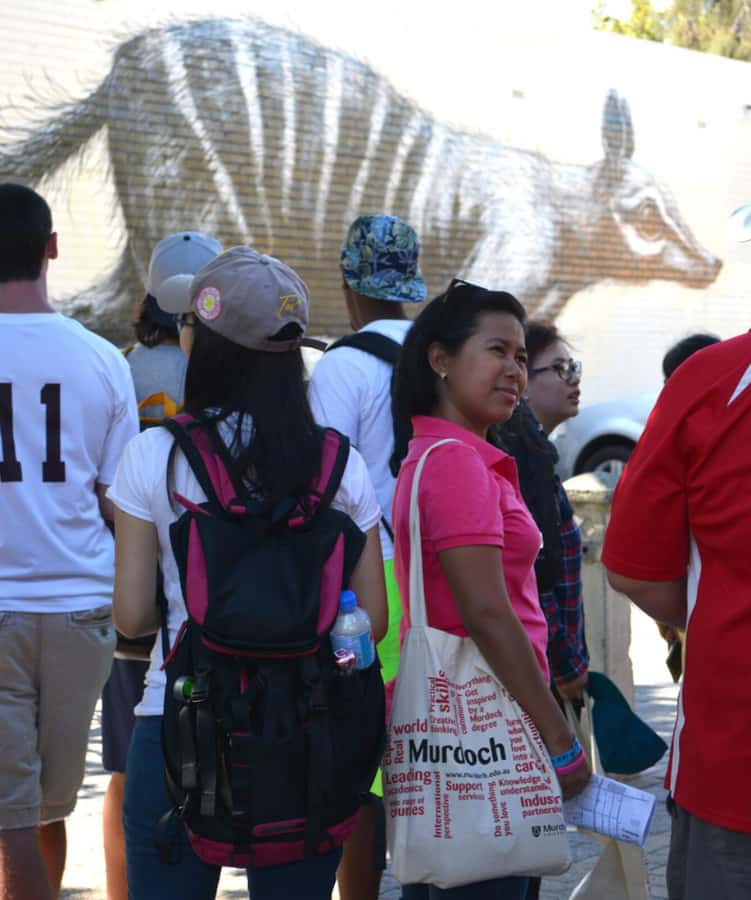
- Street art is part of the history lesson: Look at how modern murals and public art reflect the people and stories of the city.
- Guides shape the experience: Winona, Vaughan, Joanie, and Daniel are among the hosts praised for their local insight and easygoing style.
- Good first-day orientation: You receive local tips and a useful sense of where to return for museums, markets, food, and further walks.
- A manageable price and length: At $46 per person for two hours, this suits visitors who want context without giving up half a day.
Starting at Kings Square with Fremantle’s stories
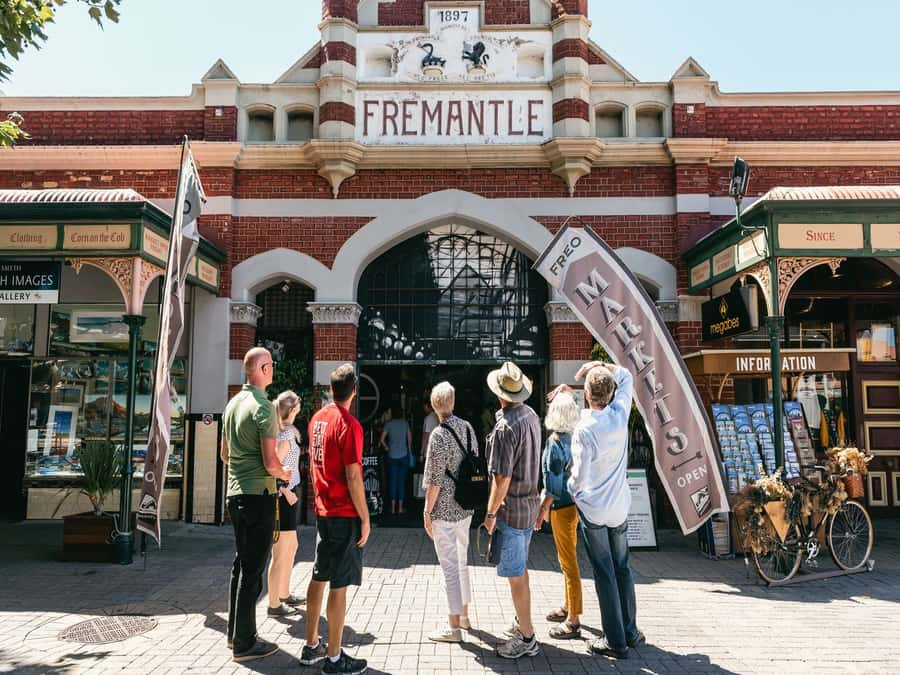
You meet at the Fremantle Visitor Information Centre in Kings Square. That central start matters because you can reach it before exploring the nearby shops, markets, cafés, and historic streets.
From there, your guide sets the tone. This is not meant to be a date-heavy lecture about governors and buildings. Instead, you hear factual stories, local anecdotes, and stranger episodes as you move through the city. I find that format useful in Fremantle because the old buildings are close together, but their stories often pull in very different directions.
The guide may discuss pioneering figures, seafarers, prisoners, migrants, artists, and Indigenous people. Those subjects do not make a neat or comfortable story. Fremantle was a port, a place of arrival, a prison settlement, and a town shaped by people who did not always meet on equal terms.
That mix is one of the tour’s strengths. You are not asked to admire the old buildings without asking who built them and who paid the price.
Other convict-history days from Fremantle:
- From Port Arthur: Tasman Island Wilderness Cruise
★ 4.9 · 704 reviews - Port Arthur Full-day Guided Tour with Harbour Cruise and Tasman National Park
★ 4.5 · 585 reviews - Port Arthur Historic Site Admission and Tour Options
★ 4.8 · 509 reviews
The cappuccino strip and the town’s changing identity
The walk passes through Fremantle’s famous cappuccino strip, where cafés and foot traffic give the city much of its easygoing feel. The modern café scene can make Fremantle seem like a relaxed weekend town, but your guide connects it to the port’s older working life and immigrant communities.
This is a good place to understand the contrast at the heart of Fremantle. The city has a friendly, social surface, yet its past includes prison labor, harsh sea work, forced displacement, and difficult arrivals. The tour uses the streets around you to show how those layers sit side by side.
I especially like this part for first-time visitors because it gives you more than a list of cafés to try. You begin to see the city as a place shaped by movement. Ships arrived, prisoners were transported, migrants started new lives, and local communities were pushed aside.
The guide also shares local tips along the way. Those suggestions are useful after the walk, especially if you plan to spend a second day in Fremantle or visit museums the following morning.
Convicts, prison labor, and the Roundhouse
The convict story is central to the tour. Almost 10,000 men were transported from Great Britain and Ireland to Western Australia, and the walk explains why they came and what they did after arriving.
One memorable detail is that the convicts helped build their own prison. That fact gives the story a grim practicality. These men were not just names in a transport record. Their labor helped shape the settlement, while their presence changed Fremantle’s social life and reputation.
You also hear about prisoner escapes and convict antics. The lighter tales make the people easier to picture, but the tour does not turn the subject into harmless entertainment. The overall picture includes punishment, forced labor, and the hard conditions of colonial life.
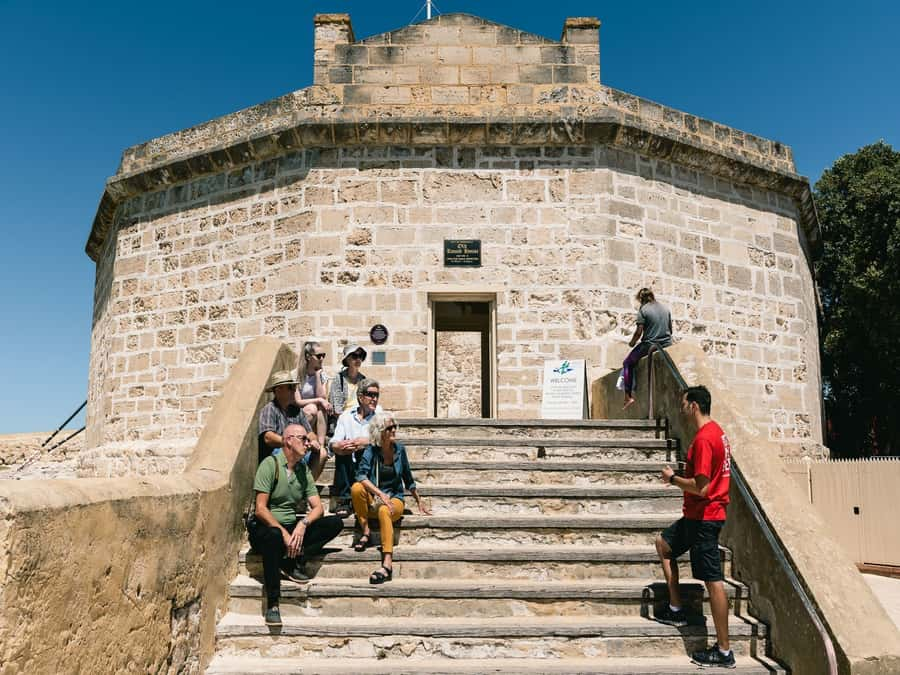
The Roundhouse is one of the key landmarks on the route. It gives the convict story a physical setting and helps explain why Fremantle became such an important part of Western Australia’s early development. If you have already visited the Roundhouse, the guide’s stories can add meaning to what you saw. If you have not, the walk can help you decide if it deserves a longer visit.
The route includes some outdoor walking around historic places rather than a full, slow museum visit. If your main goal is detailed architecture or a room-by-room look at the prison system, you may want to add a museum visit afterward.
The Whaler’s tunnel and Fremantle’s maritime past
The Whaler’s tunnel brings the port’s sea-going past into focus. Fremantle was linked to whaling stations and the wider maritime world, and this landmark gives the tour a more physical sense of what working life once involved.
I like the way the tunnel changes the mood of the walk. You leave the open streets and enter a more enclosed reminder of the labor and infrastructure behind the port. The tour is not simply about pretty façades. It asks you to think about the people who worked below street level, loaded goods, handled ships, and made the port function.
The boat harbour adds another side of that story. You see the working and recreational waterfront while hearing about sailors, pioneering figures, and the characters who passed through Fremantle. The route does not treat the harbor as scenery alone. It connects the water to the people and industries that made the town what it is.
Do not expect a specialized whaling tour. Maritime history is one part of a wider route, alongside convicts, migration, Indigenous history, and street art. That broad approach is helpful if you want an overview, but less suitable if you want a narrow study of ships or naval history.
A few more things to do in Fremantle worth a look
- Melbourne Street Art Tour
★ 5.0 · 378 reviews - Melbourne: Street Art Walking Tour with a Street Artist
★ 4.9 · 147 reviews - Brisbane Small Bars and Street Art Tour
★ 5.0 · 34 reviews - Paint and Palate Street Art Tour with Food
★ 5.0 · 21 reviews
West End streets and the stories behind the buildings
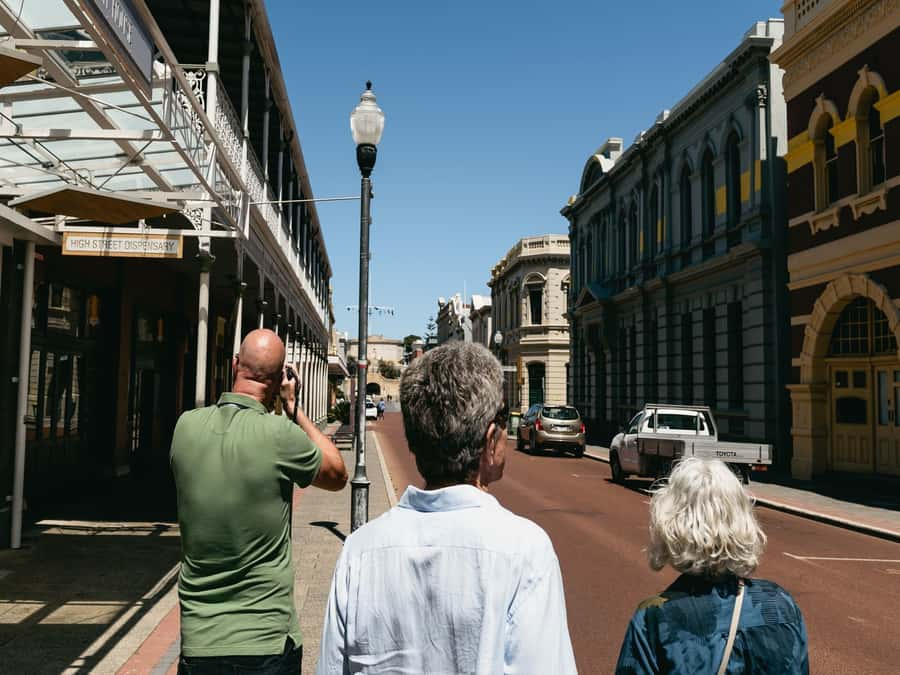
The narrow streets of Fremantle’s West End are among the most atmospheric parts of the walk. The buildings and lanes help you picture a port town where sailors, immigrants, traders, and local workers crossed paths.
Your guide tells stories as you move, so the setting keeps changing. You are not standing in one place for a long speech. You may pause at a landmark, then continue through streets where the city’s later cultural life becomes more visible.
This section works well for people who care about the character of a place. The West End is not just a collection of old façades. It reflects Fremantle’s position as a gateway for migrants and a meeting point for different cultures.
The tour also deals with the expulsion of Indigenous people to Rottnest Island. That is an important part of the story, and it needs to be heard alongside the more amusing tales of prisoners and salty sea dogs. The subject is difficult, but leaving it out would give you a false picture of Fremantle’s past.
I would pay close attention here and ask questions if your guide invites them. The tour’s value comes partly from placing the cheerful café streets and handsome old buildings beside the less comfortable facts of colonization.
Street art that carries local stories
The street-art element keeps the walk tied to present-day Fremantle. You are not only looking backward at convicts and port workers. You are also seeing how artists use walls and public spaces to comment on identity, memory, and community.
The art can act as a second layer of interpretation. A mural or painted wall may point you toward people and events that are not obvious from the architecture. The guide explains the stories the art relays, so you are encouraged to look rather than simply pass by.
This is a useful feature for visitors who find traditional heritage tours too formal. Street art gives younger travelers and repeat visitors another reason to pay attention. It also helps show that Fremantle’s culture is still being made, not sealed in the past.
The art is not a separate gallery visit, and you should not expect a full survey of every mural in town. It is woven into the walking route. That keeps the tour varied, but it means the amount of street art you see can depend on the route and the guide’s focus.
Guides who make the difference
The guide is the key variable on any local walking tour. Here, the named hosts include Winona, Vaughan, Joanie, and Daniel. The strongest descriptions of their work point to clear local insight, warmth, and an ability to answer questions without making the walk feel formal.
Winona is especially associated with an easygoing approach. She has adapted the walk to what small groups want to learn instead of relying only on a fixed speech. That matters if you have a particular interest in convict history, street art, migration, or Fremantle’s buildings.
Vaughan’s tours have included extra historical detail and suggestions for museums to visit afterward. One walk continued for close to three hours because the group was enjoying the stories, although the advertised duration is two hours. You should plan on two hours, but allow a little breathing room if you are booking a meal, ferry, or train immediately afterward.
Joanie has been described as relaxed and informative, while Daniel brings a personable style to the route. Guides can vary, of course, but the format gives them room to respond to the group.
I would ask questions. A small group can turn this from a standard route into a conversation, and several parts of Fremantle’s story become clearer when you can pause and ask about them.
How much walking and what to wear
The tour lasts two hours and follows a walking route through central Fremantle. You pass streets, waterfront areas, tunnels, and historic landmarks, so comfortable shoes are essential.
There is no hotel pick-up or drop-off for ordinary bookings. Group transfers can be requested, but you should treat the Visitor Information Centre as your meeting point and make your own way there.
Fremantle weather can shift, particularly from April through August. Cold weather and rain are possible, so check the forecast the day before and bring suitable clothing. The walk continues in poor weather unless arrangements say otherwise, and a wet day will affect how long you want to linger at each stop.
The activity is listed as wheelchair accessible. Still, because this is a street-based walking tour that includes a tunnel and historic areas, it is sensible to confirm the details with the local partner before departure if you have specific mobility needs.
Bring your own water. Bottled water is not included.
Is $46 good value for two hours?
At $46 per person, this is not the cheapest way to stroll around Fremantle. You can walk through the city without paying anything, and you can visit some sites separately.
The value comes from the connections. A guide ties the Roundhouse to convict labor, the boat harbour to maritime work, the West End to migration, and street art to modern identity. You are paying for the interpretation and the chance to ask questions, not just for access to a landmark.
I think the price is fair if this is your first visit or if you want a strong orientation before exploring on your own. It also works well for people who would otherwise walk past important places without understanding them.
The value is weaker if you already know Fremantle’s colonial and maritime past or prefer to set your own pace. You will not get a long museum visit at every stop. This is a guided overview with stories, movement, and local context.
The free cancellation period gives you some flexibility. You can cancel up to 24 hours before departure for a full refund, and the reserve-now, pay-later option means you do not need to pay at the time of booking.
Who should book this walk?
I would recommend it to first-time visitors who want to get their bearings quickly. The route covers enough ground to help you plan later visits to the Roundhouse, museums, markets, and waterfront areas.
It also suits history fans who prefer people and anecdotes to a strict timeline. The stories of escapes, convict behavior, migrants, sailors, and pioneers make the past easier to picture.
Families and mixed-age groups may appreciate the variety, though the serious discussion of Indigenous displacement may need some thoughtful explanation for younger children. Art fans should like the street-art element, especially if they want something beyond standard heritage buildings.
I would be less likely to choose it for someone seeking a quiet, self-guided walk or a specialist tour focused only on architecture, whaling, or Aboriginal history. The broad subject range is the point, but it also means no single topic receives a full afternoon of attention.
Final verdict: a smart first look at Fremantle
I would book this tour if you have two hours early in your Fremantle stay. The combination of convict stories, maritime landmarks, street art, migration, and Indigenous history gives you a useful sense of how the city was formed and how it continues to change.
The strongest reason to go is the guide. Hosts such as Winona and Vaughan bring the facts to life, answer questions, and point you toward places worth visiting afterward. The main caution is the weather and the walking. Dress for the season, wear sound shoes, and do not schedule something immediately afterward.
At $46, it offers good value when you want meaning as well as movement. Book it for local stories and orientation, not for a long indoor museum experience.
FAQ
Where does the Fremantle walking tour begin?
The tour begins at the Fremantle Visitor Information Centre in Kings Square, Fremantle, Western Australia.
How long does the tour last?
The advertised duration is two hours. One guided walk ran longer because the group continued enjoying the discussion, so allow extra time if your schedule is tight.
What language is the tour conducted in?
The live guided tour is conducted in English.
Is the walking tour wheelchair accessible?
The activity is listed as wheelchair accessible. Contact the local partner before departure if you need to confirm details for your particular mobility requirements.
What should I wear and bring?
Wear comfortable shoes and dress for the weather. From April through August, cold conditions and rain are possible. Bottled water is not included, so bring your own.
Can I cancel the booking?
You can cancel up to 24 hours before departure for a full refund. The reserve-now, pay-later option also lets you hold a place without paying immediately.
Just added in Fremantle
- Educational Whale Watching Tour from Perth★ 5.0 · 160 reviews
- Scuba Dive The Beautiful Rottnest Island for Certified divers★ 5.0 · 65 reviews
- Rottnest Island scuba dive tour★ 5.0 · 25 reviews
- Rottnest Island All-Inclusive Grand Island Tour from Fremantle★ 4.5 · 93 reviews
- Rottnest Island Deep Dive Day Trips★ 5.0 · 29 reviews
- Rottnest Island Round Trip Ferry from Fremantle★ 4.0 · 51 reviews
- Fremantle Twilight Sail★ 5.0 · 25 reviews
- Rottnest Island Bayseeker Day Trip from Fremantle★ 4.5 · 50 reviews
Port Arthur & Convict History, compared.
Port Arthur Full-day Guided Tour with Harbour Cruise and Tasman National Park
Read our review →
Port Arthur Historic Site Admission and Tour Options
Read our review →
Tasman Island Cruises and Port Arthur Historic Site Day Tour from Hobart
Read our review →
Port Arthur & Tasman Park Full-Day Trip with Cruise
Read our review →
Port Arthur, Richmond & Tassie Devil – Active Tour
Read our review →
Tasman Peninsula Tour, Cruise & Port Arthur Historic Site
Read our review →Browse the lists this tour appears in