

Reviewed · AUSTRALIA
Albany: National Anzac Centre Entry Ticket
The most affecting part of this Albany experience is the personal format. Instead of reading only about campaigns and dates, you take on the identity of one of 32 actual service men and women and follow that person from recruitment through wartime and, for some, life after the war. I like the calm, self-paced audio and multimedia displays, and I like how the final tribute wall gives you a place to respond rather than simply walk away. The strong war themes may be too much for young children.
I also like that your ticket covers more than the museum. You can join the history talk at Princess Royal Fortress, visit the site of Australia’s first documented Anzac Day dawn service, and re-enter during the same day if you need a break. At $17, this is good value for anyone interested in Australian history, though you should allow at least two hours rather than trying to squeeze it into a quick stop.
Key points to know before you go

- Follow one real wartime life: Choose one of 32 service members and track that person through recruitment, training, convoy travel, battle, and post-war life.
- See where the Anzac story began: The first convoy of Australian and New Zealand troops left King George Sound, Albany, on November 1, 1914.
- Use the exhibits at your own pace: Audio commentary, film, rare images, artifacts, and interactive displays let you spend longer on the parts that matter most to you.
- Finish beneath the Pool of Reflections: The names of 41,265 servicemen and women who left Albany in the first and second convoys appear as part of the closing display.
- Add the fortress to your visit: The ticket includes a history talk about Princess Royal Fortress, with access to the location of Australia’s first documented Anzac Day dawn service.
- Plan for a serious museum visit: The centre is open from 9:00 AM to 5:00 PM, with last entry at 4:00 PM, and two hours is the sensible minimum.
Why Albany is the right place for the Anzac story
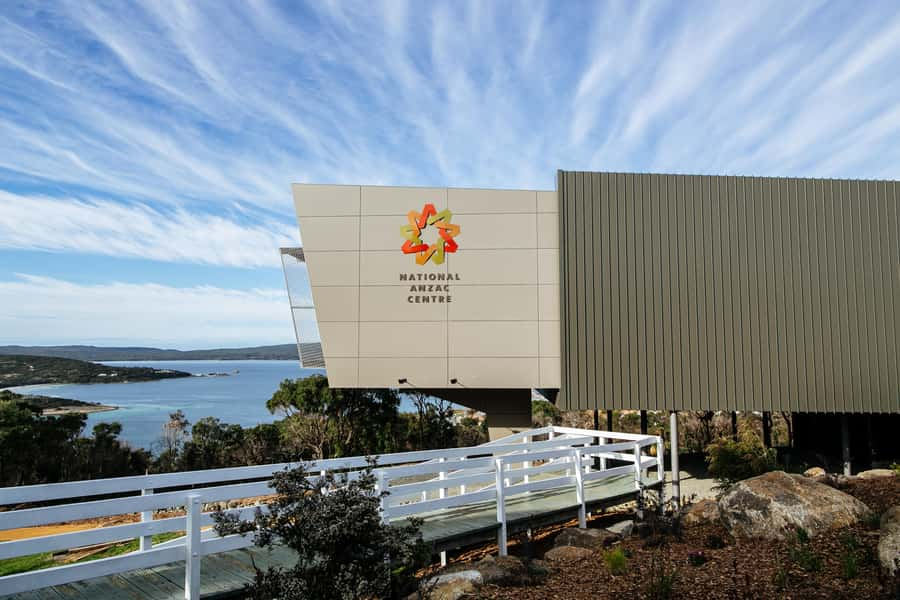
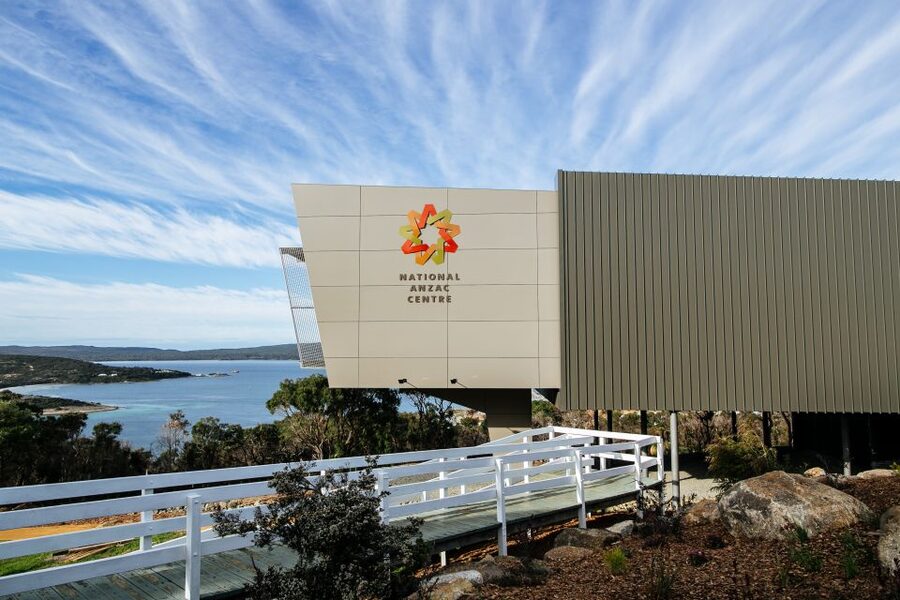
Albany is not an arbitrary setting for a First World War museum. On November 1, 1914, the first convoy of Australian and New Zealand troops sailed from King George Sound. For many of those men and women, Albany was the last Australian soil they saw.
That fact gives the National Anzac Centre a useful sense of place. You are not only studying a distant conflict inside a city museum. You are visiting the departure point for the first convoys, within the Princess Royal Fortress complex that helped protect the harbour.
The centre links this local departure point to the wider Anzac story. The focus moves from enlistment and training to the convoy, life at sea, Gallipoli, the Middle East, and the Western Front. It also looks at what happened after the war to those who returned.
I find that structure more helpful than a display arranged only by battles. It shows how military service changed a person’s life before, during, and after combat. It also gives you a clearer sense of the long journey involved, from the first decision to enlist to the difficult return home.
A few more things to do in Australia worth a look
- Sydney: Opera House Guided Tour with Entrance Ticket
★ 4.8 · 8,312 reviews - Sydney: Taronga Zoo Tickets
★ 4.6 · 1,551 reviews - From Brisbane: Australia Zoo Transfer and Entry Ticket
★ 4.9 · 1,539 reviews
Choosing one of 32 personal stories
The museum’s central idea is simple: you assume the identity of one of 32 real service members. From that point, the displays connect the broader events of World War I to an individual experience.
Your chosen character guides the visit. You follow their recruitment and training, then see what the war meant during convoy travel and at the front. Some parts of the story concern the Gallipoli campaign, while others move through the Middle East or the Western Front. The final stage reveals each character’s fate and explains what happened after the conflict for those who returned.
This approach gives you a reason to pay attention to small details. A photograph, piece of equipment, or recorded account is not just an isolated object. It connects to the person you have been following.
You can listen to the audio at your own speed. That matters here because the material is emotional and you may want to pause, replay a section, or spend longer with a particular image. One of the strongest features of the centre is this freedom to set your own pace instead of moving through a fixed group presentation.
The experience is still educational if you do not become fully absorbed in one character’s story. The major phases and events of the war remain clear, while the individual accounts prevent the subject from becoming a list of dates and military movements.
From recruitment to the convoys
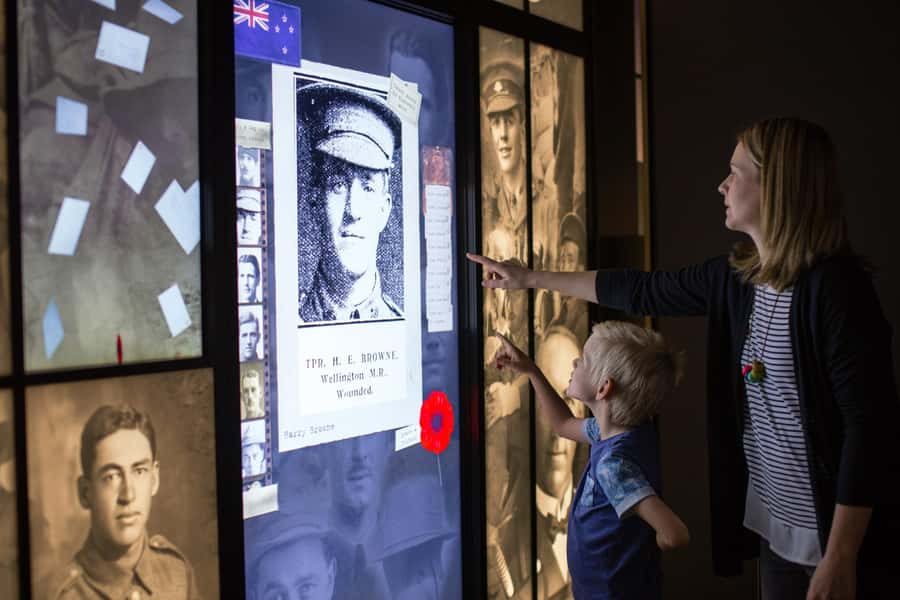
The first section follows the beginning of service. You learn about recruitment, training, and the preparations for departure. This stage is important because it places the soldiers and nurses in ordinary life before the war took over.
The convoy section then brings you back to Albany and King George Sound. The significance is not only that troops left from this harbour, but that many were making their final departure from Australia. The centre uses this fact to give the voyage a human scale.
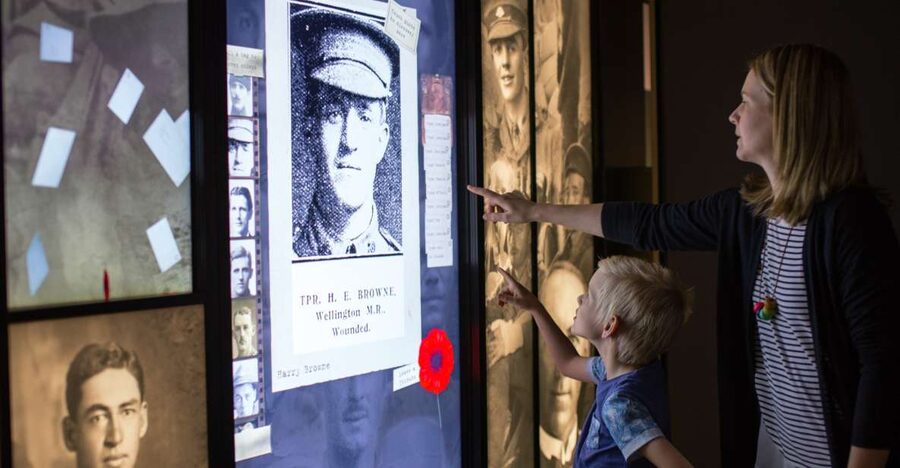
Multimedia displays, rare images, film, audio, and artifacts help build the sequence. You can expect information to arrive through several formats rather than through long blocks of text alone. If you prefer traditional museum labels, the technology may feel prominent, but it is used to connect the material to the chosen character.
I would not rush this part. The museum is compact enough to visit in a couple of hours, but the personal audio gives you a good reason to stop and listen. The $17 admission makes better sense when you treat it as a full museum visit rather than a short prelude to the fortress.
Gallipoli, the Middle East, and the Western Front
The wartime sections trace the experience across several theatres. Gallipoli is included, along with the Middle East and the Western Front, so you get more than a narrow account of one campaign.
The personal story format helps you understand that not every service member experienced the war in the same way. Your chosen character may take you through a different sequence from another character, and the closing section reveals the outcome of that individual story.
The centre does not present war as a clean adventure. Its themes are serious, and the material can be sad. That is part of the point, but families should think about the age and temperament of younger children before visiting. Children under five can enter free, yet the centre is not generally recommended for children aged seven or younger because of the strong war themes.
For older children, teenagers, and adults with an interest in history, the interactive format can make the subject easier to follow. You have a personal thread to hold onto while the wider story moves between campaigns and locations.
Same base, a different sort of day:
- All Inclusive Blue Mountain,Scenic World,Lunch,Koalas,ferry
★ 5.0 · 7,832 reviews - Great Ocean Road Small-Group Eco Tour from Melbourne
★ 5.0 · 6,607 reviews - From Melbourne: Great Ocean Road, 12 Apostles, Wildlife Tour
★ 4.7 · 6,020 reviews - Ocean Rafting: Whitehaven Beach, Snorkelling & Hill Inlet Lookout
★ 5.0 · 4,777 reviews
The Pool of Reflections and the Tribute Wall
Near the end, the centre reveals the names of 41,265 servicemen and women who left Albany in the first and second convoys. Their names scroll beneath a Pool of Reflections.
This is a quiet change of scale. Earlier displays ask you to follow one person. Here, the focus expands to the full number of people connected with those departures. The effect is simple but powerful: one life becomes part of a much larger group.
The visit finishes at an interactive Tribute Wall. You can leave your own message or thoughts for the Anzacs. It is a small feature, but it gives you a way to respond to the material rather than ending with the final display and heading straight outside.
I would allow a few extra minutes here. The tribute wall is not a reason to visit on its own, but it gives the museum a personal closing note. You do not have to write anything, of course. You can simply take in the display and move on when you are ready.
Adding Princess Royal Fortress to the visit
Your admission includes a history talk about the Princess Royal Fortress complex. You should also make time for the free guided tour of the forts if it is available during your visit.
The fortress adds physical context to the indoor displays. The National Anzac Centre explains the human stories and the wartime journey, while the surrounding site connects those stories to Albany’s military role and harbour.
You can visit the location of Australia’s first documented Anzac Day dawn service. This detail gives the fortress visit a direct link to the Anzac tradition as it is remembered today.
Do not treat the fortress as an optional extra if you have the time. It makes the $17 admission more worthwhile and gives you a change of pace after the emotionally heavy museum displays. Put on comfortable shoes, and bring an umbrella if the weather looks uncertain. You will be moving through an outdoor historic site as well as an indoor centre.
How long to allow and how to plan the day
The centre is open every day of the year, including public holidays, except Christmas Day. Hours are 9:00 AM to 5:00 PM, with last entry at 4:00 PM.
Allow at least two hours for the museum and fortress visit. You can exit and re-enter several times during the full calendar day printed on your ticket, which is useful if you want a break, need to spend time outside, or plan your visit around the history talk.
The meeting point is straightforward. Park in the main car park and walk to the National Anzac Centre entrance. Hotel transfers are not included, so you need to arrange your own way to the Princess Royal Fortress complex.
The activity is wheelchair accessible. The host or greeter speaks English, and the available experience is in English. If you need the most flexible visit, check the starting times before booking, then arrive early enough to use the day effectively.
Is the $17 ticket good value?
At $17 per person, this is reasonably priced for a museum visit that combines interactive exhibits, personal audio, a fortress history talk, and access to a historically important site.
The value comes from the amount of time you can spend there. If you listen to the stories carefully, examine the artifacts and images, visit the fortress, and pause at the closing displays, you are getting much more than a quick room-by-room museum walk.
The ticket is less attractive if you only have 30 minutes in Albany. The experience depends on following the character’s story and allowing the material time to work. You may technically see the displays quickly, but you will miss much of what makes the format different.
The full-day validity helps. You can leave and return on the same day, so the ticket works well if you are fitting the centre around other Albany plans. Free cancellation up to 24 hours before the visit and a reserve-now, pay-later option also make planning easier, but the main value remains the museum and fortress access.
Who should visit the National Anzac Centre?
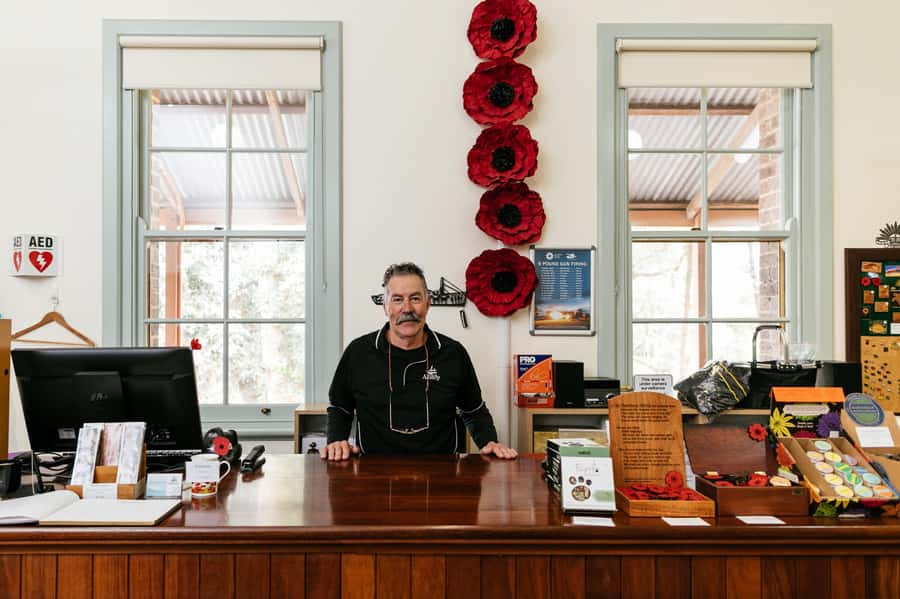
I would recommend this experience to adults, older children, students of military history, and anyone wanting to understand the Anzac story through individual lives rather than only national symbols.
It also suits visitors who prefer self-guided museums. You are not tied to one pace, and the audio lets you choose how much time to spend with each part. The centre is a good choice if you want serious historical content but do not want to read every label in a conventional museum.
Families with very young children should think carefully. Children under five enter free, but the subject matter is not generally considered suitable for children aged seven or younger. The displays concern war, loss, and the fate of real people, so this is not a light family attraction.
You should also choose another activity if you dislike interactive technology or want a short, purely outdoor visit. The fortress grounds add fresh air and physical context, but the main experience is an indoor museum built around audio and multimedia.
Practical verdict: should you book it?
Book the National Anzac Centre if you can give it two hours and want a thoughtful, personal account of Australia’s First World War experience. The strongest reasons are the 32 real characters, the self-paced audio, the convoy connection to Albany, and the moving final displays beneath the Pool of Reflections.
Add the fortress history talk and the first documented Anzac Day dawn service site to get the most from the $17 ticket. Bring comfortable shoes and an umbrella, and do not plan this as a rushed stop between other activities.
Skip it only if young children will struggle with serious war themes or if you have too little time to follow the stories properly. For most adults and older children visiting Albany, this is a worthwhile and carefully designed history experience.
FAQ
How much does admission to the National Anzac Centre cost?
Admission costs $17 per person. The ticket includes entry to the National Anzac Centre and a history talk about the Princess Royal Fortress complex.
How long should I allow for the visit?
You should allow at least two hours for the National Anzac Centre and the fortress experience.
What are the opening hours?
The centre is open daily from 9:00 AM to 5:00 PM, including public holidays except Christmas Day. The last entry is at 4:00 PM.
Can I leave and return on the same day?
Yes. Your ticket is valid for the full calendar day of issue, and you may exit and re-enter multiple times that day.
Is the experience suitable for young children?
Children under five are permitted free of charge, but the centre is not generally recommended for children aged seven or younger because of its strong war themes.
Is the National Anzac Centre wheelchair accessible?
Yes. The National Anzac Centre is wheelchair accessible. The experience is provided in English.
Just added in Australia
- 6-Day Tasmanian Explorer Adventure Tour from Hobart★ 5.0 · 66 reviews
- 3 day Tasmanian highlights tour – Hobart, Port Arthur and Bruny Island★ 5.0 · 41 reviews
- 7-Day Super Value Tour of Tasmania: Explore Tasmania’s West and East Coasts★ 5.0 · 77 reviews
- 4 Day Wild Tasmania Tour / Wildlife, Nature, Hiking / Inc. Accom★ 5.0 · 126 reviews
- A Day At Wineglass Bay★ 5.0 · 33 reviews
- Enjoy a VIP Booth Shared Experience From Gympie★ 4.5 · 22 reviews
- Bruny Island Wilderness Cruise from Adventure Bay, Bruny Island★ 5.0 · 293 reviews
- 5-Day Best of Tasmania Tour from Hobart★ 5.0 · 184 reviews