
Reviewed · SURF LESSONS
Coolangatta: 2 Hour Surf Experience on the Gold Coast
Coolangatta gives beginners a friendly first taste of surfing: warm water, rolling waves, and a beach setting that feels made for learning. You start on the sand, then work in waist-deep water before trying to stand and ride.
I like the clear step-by-step teaching, from safety and board control to the pop-up. I also like the soft-top boards and included rash shirt or wetsuit, which save you from sorting out basic gear. The main consideration is that surfing is harder than it looks, and one recent booking finished about 20 minutes early.
- Coolangatta and Greenmount provide beginner-friendly waves for a first lesson.
- Two hours of instruction gives you time to practise more than once.
- Alex, Arthur, Daniel, Blake, Nick, and Johnny are among the instructors praised for friendly, useful coaching.
- Soft-top boards, a rash shirt or wetsuit, and sunscreen are included.
- Children under nine need a parent in the water, and the activity is not recommended for children under eight.
- The $59 price is good value if you want a proper introduction rather than a brief beach demonstration.
A First Surf Lesson at Coolangatta Beach
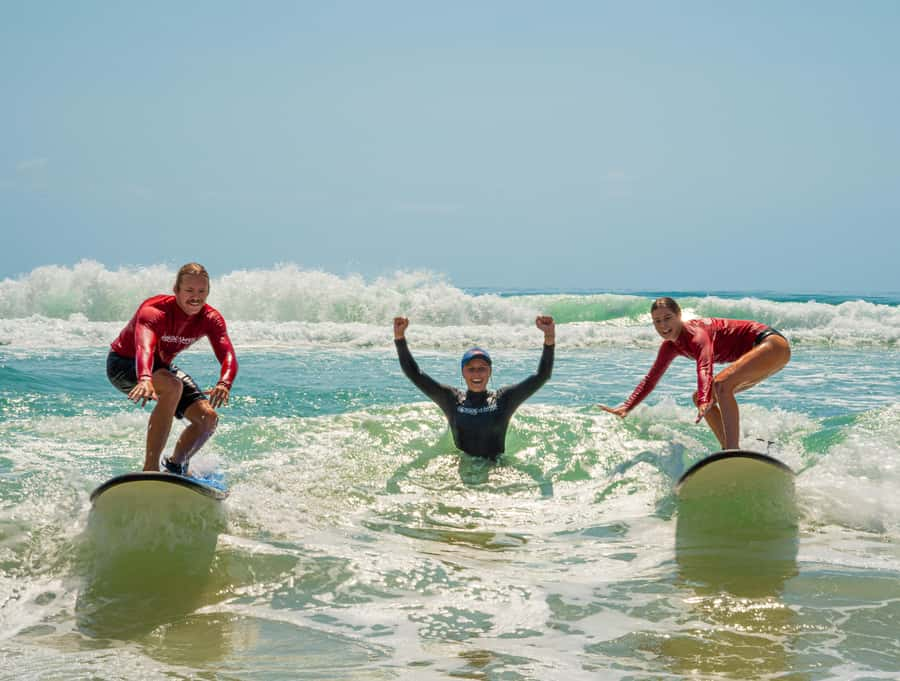
Surfing looks simple from shore. You lie on a board, wait for a wave, stand up, and glide. The first attempt usually gives you a more honest education. Timing, balance, board position, and nerves all arrive at once.
That is why a guided lesson makes sense here. Go Ride A Wave keeps the first session focused on basic skills rather than trying to turn you into a seasoned surfer in one morning. You learn how to handle the board, how to stay safe, and how to recognise the moment when a small wave can carry you.
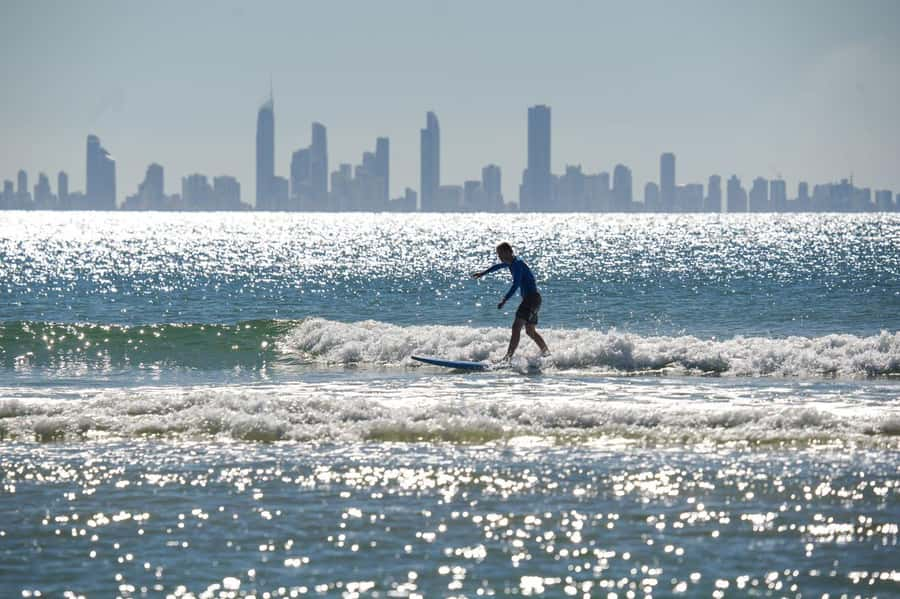
The setting helps. Coolangatta and nearby Greenmount are described as suitable for beginners, with gentle rolling waves and warm, inviting water. Conditions still vary, so nobody can promise a perfect ride every time, but this is a sensible stretch of the Gold Coast for learning the basics.
I would treat the experience as an introduction, not a complete surfing course. Your goal is to understand the fundamentals and, with some luck and practice, stand on the board. For many people, that first short ride is enough to decide if they want to book more lessons.
Finding the Learn To Surf Truck
You meet at the Learn To Surf Truck in the car park overlooking Coolangatta Beach. Look opposite the Coolangatta Rip Curl Surf Shop and Coolangatta McDonald’s, at the eastern end of Marine Parade, or the right-hand side when facing the ocean.
Arrive 15 minutes before the start time. That extra time matters because you will need to get organised before the group heads onto the sand. The meeting point is central and easy to identify by the truck, but do not cut it close if you are unfamiliar with Coolangatta.
The activity is offered in English. You should bring water, and you need to supply your own bathers and towel. Food and drinks are not included, so plan those separately around the lesson.
You do not need to bring a board, sunscreen, or specialist surf clothing. A soft-top board, sunscreen, and either a long-sleeved rash shirt or wetsuit are provided. That makes the $59 price easier to justify, especially if you are travelling without beach gear.
Other breaks to learn on near Australia:
- Surfers Paradise: 2 Hour Surf Experience on the Gold Coast
★ 4.9 · 1,132 reviews - Bondi Beach: 2-Hour Surf Lesson Experience for Any Level
★ 4.9 · 935 reviews - Byron Bay: 2-Hour Small Group Surf Lesson
★ 4.8 · 657 reviews
Sand Training Before the Water
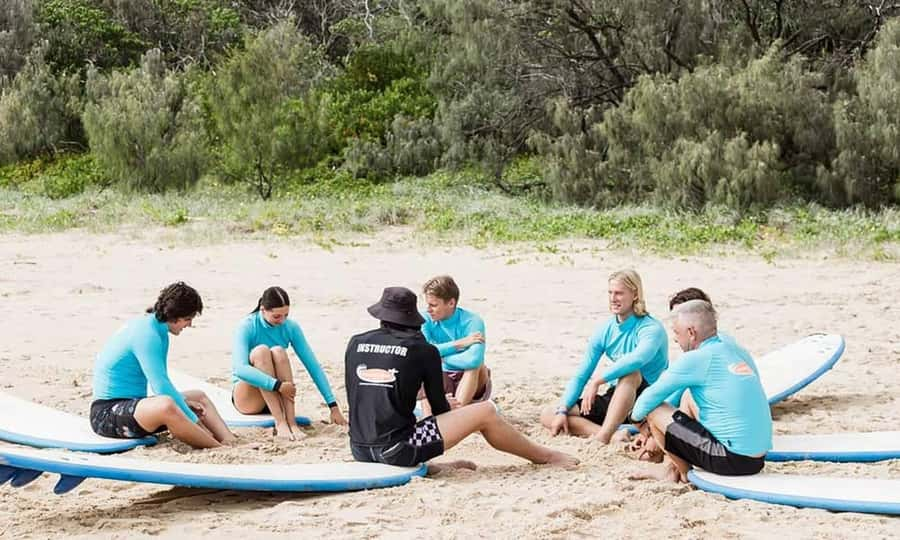
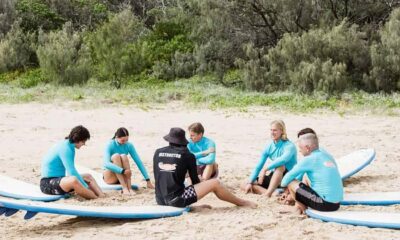
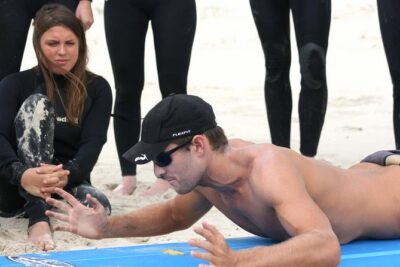
The lesson begins on the sand with a safety briefing. This is not filler. Before you carry a board into the surf, you need to know how to position yourself, how to control the board, and how to respond when a wave catches you.
The instructor explains the basic body position needed for wave catching. You learn where to lie on the board and how small changes in position affect balance and control. The lesson also covers the movements needed to get from lying down to standing.
This dry-land practice is valuable because the water is a poor classroom for complicated instructions. You can watch the movement, try it slowly, and ask questions before dealing with moving water. Instructors such as Alex, Arthur, Johnny, and Nick have been praised for making the early explanations easy to follow and keeping the mood relaxed.
Do not expect a long technical lecture. The point is to give you enough information to act safely and make a first attempt. Surfing is physical, so the instructor needs to get you practising rather than leave you standing on the beach for most of the session.
Waist-Deep Water and Your First Waves
After the beach briefing, you take the soft-top board into waist-deep water. This is where the lesson starts to feel like surfing rather than a land exercise.
Working in shallower water gives you a controlled place to practise balance and board handling. You can get used to the board beneath you, feel how the water moves it, and try to catch small waves without immediately dealing with deeper water.
The instructor guides you through the first attempts. At this point, success may simply mean lying in the right place and allowing a wave to push the board forward. That may sound modest, but it teaches you one of the key lessons of surfing: the wave provides the power, while your job is to be in the right position and stay balanced.
The soft-top board is well suited to beginners. It is designed for stability and is less intimidating than a narrow hard board. You still need to handle it carefully and follow the safety directions, but the equipment gives you a reasonable platform for learning.
The water work is also where you discover that the session is active. You will be repeatedly getting on the board, paddling or repositioning, trying to catch waves, and getting back into place. Bring water and be ready for a workout, even if the pace feels relaxed.
Learning the Pop-Up on the Beach
After you have tried a few waves, the group returns to the sand for more instruction. This time, the focus is on standing up and riding with control.
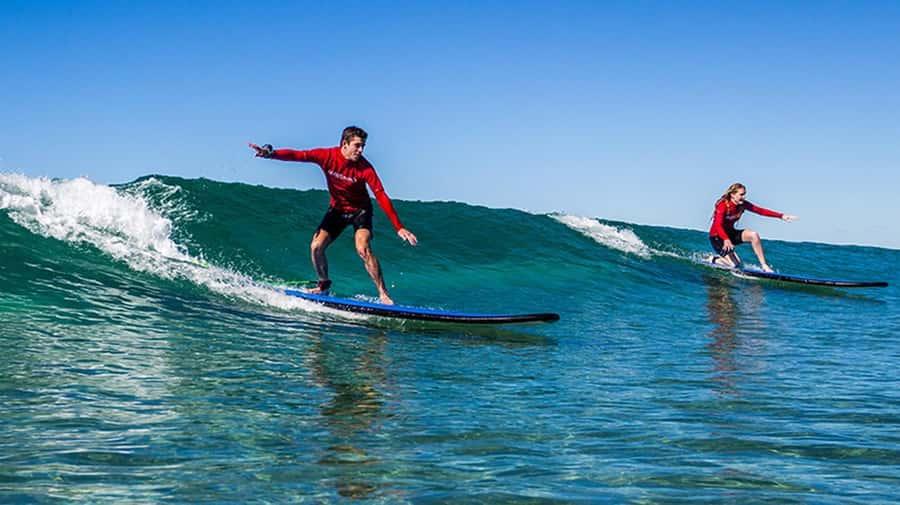
The pop-up is the move that turns a board ride into surfing. You begin lying down, push your upper body up, bring your feet underneath you, and rise into a balanced stance. The exact motion takes practice, and the instructor can correct your position before you try it again in the water.
This two-part structure is one of the strongest features of the lesson. You get an early chance to understand how waves feel, then receive more guidance before working on the most exciting part. It is easier to make a useful correction on land than while a wave is already carrying you.
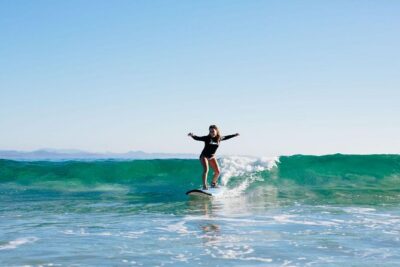
Your first successful stand may last only a few seconds. That still counts. Several beginners have managed to stand during their first lesson, including a 10-year-old who was riding by the end of the session. Results depend on conditions, fitness, balance, and how quickly you pick up the movement, so keep your expectations sensible.
I would not worry about looking awkward. Everyone starts with a few wobbly attempts. The instructor’s job is to help you improve your position and timing, not to expect polished technique on day one.
A few more things to do in Australia worth a look
- Melbourne: 2-Hour City Highlights River Cruise
★ 4.1 · 1,804 reviews - Sydney: 2-hour Express Whale Watching Cruise
★ 4.2 · 756 reviews - Noosa Heads: 2 Hour Surf Experience on the Sunshine Coast
★ 4.9 · 644 reviews - Airlie Beach: 2-Hour Sunset Cruise with Sparkling Wine
★ 4.5 · 539 reviews
Back Into the Surf for the Real Test
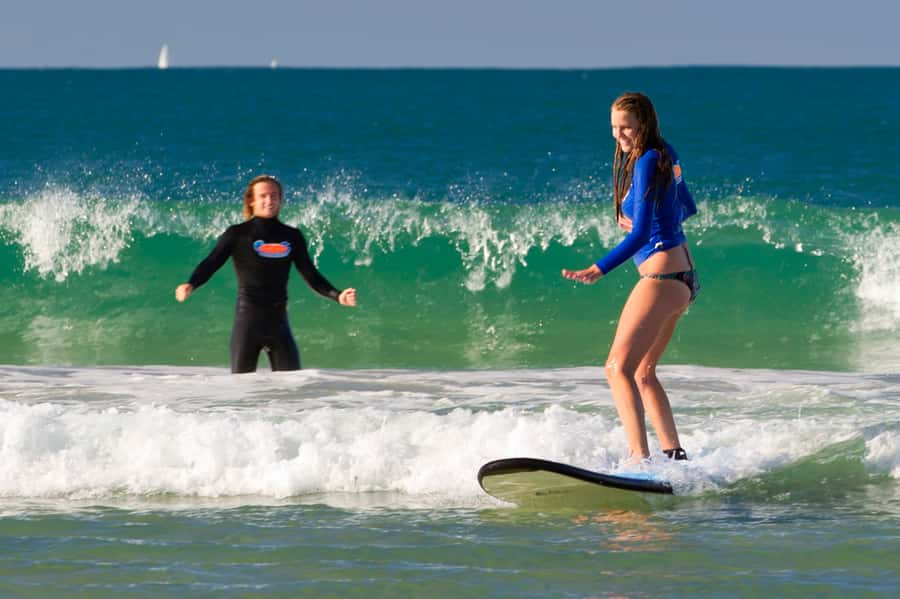
The final water session is where the instructions come together. You return to the waves, try to find the right position, and work on catching a wave while moving from the board to your feet.
This is the part most people remember. You may catch a wave cleanly, stand for a short ride, or spend much of the time refining the basic movement. The lesson is successful if you leave with a better feel for the board and a clear idea of what to practise next.
The instructors stay involved throughout the session. Alex helped one first-timer catch a first wave, while Arthur has been praised for making beginners feel at ease. Daniel was credited with making a day at Coolangatta memorable, and Blake was singled out for strong teaching. Those individual names are useful because they show that the experience depends partly on the instructor assigned to your group, but the consistent pattern is friendly, practical coaching.
The lesson aims to let you try things for yourself. You are not simply pulled into waves and placed on a board. You receive help, then make your own attempts. That balance matters if you want skills you can carry into a later lesson.
What Two Hours Really Gives You
The advertised experience is a two-hour surf lesson, while available start times may be shown within a broader two-to-six-hour duration range. For your planning, the actual instruction supplied here is two hours.
Two hours is enough time for the full beginner sequence: safety briefing, sand practice, first water attempts, another explanation of the pop-up, and a second water session. It is long enough to give you several chances, rather than basing the whole experience on one wave.
It is not long enough to master surfing. You may leave able to stand briefly but still need help with wave selection, direction, and board control. That is normal. Surfing rewards repetition, and the first session is mainly about learning the movements and gaining confidence.
One recent booking reported that the session ended 20 minutes early. I would keep that possibility in mind when planning a tight schedule. Most importantly, ask at the meeting point if you need clarification about the session length on the day.
If you enjoy the first lesson, Go Ride A Wave also offers a 1.5-hour private lesson and a progressive course with three two-hour lessons. The private option should suit someone who wants more direct attention, while the three-lesson course makes more sense if you want steady progress rather than a one-off holiday activity.
The $59 Question
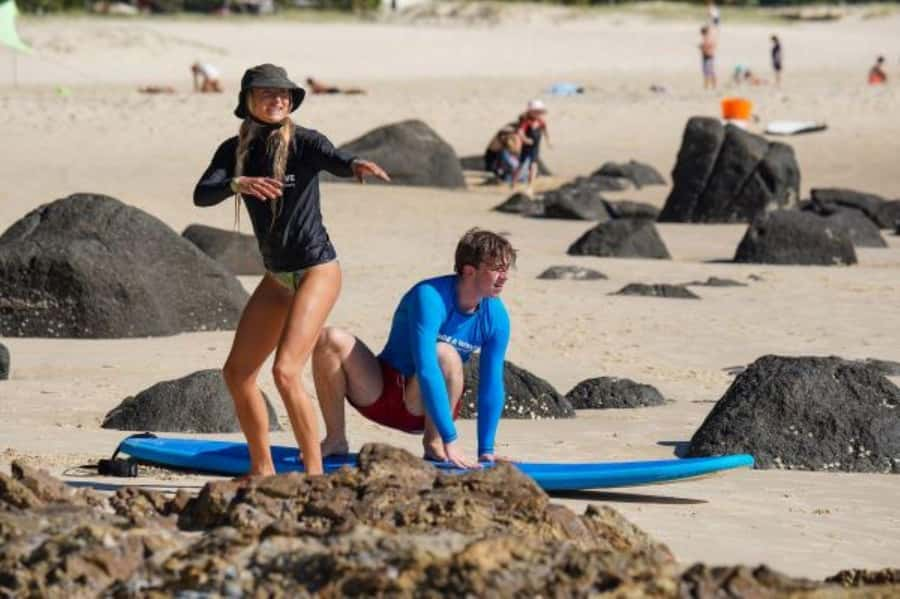
At $59 per person, this is fairly priced for a two-hour beginner lesson with equipment and basic surf clothing included. You are paying for instruction, access to a soft-top board, a rash shirt or wetsuit, and sunscreen.
The value is strongest if you do not own beach equipment. Hiring a board separately and trying to teach yourself would not give you the same safety briefing or correction from an instructor. The lesson also saves you from guessing where to stand, how to lie on the board, and when to try a wave.
The price is less attractive if you only want to splash around and take a few beach photos. Surfing takes effort, and there is no guarantee you will stand. You are paying for a serious introduction, not a guaranteed performance.
A small group improves the value. One booking specifically praised having a small group, since it allowed more attention while still keeping the class social. Group size can vary, so I would not assume every session will feel identical, but smaller groups are worth seeking if you have a choice of times.
The free cancellation policy allows you to cancel up to 24 hours ahead for a full refund, and you can reserve now and pay later. Those terms are useful when weather or holiday plans are still unsettled.
Who Should Book This Lesson
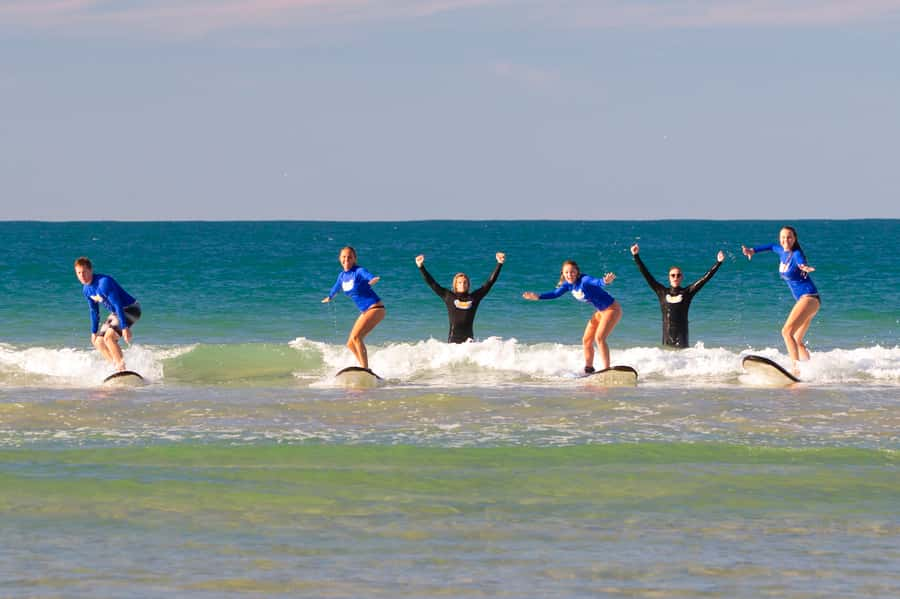
This experience is best for first-time surfers, couples, families with eligible children, and anyone who wants to test surfing before committing to a longer course.
It suits adults and children who can follow instructions, handle a physical beach activity, and accept a few falls. Children under eight are not recommended. Children under nine must be accompanied by a parent who is not taking the lesson, and that parent can enter the water to assist.
The lesson may also suit a beginner who has tried standing on a board before but still needs help with timing and position. The instructors cover the basics rather than assuming previous ability.
I would not choose it if you need a wheelchair-accessible activity. It is listed as unsuitable for wheelchair users. I would also skip it if you dislike getting wet, have a very tight schedule, or expect to surf independently after one session.
Alcohol and drugs are not allowed. That is standard for a water activity, but it is worth keeping in mind when planning a day at the beach.
What to Bring and What to Expect
Bring water, bathers, and a towel. Sunscreen is included, as are the board and a long-sleeved rash shirt or wetsuit.
Wear something you can move in beneath the supplied surf clothing. You will be entering the water, returning to the beach, and repeating the process, so simple beach clothing is more practical than anything difficult to change.
Arriving early gives you time to find the truck, meet the instructor, and prepare without rushing. Listen closely to the safety briefing, especially the board-control instructions. A beginner board may be stable, but it is still a solid piece of equipment in moving water.
You should also prepare for mixed results. One person may stand quickly, while another spends the session learning to stay balanced on the board. Both are valid first steps.
My Verdict on Go Ride A Wave at Coolangatta
I would book this lesson if you want a well-organised first look at surfing, especially if you are staying near Coolangatta and want to use the beach rather than only admire it. The gentle beginner waves, included equipment, and two-stage teaching plan make the experience approachable.
The strongest points are the patient instruction, the chance to try several times, and the practical route from sand practice to waist-deep water. Guides including Alex, Arthur, Daniel, Blake, Nick, and Johnny have been praised for clear explanations and friendly help.
Keep your expectations realistic. You may stand up and catch a short wave, but you may also spend much of the session falling, resetting, and trying again. That is not a failure. It is the basic rhythm of learning to surf.
Book it if the idea of a first ride excites you more than the possibility of a few tumbles worries you. If you want deeper progress, use this as a starting point and follow it with the private lesson or three-session course.
FAQ
How long is the surf lesson?
The instruction lasts two hours. Available start times may appear within a broader two-to-six-hour activity window, so check the selected time when booking.
Where is the meeting point?
Meet at the Learn To Surf Truck in the car park overlooking Coolangatta Beach. It is opposite Coolangatta Rip Curl Surf Shop and Coolangatta McDonald’s on Marine Parade, at the eastern end or right-hand side when facing the ocean.
How early should I arrive?
Arrive 15 minutes before the scheduled start time.
What equipment is included?
A soft-top surfboard, a long-sleeved rash shirt or wetsuit, sunscreen, and two hours of instruction are included.
What should I bring?
Bring water, bathers, and a towel. Food and drinks are not included.
Is the lesson suitable for children?
The activity is not recommended for children under eight. Children under nine must have a parent who is not participating in the lesson accompany them and enter the water to assist.
Is the activity wheelchair accessible?
No. The activity is not suitable for wheelchair users.
Can I cancel or pay later?
You can cancel up to 24 hours before the activity for a full refund. You can also reserve your place and pay later.
Just added in Australia
- 6-Day Tasmanian Explorer Adventure Tour from Hobart★ 5.0 · 66 reviews
- 3 day Tasmanian highlights tour – Hobart, Port Arthur and Bruny Island★ 5.0 · 41 reviews
- 7-Day Super Value Tour of Tasmania: Explore Tasmania’s West and East Coasts★ 5.0 · 77 reviews
- 4 Day Wild Tasmania Tour / Wildlife, Nature, Hiking / Inc. Accom★ 5.0 · 126 reviews
- A Day At Wineglass Bay★ 5.0 · 33 reviews
- Bruny Island Wilderness Cruise from Adventure Bay, Bruny Island★ 5.0 · 293 reviews
- 5-Day Best of Tasmania Tour from Hobart★ 5.0 · 184 reviews
- Enjoy a VIP Booth Shared Experience From Gympie★ 4.5 · 22 reviews
Surf Lessons, compared.
Noosa Heads: 2 Hour Surf Experience on the Sunshine Coast
Read our review →
Learn to Surf at Surfers Paradise on the Gold Coast
Read our review →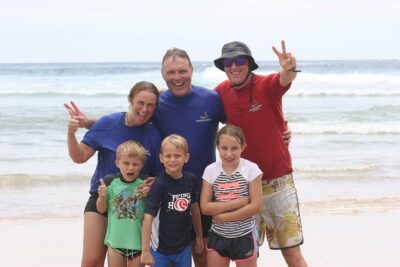
Browse the lists this tour appears in