
Reviewed · WHALE WATCHING
Hervey Bay: Ultimate Whale Watching Experience
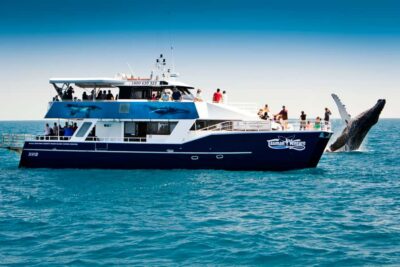
Hervey Bay’s humpback whales are the main event, but the marine scientist guides give this three-hour trip more purpose than a simple boat ride. You cruise into protected Platypus Bay aboard the 12m Ocean Defender, listening to live whale songs and learning how research helps protect these animals.
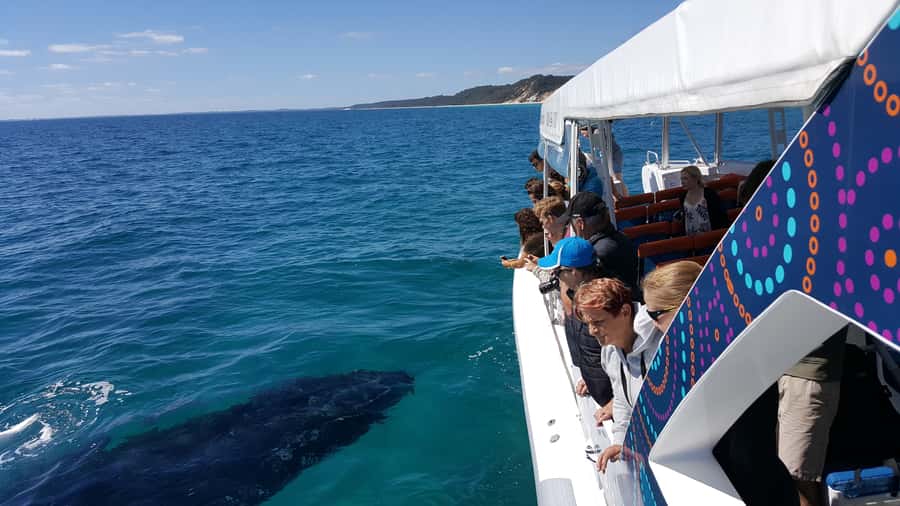
I like the small boat, which gives you broad water-level views instead of making you peer over rows of heads. I also like that your ticket supports whale research and ocean conservation. The catch is simple: the sea can feel cold and choppy, especially on the fast ride out, so bring more warm clothing than you think you need.
Key points
- Live whale songs through underwater hydrophones, not just a view of a distant blow.
- A 12m rigid inflatable boat with forward-facing seats, shade, and clear views around the vessel.
- Marine scientist guides explain whale behaviour and current research.
- Platypus Bay and K’gari views add a scenic setting to the wildlife trip.
- Whale sightings are guaranteed from July 15 to October 9, the strongest part of the season.
- Children receive a Junior Naturalist activity book, though the trip is not suitable for children under six.
Setting out from Great Sandy Straits Marina
You meet at Shop 1 in the Tourist Terminal at Great Sandy Straits Marina in Urangan, Hervey Bay. Look for the Pacific Whale Foundation Ocean Store. The tour returns to the same marina after roughly three hours, so the outing is easy to fit into a day based around Hervey Bay.
The first minutes are about getting settled. Seats are pre-assigned, and you need to remain in your allocated section while the boat is moving quickly. That may feel a little formal if you prefer to wander around, but it helps keep the 12-person-style vessel orderly and gives each section a clear view.
The Ocean Defender is a rigid inflatable boat built for small-group whale watching. Its low profile puts you close to the water, and forward-facing seats make the ride easier to follow than a large boat where the best views can depend on finding an open rail.
You get shade, a toilet, and room to look in several directions. Still, this is an open-water trip, not a sheltered harbour cruise. Take a jacket, warm clothing, sunglasses, and a sun hat. Several passengers found the wind much colder than expected, even on sunny days.
More Whale Watching in Hervey Bay
- Hervey Bay 4-Hour Whale Watch Encounter
★ 4.9 · 562 reviews - Hervey Bay Whale Watching Experience
★ 5.0 · 557 reviews - Hervey Bay Whale Watching Cruise
★ 5.0 · 553 reviews
The ride toward Platypus Bay and K’gari
The boat ride is part of the outing, not just transport to the whales. As you leave Hervey Bay, you get wide views toward K’gari, formerly known as Fraser Island, while heading into Platypus Bay.
Platypus Bay is a protected resting area for humpback whales during their migration. It is also part of the Great Sandy Biosphere and Great Sandy Marine Park, and it has been recognised as the world’s first Whale Heritage Site. Those designations matter because the bay is used by migrating whales as a calmer place to rest, socialise, and care for calves.
The setting helps explain why this part of Queensland is so well suited to whale watching. Humpbacks pass along the east Australian coast during migration, and Hervey Bay gives you a chance to see them in a place where they often slow down rather than simply pass by.
The fast ride can be bumpy. Weather and tide conditions sometimes lead to a cancellation or a change of day, and one trip was rescheduled because of poor conditions. That is not a flaw in the tour. It is a sensible response to the sea. If your outing goes ahead in windy weather, expect spray and movement, and consider taking travel sickness tablets if you normally need them.
Meeting humpbacks at water level
Once the boat reaches the whale area, the pace changes. The captain watches for blows, fins, splashes, and other signs of activity, while the guide explains what you are seeing.
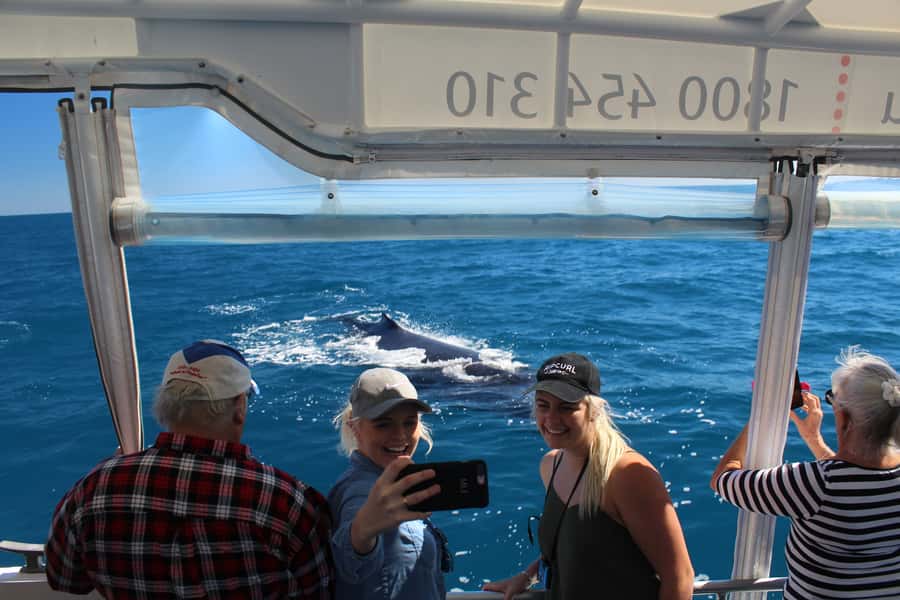
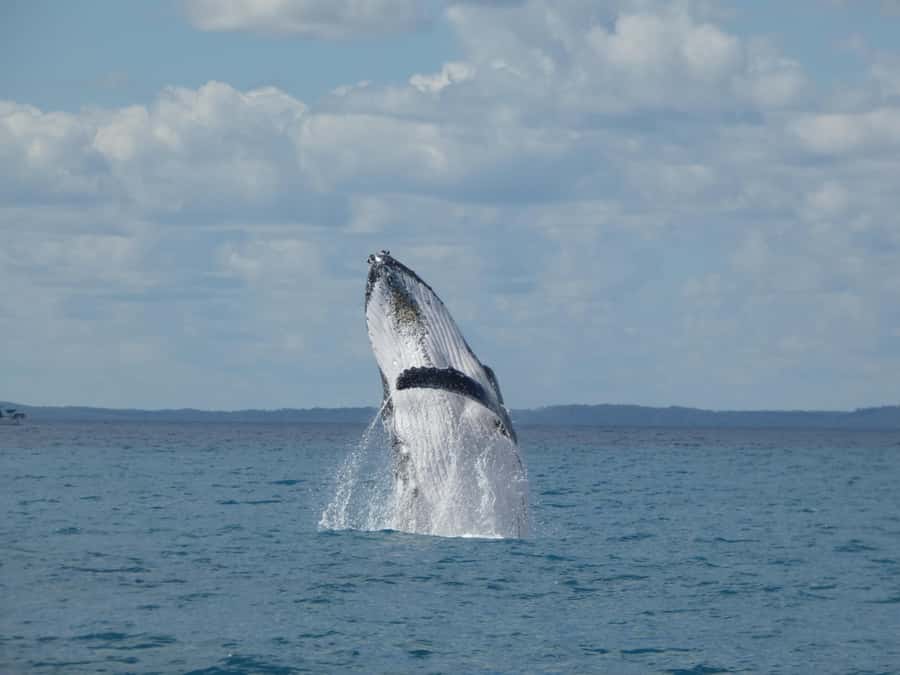
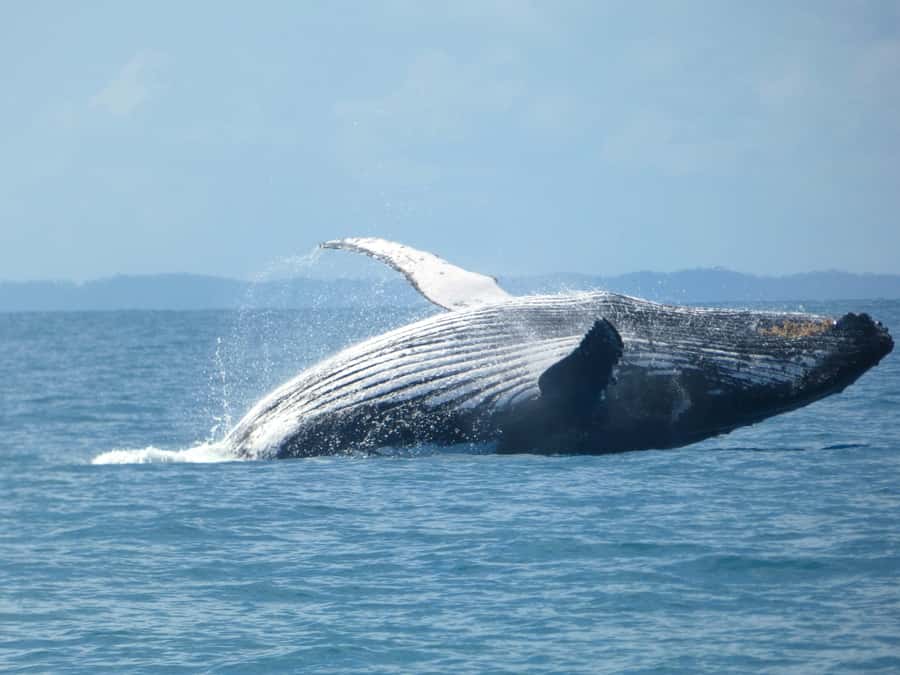
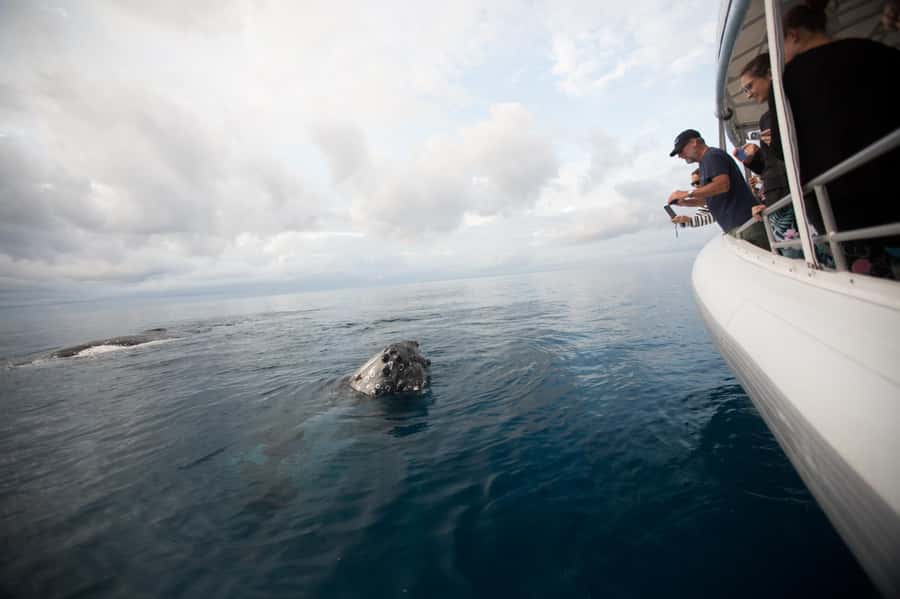
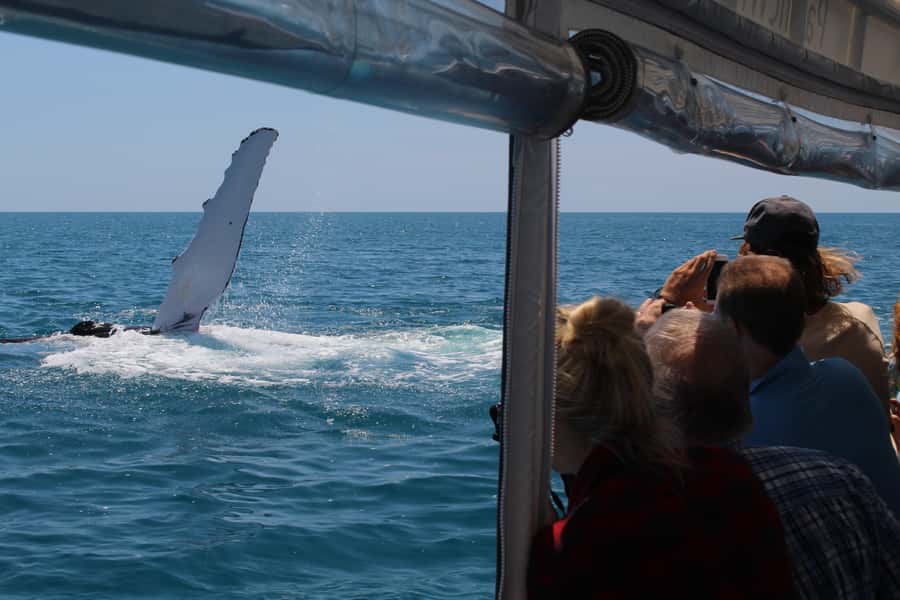
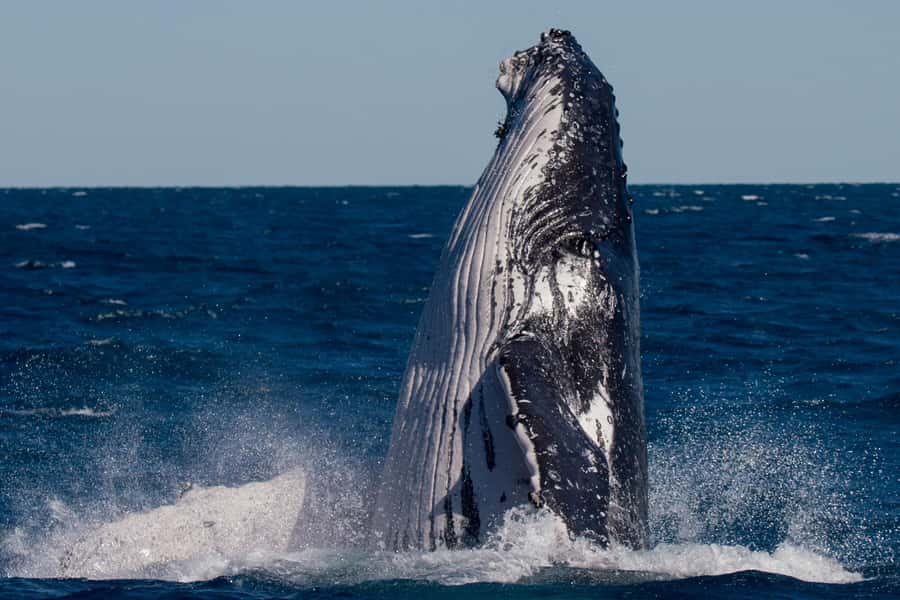
You may see single whales, pods, mothers with calves, or whales resting close to the boat. Recent outings included sightings within the first 15 minutes of leaving the harbour, several pods, breaching, fin slapping, and calves playing near their mothers. Some whales have circled the boat, passed underneath it, or remained nearby for a long period.
That closeness is one of the strongest reasons to choose this trip. The Ocean Defender sits low on the water, giving you a whale’s eye view rather than a distant look from a tall deck. When a humpback surfaces beside the boat, the scale of the animal becomes clear. A mother and calf moving together can be especially striking.
Still, whale behaviour is never guaranteed in the same way a museum exhibit is. One trip might bring several active pods, while another may produce fewer sightings. The captain can position the boat and respond to reports from passengers, but nobody can order a breach or guarantee that a whale will approach.
The formal sighting guarantee applies from July 15 through October 9. That is useful when choosing your dates, especially if seeing whales is the main reason for visiting Hervey Bay. Trips outside that window may still produce excellent sightings. Outings after October 9 included mothers, calves, and close encounters, but the guarantee does not apply then.
What the marine scientist guides add
The guides do more than point toward a blow. They explain whale behaviour, migration, age, sex, and the ways scientists identify individual animals and interpret their actions.
Guides on different departures have included Leanne, Isabelle, John, and Ellie. The exact team depends on your sailing, but the guiding style is consistent with the purpose of the tour: explain what is happening and connect your sighting to whale protection.
I particularly like the way this changes the outing from a hunt for dramatic photographs into a lesson in reading animal behaviour. A whale circling the boat may not simply be showing off. It may be resting, socialising, or responding to the presence of other whales. A calf’s playful movement has more meaning when your guide explains the family group around it.
The commentary also covers ongoing research and conservation work. Your fare helps support marine research, education, and ocean conservation in Australia. If you prefer wildlife experiences that put some money and attention toward protecting the animals you came to see, this is a meaningful advantage.
The guides are generally described as friendly, passionate, and well prepared. One passenger found a guide slightly blunt on a personal level, and the captain was not always able to position the boat perfectly for every sighting. Those are minor points, but they are worth keeping in mind. A small boat improves access and visibility, yet every seat cannot face the whale at the exact best angle every time.
More whale boats leaving Australia:
- Sydney: Whale Watching Adventure Cruise
★ 4.2 · 1,790 reviews - Brisbane Whale Watching Cruise from Redcliffe or Sunshine Coast
★ 5.0 · 997 reviews - Swim with Whale Sharks in the Ningaloo Reef: 3 Island Shark Dive
★ 5.0 · 919 reviews - Whale Watching Tour with Spirit of Gold Coast
★ 4.5 · 884 reviews
Hearing whale songs through the hydrophones
The underwater hydrophones are one of the most distinctive parts of the tour. Instead of only watching for a surface movement, you can listen to live whale songs below the boat.
This works best as a quiet contrast to the excitement outside. Humpbacks may be visible one moment and hidden the next, while the hydrophones remind you that the animals remain active beneath the surface. You do not need a special background in marine science to appreciate the effect. Hearing the sounds makes the bay feel occupied even when the water looks empty.
The hydrophones also support the educational side of the tour. You are not simply waiting for a spectacular breach. You are learning that whale watching involves sight, sound, timing, and patience.
Snacks, seating, and the practical comforts
Complimentary snacks and soft drinks are included. Morning tea has been described as a welcome surprise, with cookies and drinks available during the trip. Food and drink service has been adjusted to reduce unnecessary contact, so do not expect a full meal or elaborate catering.
The forward-facing seats are pre-assigned, with plenty of room and shade. That arrangement helps prevent a scramble when a whale appears. It also means you should not plan on moving freely around the boat while it is underway.
There is a toilet on board, an important detail during a three-hour trip. The small-group format also means you are not competing with a large crowd for every sightline. The tradeoff is that a rigid inflatable boat feels more exposed than a high-sided vessel. Bring a waterproof layer if the forecast looks unsettled, and keep your phone or camera protected from spray.
Photography is easy when a whale surfaces nearby, but do not let the camera take over. Water-level encounters can happen quickly, and the best view may be gone while you are trying to frame it. The boat offers strong photo opportunities from several angles, but the whales set the schedule.
A good choice for families and first-time whale watchers
Children under six cannot join this activity. Older children receive a Junior Naturalist Whale Watching Guide activity booklet, which gives them something to do between sightings and encourages them to watch for behaviour rather than only waiting for a jump.
The trip suits children who can handle a fast boat, cold air, assigned seating, and periods of waiting. It may be less suitable for a young child who needs to move around often or dislikes boat motion.
For adults, couples, and small groups, the tour works well if you want a focused wildlife outing rather than a general sightseeing cruise. The combination of expert commentary, live hydrophones, K’gari views, and a low boat gives the trip a clear identity.
People with mobility impairments or wheelchair users should note that the experience is not suitable for them. The boat is also not suitable for anyone who is intoxicated, and alcohol and drugs are not allowed.
Is the $84 price good value?
At $84 per person for three hours, this is not the cheapest way to spend a morning in Hervey Bay. It is also not priced like a basic harbour cruise. You are paying for a small-group boat, marine scientist guides, a specialised whale-watching vessel, hydrophones, snacks, onboard facilities, and support for conservation work.
The value improves if you care about the interpretation as much as the sighting. A large boat can get you onto the bay, but this trip gives you water-level views and a more direct connection to the research behind whale protection.
The sighting guarantee from July 15 to October 9 also adds useful reassurance during the core season. It does not promise breaching or a whale beside your seat, and it cannot remove the unpredictability of nature. It does mean the provider recognises how important the wildlife encounter is to your booking.
I would consider the price fair for a three-hour specialist tour, particularly during the guaranteed period. If your budget is tight and you only want to see a whale from a distance, you may prefer a cheaper option. If you want a small boat, strong interpretation, and conservation support, the fare makes sense.
Picking your date and preparing for the water
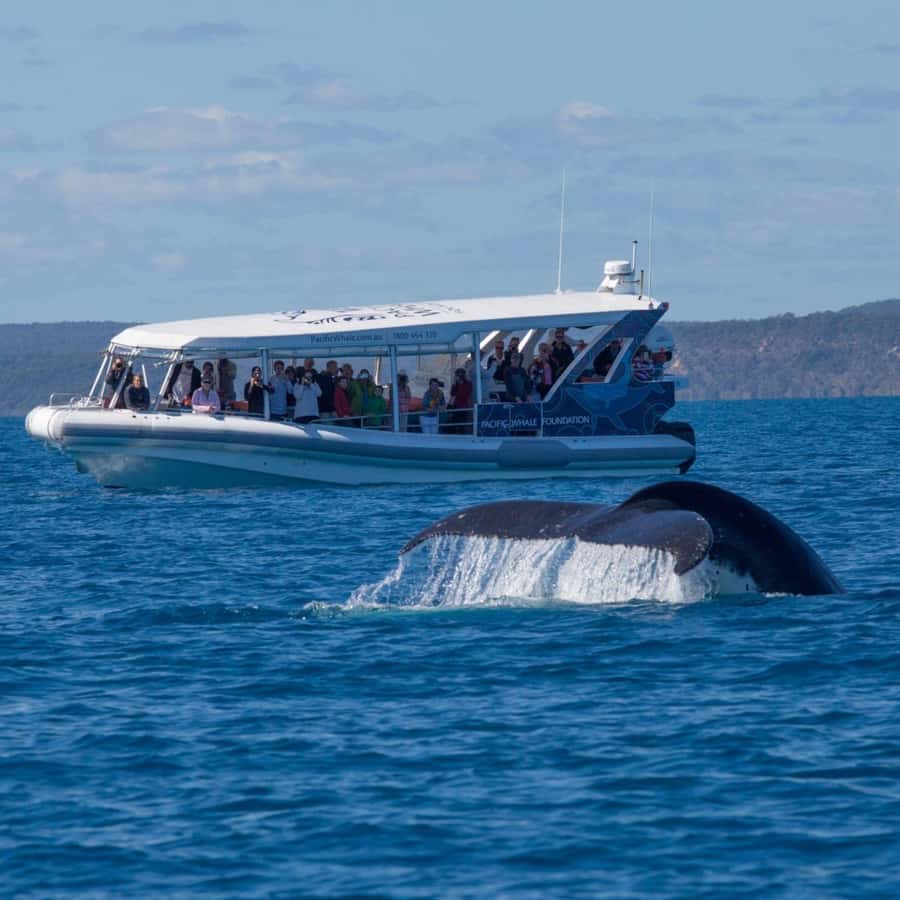
The best planning choice is to book between July 15 and October 9 if a guaranteed sighting matters to you. The season can still produce good sightings outside those dates, but the guarantee no longer applies.
Leave room in your itinerary for weather changes. Poor conditions can lead to a cancellation or a rescheduled departure, and that flexibility is better than forcing a small boat into unsafe water. If your trip is cancelled, free cancellation is available up to two days in advance for a full refund, according to the booking conditions.
Pack warm layers, a jacket, sunglasses, and a sun hat. The boat’s speed creates wind chill, and the water can feel much colder than the marina. If you are prone to motion sickness, take appropriate precautions before boarding.
Arrive at the Great Sandy Straits Marina Tourist Terminal and find the Pacific Whale Foundation Ocean Store front. Keep drones at home, and do not bring alcohol or drugs.
Should you book the Ocean Defender whale watch?
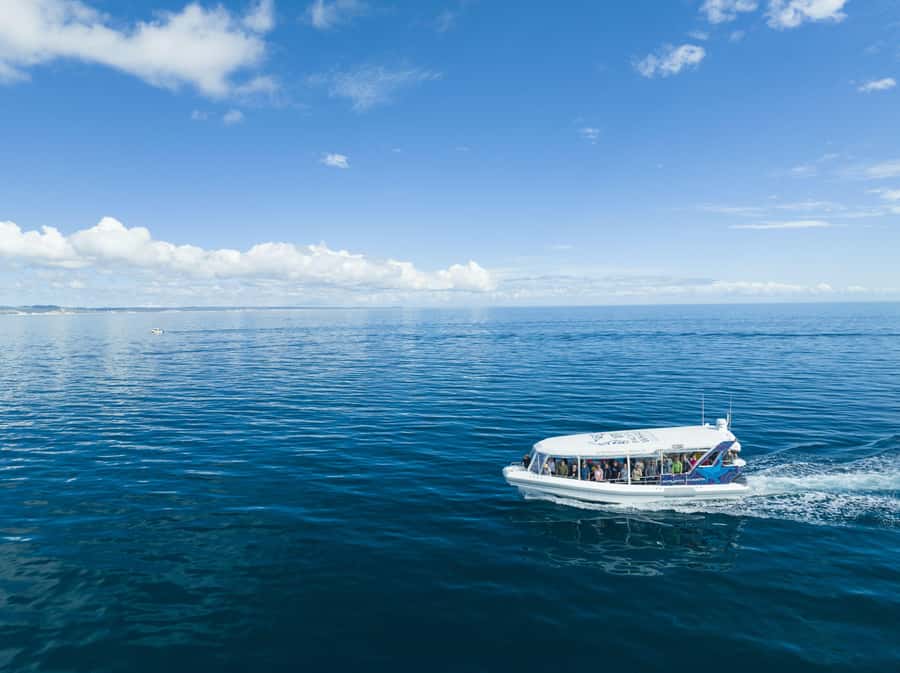
I would book this tour if you want close water-level views, clear marine science, and a smaller boat rather than a large sightseeing vessel. The hydrophones are a real bonus, and the conservation purpose gives the trip more weight than a simple wildlife chase.
Book during the July 15 to October 9 guarantee period if whale sightings are essential to your plans. You should also be comfortable with cold wind, boat movement, assigned seating, and the fact that nature controls the quality of the encounter.
For a first whale-watching trip in Hervey Bay, this is a strong choice. Bring warm clothing, keep your camera ready, and give yourself enough time to appreciate the quiet moments between the breaches.
FAQ
Where does the whale-watching tour depart from?
It departs from Shop 1 at the Tourist Terminal in Great Sandy Straits Marina, Urangan, Hervey Bay. Look for the Pacific Whale Foundation Ocean Store front.
How long does the tour last?
The whale-watching trip lasts three hours and returns to Great Sandy Straits Marina in Hervey Bay.
What boat is used for the tour?
You cruise aboard the Ocean Defender, a 12m rigid inflatable boat designed for small-group tours and whale watching.
Are whale sightings guaranteed?
Sightings are guaranteed from July 15 through October 9. The guarantee does not apply outside those dates.
Can I hear whales underwater?
Yes. The boat uses underwater hydrophones so you can listen to live whale songs during the trip.
What is included in the ticket?
The ticket includes marine scientist commentary, whale-song hydrophones, snacks, soft drinks, forward-facing seats with shade, a toilet, and a Junior Naturalist activity booklet for children.
What should I bring?
Bring warm clothing, a jacket, sunglasses, and a sun hat. The ride can feel cold because of the wind on the water.
Can young children join?
Children under six are not permitted on the activity. Older children can receive the Junior Naturalist Whale Watching Guide activity booklet.
Is the tour suitable for wheelchair users?
No. The activity is not suitable for wheelchair users or people with mobility impairments.
Just added in Australia
- Airlie Beach: Whitsunday Islands Sailing, SUP & Snorkel Tour★ 4.8 · 90 reviews
- Airlie: Adults Only Sunset Sail with Aperol Spritz/Antipasto★ 4.5 · 101 reviews
- Albany: Historic Whaling Station Entry Ticket★ 4.8 · 24 reviews
- Airlie Beach: Whitehaven Beach Club★ 3.9 · 152 reviews
- Airlie Beach: Whitehaven Beach Cruise and Hill Inlet★ 4.6 · 71 reviews
- Airlie Beach: Waterfall & Rainforest Bushwalk Eco Adventure★ 4.8 · 22 reviews
- Airlie Beach: Half Day Turtle Tour Sea Kayaking Adventure★ 4.8 · 21 reviews
- Airlie Beach: Outer Great Barrier Reef Snorkeling Day Trip★ 4.5 · 156 reviews
Whale Watching, compared.

Brisbane Whale Watching Cruise from Redcliffe or Sunshine Coast
Read our review →
Swim with Whale Sharks in the Ningaloo Reef: 3 Island Shark Dive
Read our review →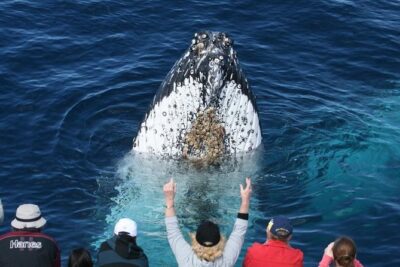
Sydney Whale-Watching Cruise Including Lunch or Breakfast
Read our review →
Browse the lists this tour appears in