Reviewed · TOURS IN LONGREACH
Nogo Station Experience
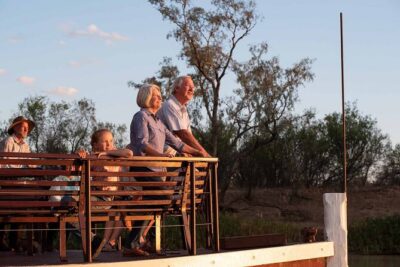
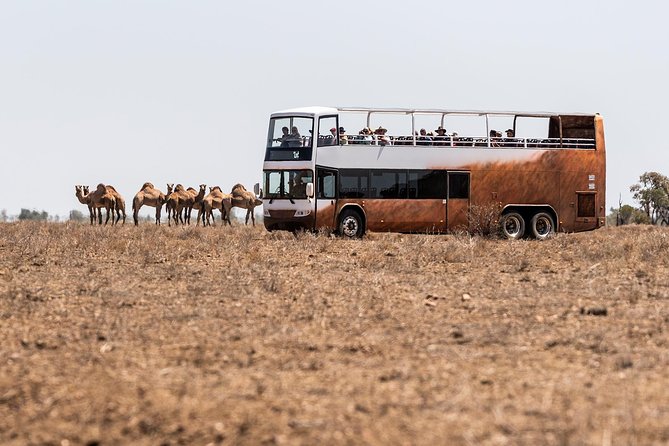
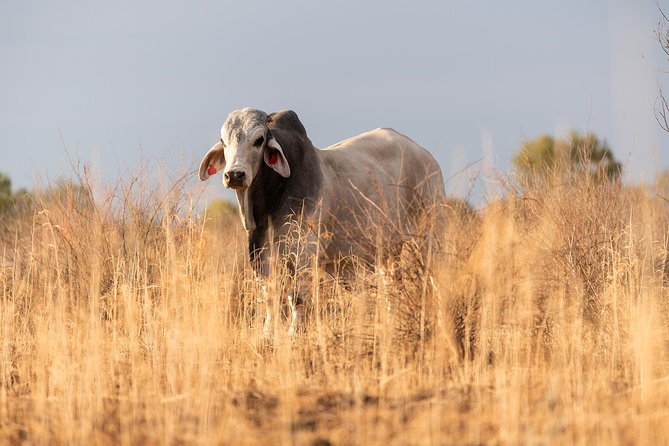
The most memorable part of the Nogo Station Experience is the way it links Longreach’s town history with the hard daily work of a working sheep and cattle property. You move from heritage sites to a historic shearing shed, then out across the open plains in an open-top double-decker bus looking for camels, donkeys, kangaroos, goats, cattle, and wedge-tailed eagles.
I like the direct local storytelling, especially when Jeremy Kinnon explains sheep-station life and the old shearing trade. I also like the simple bush lunch at Captain Starlight’s Camp, where billy tea and a lunch pail under gum trees feel far more fitting than a standard café stop. The main consideration is that the shearing shed is more compelling when a shearing team is working. On quieter days, the experience depends heavily on the guide’s talk.
Key points to know before booking
- A working station, not just an outback photo stop: You learn how sheep, cattle, horses, and station work fit together.
- The shearing shed is the main history lesson: Merino wool, sheepdogs, shearers, and old station terms all get practical explanation.
- The open-top bus adds wildlife spotting: You might see desert camels, wild donkeys, kangaroos, goats, cattle, and wedge-tailed eagles.
- Jeremy Kinnon brings the station story to life: His talks combine hands-on knowledge with Australian humor.
- Captain Starlight’s Camp gives the morning a strong finish: Expect a traditional pioneer-style billy-can lunch and billy tea under gum trees.
- Plan for an early start: Pickup or meeting arrangements begin at 7:45 am, and the full experience takes about 3 to 4 hours.
Why Nogo Station is more than a farm visit
Longreach is often treated as a base for outback attractions, but the town itself makes more sense once you understand its links to transport, cattle, wool, and early settlement. The Nogo Station Experience uses that setting well. Your morning begins with a guided heritage tour of Longreach, where local places and characters are explained before you head out to the property.
That opening matters. Without it, a station visit can feel like a collection of isolated stops. With it, you get a clearer picture of why sheep and cattle stations shaped the region, how people managed distance and isolation, and why the wool industry mattered so much.
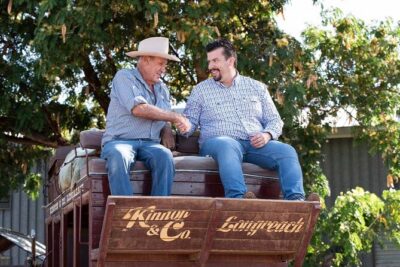
The tour is hosted by the Kinnon family, and that family connection gives the visit a personal feel. You are not simply shown a shed and a paddock. You hear stories tied to the property and the people who worked there. Duncan, who has driven the bus on some tours, is also praised for his Longreach commentary and local stories.
The experience is rated 4.8 out of 5 from 64 reviews, with 97 percent recommending it. Those numbers fit the tour’s strongest qualities: clear storytelling, friendly hosts, and a good mix of history, wildlife, and food. This is not an adrenaline tour. Its appeal comes from helping you understand a place that can otherwise seem vast and hard to read.
Other trips people book in Australia:
- Sydney: Opera House Guided Tour with Entrance Ticket
★ 4.8 · 8,312 reviews - All Inclusive Blue Mountain,Scenic World,Lunch,Koalas,ferry
★ 5.0 · 7,832 reviews - Great Ocean Road Small-Group Eco Tour from Melbourne
★ 5.0 · 6,607 reviews
The 7:45 am start and the ride to Nogo Station
The morning starts at 7:45 am, with pickup offered. Since the experience lasts roughly 3 to 4 hours, it fits neatly into a Longreach day without taking over your afternoon.
The first section includes a guided look at Longreach’s heritage sites. The exact route is built around the town’s history, characters, and events, with the guide adding personal details along the way. Duncan’s commentary has been singled out for making the transfer itself useful rather than treating it as dead time.
I like this approach because the drive to a station can otherwise be little more than transport. Here, you begin learning about the region before reaching the main property. Watch for place names and local terms you may hear again in the shearing shed. The history lesson gives the later demonstrations a clearer setting.
The group can have up to 40 people. That is large enough for a lively outing but not a private tour, so your position and the guide’s speaking volume may matter during the shed talk. If you prefer a quieter, highly personal experience, this is worth keeping in mind.
Inside the historic shearing shed
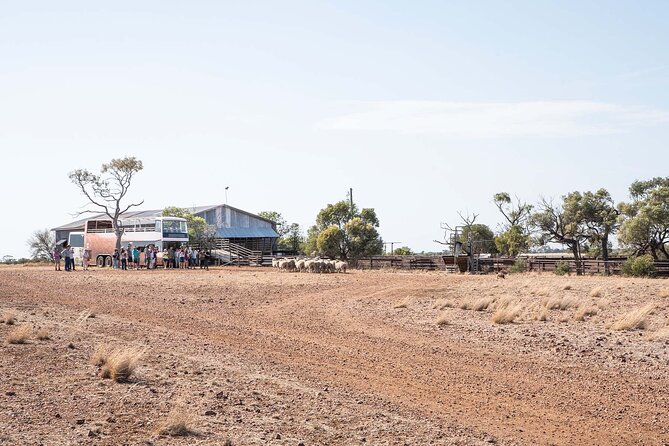
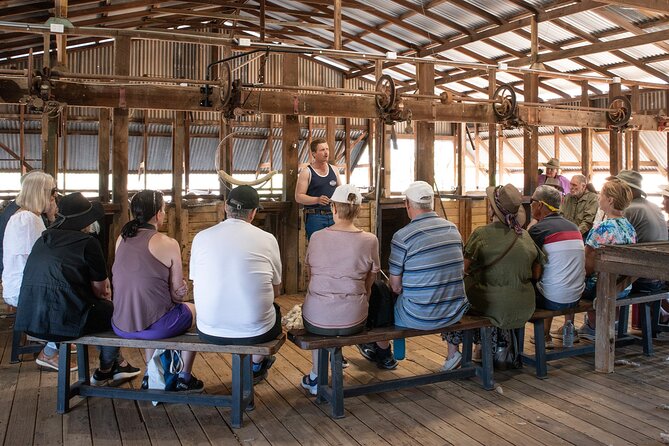
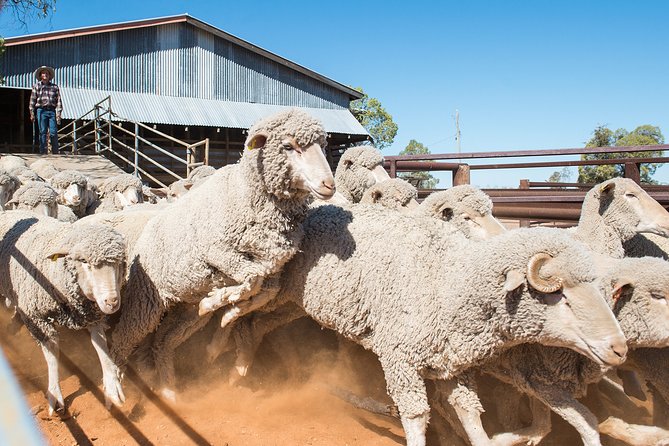
The historic shearing shed is the heart of the experience. This is where you learn how Merino sheep and wool shaped life in the district, and how much skill is involved in running a station.
The presentation covers the work of shearers, sheepdogs, mustering, and the daily operation of a wool property. One especially useful detail is the explanation of familiar Australian terms that many visitors have heard without knowing their origin. You may also hear about the practical clothing and equipment used by shearers, including the surprising fact that shearers wore moccasins.
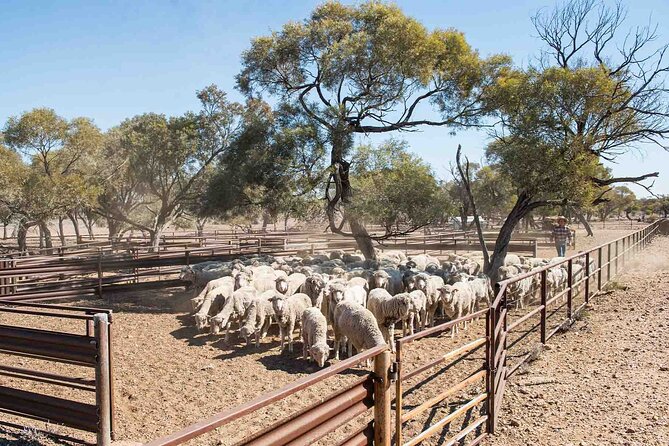
If a shearing team is working during your visit, you may see the shed in full operation. That adds movement, noise, and a direct sense of the work. It also shows why a station is not simply a scenic place. It is a demanding business built around timing, animals, weather, transport, and skilled labor.
On a day without live shearing, Jeremy Kinnon’s presentation becomes even more important. His strength is explaining station life in plain language and adding humor without losing the useful detail. The talk has been praised as one of the best parts of the morning, particularly for showing how hard the work remains both today and in earlier generations.
You should not expect a full hands-on shearing workshop. The emphasis is on explanation and observation. Still, the shed gives you something many outback tours miss: a clear account of how an important local industry actually worked.
Watching the station from an open-top double-decker bus
After the shed, you climb aboard an open-top double-decker bus for a safari-style ride across the station. This is a fun change of pace, and it gives you a raised view over the broad outback plains.
The bus is particularly useful for wildlife spotting. Depending on the day, you might see desert camels, wild donkeys, kangaroos, goats, cattle, horses, and wedge-tailed eagles. The animals are not presented as a guaranteed show, so keep your eyes moving and listen for the guide’s signals.
The wedge-tailed eagle is one of the more striking sights. Seeing one overhead helps you appreciate the scale of the country around Longreach, especially when the bird is set against a wide, open sky. The camels and donkeys also underline how unusual the local mix of wildlife and working animals can be.
This part is not a fast off-road ride. The attraction is the view, the commentary, and the chance to see station life spread across a large property. I would bring a hat, water, and sun protection, although the provided information does not specify what is included or required. An open-top vehicle can be exposed, so dress for outback conditions.
The bus ride also gives you a better feel for distance. From the ground, a paddock can seem simply large. From the upper deck, you begin to understand how much space a station operation covers and why moving livestock takes planning.
Same base, a different sort of day:
- From Melbourne: Great Ocean Road, 12 Apostles, Wildlife Tour
★ 4.7 · 6,020 reviews - Ocean Rafting: Whitehaven Beach, Snorkelling & Hill Inlet Lookout
★ 5.0 · 4,777 reviews - Laid back, Yarra Valley Wine Tour: Wine, Cider, Gin, Beer + Choc
★ 5.0 · 4,552 reviews - From Sydney: Blue Mountains Full-Day Trip
★ 4.5 · 4,471 reviews
Captain Starlight’s Camp and the billy-can lunch
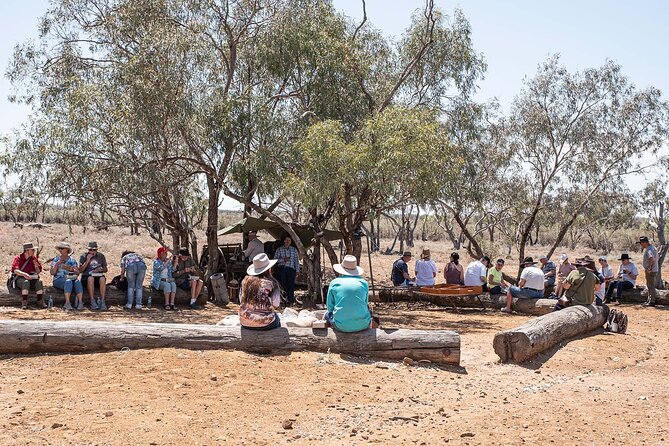
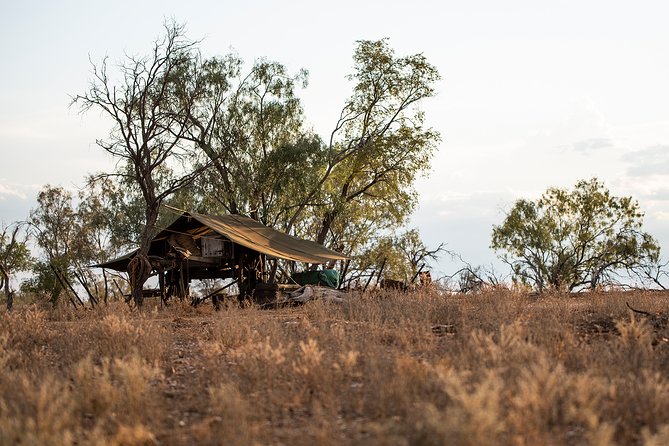
The final stop is a recreation of Captain Starlight’s bush camp. Here, beneath the gum trees, you sit down to a traditional pioneer-style lunch with billy tea.
The meal is often described as a saddlebag or lunch-pail experience. It is not presented as a formal restaurant meal, and that is the point. The simple setting ties the food to the practical camp life being discussed. You get a short break, a taste of pioneer routine, and time to take in the surroundings.
The stop lasts about 30 minutes. That is enough time to eat and hear the story of the camp, but not so long that the morning loses momentum. The food has been well received, and the billy tea adds a distinctly Australian touch.
There is one honest practical note: flies can be part of the meal. That is not a flaw unique to this tour, but it is part of eating outdoors in the outback. Come prepared to be relaxed about it. If you expect a polished dining room, you may find the setting rough around the edges. If you want a camp-style experience, the flies are part of the bargain.
Captain Starlight’s old stockyards and the recreated camp also add a human story to the station visit. You are not only looking at animals and buildings. You are considering how people moved, worked, camped, and survived in a region where distance shaped nearly every choice.
What the guides add to the experience
The guides are central to the quality of this tour. Jeremy Kinnon is repeatedly praised for his humor, strong storytelling, and practical understanding of station life. He explains the work from a hands-on point of view, which helps the material feel grounded rather than rehearsed.
Duncan, the bus driver on some outings, is also known for his commentary about Longreach. His role matters because the town tour and the station visit work best as one connected story. The right guide can point out a landmark, explain an expression, and then link it to something you see at the property.
This style suits you if you enjoy learning through stories rather than reading signs. The information is delivered with Australian humor, and the tone is relaxed. It is not a formal lecture, but you should still expect plenty of explanation.
The only caution is that your exact guide and the presence of live shearing can affect the balance of the morning. The tour has a solid plan, but some parts naturally depend on who is working at the station that day and what animals are visible.
Is the price of $118.35 fair?
At $118.35 per person, the Nogo Station Experience is not a cheap short transfer or a simple farm entry. You are paying for a half-day package that combines pickup, a Longreach heritage tour, station access, guided interpretation, a bus safari, wildlife viewing, a recreated historic camp, and food.
The value is strongest if you want several different pieces of Longreach in one booking. Arranging those elements separately would be difficult, and the guide is doing the connecting work for you. You also get access to a working station rather than only a museum display.
The value is weaker if you mainly want a guaranteed wildlife encounter or a live shearing demonstration. Animals are seen as part of the station setting, not placed on a fixed schedule, and shearing may not be taking place when you visit.
For me, the best reason to pay the price is the quality of the explanation. The tour helps you understand why wool, livestock, transport, and pioneer travel mattered here. If you only want photographs, a shorter outing may suit you better. If you want context and local voices, the price is easier to justify.
The experience is commonly booked 61 days in advance, so it is sensible to reserve ahead during busy periods. Confirmation is provided at booking, and the group size can reach 40 people.
Who should book the Nogo Station Experience?
I would recommend it to first-time visitors to Longreach who want a clear introduction to the region. It also suits families, older visitors, and anyone interested in farming, Australian history, wildlife, or local stories.
You will get the most from it if you enjoy asking how things work. Why did Merino wool matter? What did a sheepdog do? How did people manage a huge station? What did pioneer camp life involve? The tour addresses those questions in a direct way.
It is less suitable if you want a physically demanding adventure, a small private group, or a guaranteed close-up view of animals. The pace is relaxed and the focus is educational. The open-top bus adds fun, but this is still a storytelling tour at heart.
Most people can take part. If you have dietary requirements, list them in the booking notes. The experience depends on good weather, and a minimum number of participants is required. If poor weather or low bookings cause cancellation, you are offered another date or experience, or a full refund. Free cancellation is available up to 24 hours before the start time.
Should you book Nogo Station?
Book it if you want Longreach to make sense beyond its famous outback image. The shearing shed, Jeremy Kinnon’s stories, Duncan’s town commentary, the open-top bus, and the billy tea at Captain Starlight’s Camp create a well-balanced morning.
The strongest version of the tour includes live shearing and a good wildlife day, but the experience still has value without either. Just understand that its real product is local knowledge and access to station life, not a guaranteed animal show.
For a first visit to Longreach, I would put this high on the list. It gives you the history, the working property, the wildlife, and the bush food stop in one practical outing. Bring sun protection, arrive ready for an early start, and expect a few flies with your lunch.
FAQ
Where does the Nogo Station Experience take place?
The experience takes place in and around Longreach, Queensland, including Nogo Station and Captain Starlight’s Camp.
What time does the tour start?
The stated start time is 7:45 am.
How long does the experience last?
It lasts approximately 3 to 4 hours.
Is pickup available?
Yes, pickup is offered.
What animals might I see?
You might see desert camels, wild donkeys, kangaroos, goats, sheep, cattle, horses, and wedge-tailed eagles.
Is there a sheep shearing demonstration?
You visit the historic shearing shed and learn about Merino wool and shearing. Live shearing may take place on some tour days, but it is not guaranteed.
What is included at Captain Starlight’s Camp?
You visit a recreation of the camp and receive a traditional pioneer-style billy-can lunch and billy tea under gum trees.
How many people can join the tour?
The activity has a maximum group size of 40 travelers.
Can I request dietary requirements?
Yes. You should list any dietary requirements in the booking notes.
What happens if the tour is canceled?
If poor weather or an insufficient minimum number of participants causes cancellation, you are offered a different date or experience, or a full refund. You can also cancel for a full refund up to 24 hours before the start time.
Just added in Australia
- Airlie Beach: Whitsunday Islands Sailing, SUP & Snorkel Tour★ 4.8 · 90 reviews
- Airlie: Adults Only Sunset Sail with Aperol Spritz/Antipasto★ 4.5 · 101 reviews
- Albany: Historic Whaling Station Entry Ticket★ 4.8 · 24 reviews
- Airlie Beach: Waterfall & Rainforest Bushwalk Eco Adventure★ 4.8 · 22 reviews
- Airlie Beach: Whitehaven Beach Club★ 3.9 · 152 reviews
- Airlie Beach: Whitehaven Beach Cruise and Hill Inlet★ 4.6 · 71 reviews
- Airlie Beach: Half Day Turtle Tour Sea Kayaking Adventure★ 4.8 · 21 reviews
- Airlie Beach: Outer Great Barrier Reef Snorkeling Day Trip★ 4.5 · 156 reviews
Tours in Longreach, compared.
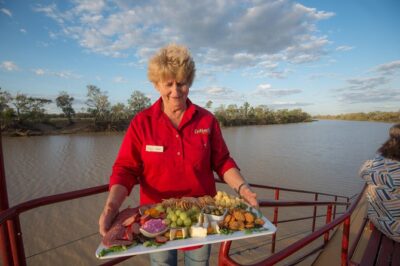
Drover’s Sunset Cruise includes Smithy’s Outback Dinner and Show
Read our review →