
Reviewed · TOURS IN DARWIN
Royal Flying Doctor Service Tourist Facility: Two Iconic Territory Stories
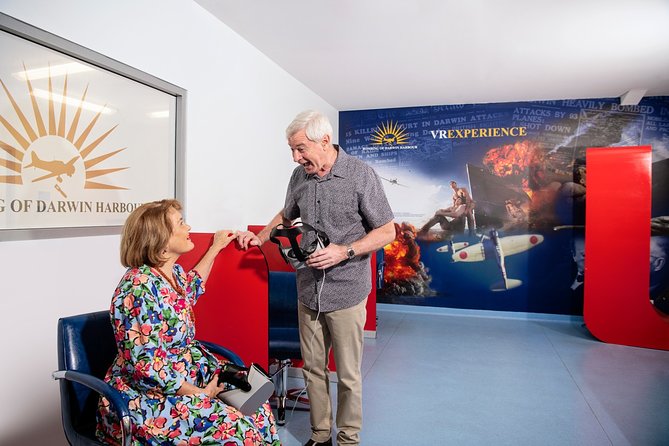
The most striking part of this Darwin attraction is the way it puts two very different Territory stories under one roof. One tells how the Royal Flying Doctor Service brought medical care to remote outback communities. The other recalls the 1942 Bombing of Darwin through cinema and virtual reality.
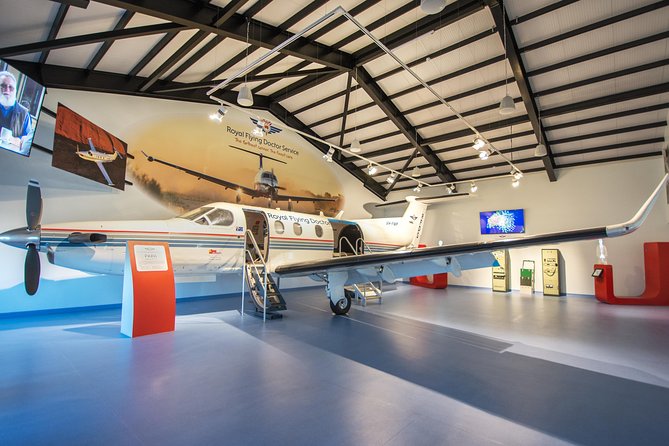
I like the life-size hologram presentation because it makes the RFDS story easy to follow, even if you know little about Australian aviation. I also like the chance to step inside a real, aero-medically equipped Pilatus PC-12 and see how much care and equipment can fit into a small aircraft.
The main consideration is time. The ticket is advertised as a two-hour experience, but you can see the main displays in about an hour if you move quickly. The facility is self-guided, so you will get more from it if you pause for the films, VR scenes, and written displays.
Key points to know before you go
- Two major Territory stories share one indoor facility: the RFDS and the 1942 Bombing of Darwin.
- The hologram cinema explains Rev John Flynn’s vision and how it became the modern flying doctor service.
- A decommissioned Pilatus PC-12 aircraft is open to explore, with its medical fittings still in place.
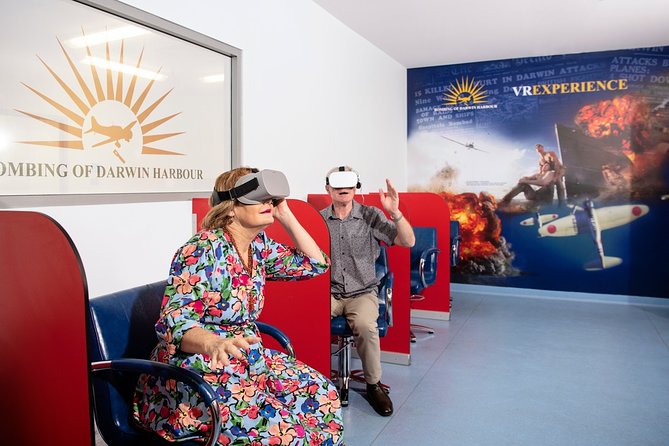
- VR and interactive displays bring the bombing of Darwin to life without requiring a live guide.
- Allow at least one hour, and closer to two hours if you watch the presentations and take your time.
- The air-conditioned setting, seating, and full disability access make this a useful choice during Darwin’s heat.
Two Territory stories, one compact Darwin visit
The RFDS Darwin Tourist Facility is not a traditional museum with rows of dusty cases. It uses film, holograms, virtual reality, and an aircraft you can enter to tell its story.
That mix works well for families. Children can focus on the aircraft and technology, while adults can spend more time with the medical, aviation, and wartime displays. You can also move at your own pace instead of following a fixed group around the building.
The two subjects are linked by a common theme: people facing danger, distance, and limited resources. The RFDS story is about reaching patients across remote Australia. The bombing story shows Darwin under attack during World War II. Together, they give you a broader sense of the challenges faced in the Northern Territory.
The facility is indoors and air-conditioned, which matters in Darwin. I would use it as a break from the heat, not just as a rainy-day backup. The combination of history and technology gives you something to do at a steady pace without rushing between outdoor sites.
Other trips people book in Darwin:
- Litchfield National Park and Jumping Crocodile Cruise
★ 5.0 · 2,119 reviews - Adelaide River Cruises – Jumping Crocodile Experience
★ 5.0 · 997 reviews - Sunset 3-Hour Cruise from Darwin with Dinner and Sparkling Wine
★ 5.0 · 980 reviews
How the RFDS story unfolds
The first major story follows the Royal Flying Doctor Service, an organisation that provides medical care by plane to remote outback areas.
The presentation begins with Rev John Flynn’s vision and traces how that idea developed into the RFDS service you see today. The life-size hologram cinema is the centrepiece. It uses holographic technology to make the early vision feel more immediate than a simple wall of text would.
I like this format because it explains the purpose of the service before asking you to study the equipment. You first understand the problem: large distances, isolated communities, and the need to get medical help where roads or hospitals may be far away. Then the aircraft and displays show how the service responds.
The story also gives attention to the people who make the system work. Pilots, engineers, doctors, nurses, and patients all have a place in the presentation. That wider view is useful. The RFDS is not simply about a plane arriving at an airstrip. It depends on flight operations, maintenance, medical skills, and patient care working together.
The hologram session includes audio translation in Japanese, German, French, and Simplified Chinese. That is a practical plus if you prefer to hear the presentation in one of those languages. Since the attraction is self-guided, you do not need to keep pace with a live guide.
Inside the Pilatus PC-12 aircraft
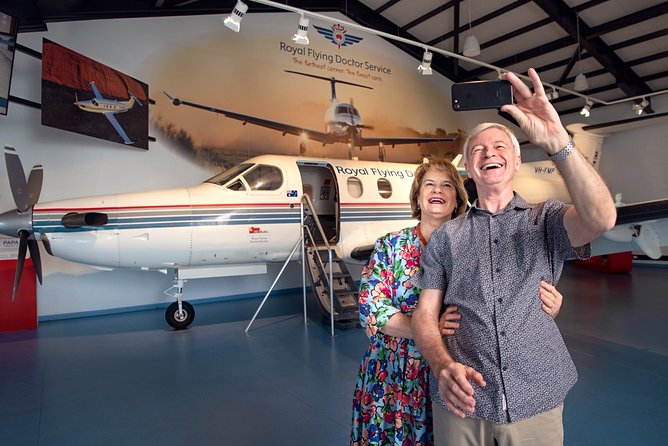
The decommissioned RFDS Pilatus PC-12 is one of the most worthwhile parts of the visit. You can climb aboard and see the aircraft in its medical configuration.
From the outside, it looks like a compact plane. Inside, the medical fit-out shows how carefully every bit of space has to be used. You can look at the aircraft as both a flying machine and a working treatment area.
This is where the RFDS story becomes more concrete. Films can explain the service, but walking through the plane gives you a better feel for the practical side of an aeromedical flight. The aircraft carried patients while also supporting the work of medical staff and crew.
I would give this section extra time if you are visiting with children. The chance to enter the cockpit is particularly appealing for younger visitors, and the aircraft helps turn an abstract lesson about remote medicine into something physical and memorable.
The plane is also valuable for adults who are interested in engineering or aviation. You can see why the service relies on more than bravery and good intentions. Aircraft have to be maintained, medical equipment has to be arranged, and crews have to work in a confined space.
The aircraft is not a long guided tour. You explore it as part of the self-guided visit. That gives you freedom, though it also means you should read the nearby information and pause to connect the equipment with the wider RFDS story.
The 1942 Bombing of Darwin through VR
The second major subject is the Bombing of Darwin during World War II. The facility presents this story through films, interactive displays, and a virtual reality experience.
The VR section recreates the bombing of Darwin Harbour. It is designed to show the scale and impact of the attacks in a way that ordinary text panels cannot. The experience is short enough to fit into a museum visit, but it may feel intense for younger children or anyone sensitive to wartime scenes.
I like that the presentation treats the subject with respect rather than turning it into a simple action display. The point is not just aircraft and explosions. The story recalls the people serving Australia and the effect of the attacks on Darwin.
The VR equipment is one of the reasons the facility works for mixed-age groups. Children and teenagers may be drawn in by the technology, while adults can focus on the historical meaning. You can then follow the VR section with the cinema and written displays for a fuller account.
The attraction also works well as part of a wider Darwin history day. If you have time, you can combine it with other Defence of Darwin museums and sites around the city. The RFDS facility gives you one indoor, focused introduction before you tackle more locations.
Same base, a different sort of day:
- From Darwin: Litchfield Park Tour & Jumping Crocodile Cruise
★ 4.9 · 829 reviews - Charles Darwin Dinner Cruise
★ 4.5 · 820 reviews - Kakadu Day Tour from Darwin with Offroad Dreaming
★ 5.0 · 776 reviews - Cape Adieu Darwin Sunset Dinner Cruise
★ 5.0 · 750 reviews
What the self-guided format means for you
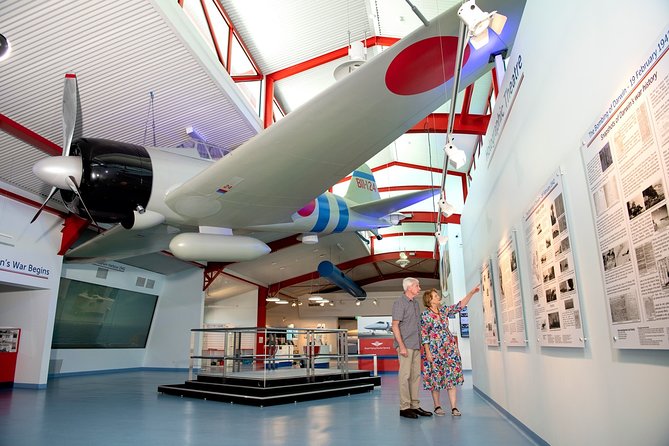
Your admission includes an introductory overview, but the main experience is self-guided. You are not locked into a tour group or a set commentary.
That format has clear advantages. You can spend longer at the aircraft, move quickly through displays that interest you less, and take a seat when you want a break. Families can divide their attention without holding up a group.
The trade-off is that you need to manage your own visit. If you simply walk through without watching the presentations, you may miss the best parts. I would start with the introduction, check the timing of the cinema or VR session, then work through the aircraft and displays around those scheduled elements.
The attraction offers a choice of entrance times during the day. That makes it easier to fit around a Darwin sightseeing plan, a cruise schedule, or lunch. If you are arriving from a cruise ship, a free shuttle bus may take you to the facility, according to the visitor information provided. Check the current shuttle arrangements before relying on them.
Most people should allow 1.5 hours. You can cover the main areas in about an hour, but two hours gives you time for the films, VR, aircraft, and displays without treating the visit like a race.
Is the $21.52 ticket good value?
At $21.52 per person, this is a reasonably priced Darwin attraction, especially if you use the full two hours. The ticket gives you access to both story areas, the cinema presentations, the interactive material, the VR experience, and the aircraft.
The value is strongest when you enjoy museums that mix history with technology. You are not paying only to look at static objects. The hologram and VR elements take up part of the cost, while the aircraft gives you a physical exhibit that is difficult to replace with photographs.
It is also good value for a family looking for an indoor activity. The attraction has enough variety to keep different ages interested, though very young children may not follow all the historical detail. The facility’s air-conditioning adds practical value during hot weather.
The price may feel less worthwhile if you only want a quick look at the aircraft and do not plan to watch the presentations. In that case, your visit could be over in about an hour. I would book it when you have time to engage with both stories rather than squeezing it into a short gap.
There is a gift shop in the centre of the facility, but souvenirs are not included in the ticket. You will find RFDS and Bombing of Darwin items, along with co-branded RFDS and RM Williams clothing and belts. Treat the shop as an optional extra, not part of the admission value.
Who will get the most from this visit?
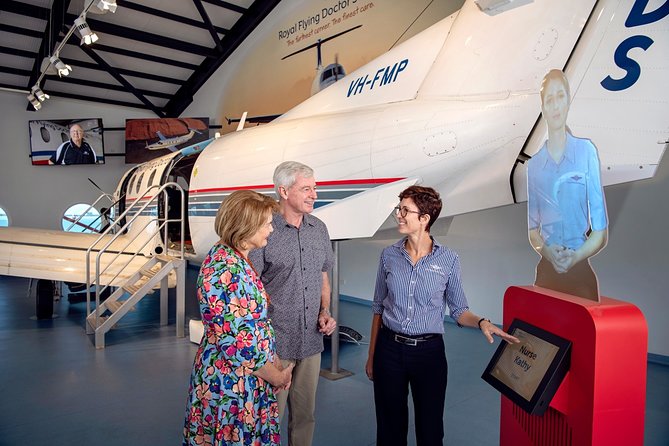
I would recommend this facility to families, aviation fans, history enthusiasts, and anyone who wants a clear introduction to two important Darwin stories.
It suits families particularly well because the experience changes pace. The aircraft offers something hands-on, the VR provides a strong visual moment, and the films give adults more background. The displays also make it easier to keep children involved than a museum made up only of documents.
It is a good choice if you have limited time in Darwin. You can learn about the RFDS and the bombing in one location, without committing to a full-day excursion. The self-guided design also lets you leave when you have had enough.
The experience may be less suitable for very young children who cannot sit through films or for anyone who dislikes VR. The bombing presentation deals with wartime danger, so parents may want to decide how much of that section their children should see.
People with access needs are well catered for. The facility has complete disability access and seating throughout. Service animals are allowed. Those details make a real difference if you need a place where you can move and rest at your own pace.
When to fit it into your Darwin day
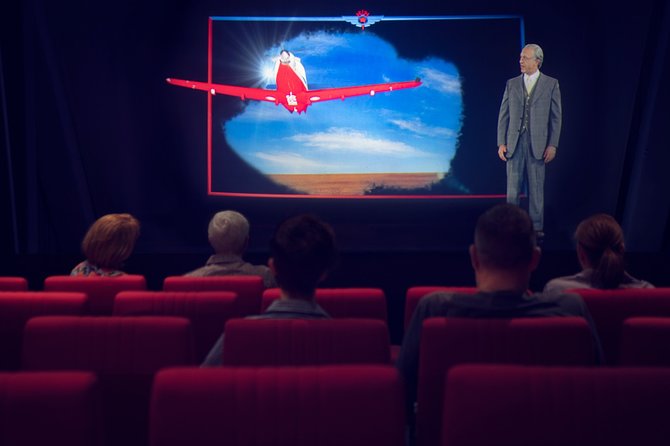
I would visit during the hotter part of the day, when the air-conditioning is most useful. You can choose an entrance time during the day, so it is easy to place the visit between outdoor sightseeing stops.
A lunchtime visit can work well. Afterward, you might continue to the wharf for lunch, as the facility is close enough to make that a practical pairing. Keep in mind that this is a suggestion for planning your day, not an included part of the ticket.
If you are using the attraction as a cruise-day stop, allow enough time for transport and the full visit. The museum itself takes about 1 to 2 hours, depending on how carefully you watch the films and displays.
The experience is private in the sense that only your group participates in the booked activity, but the facility itself is still a public tourist attraction. Your self-guided visit gives you personal control, though other people may be exploring the exhibits at the same time.
Practical details that affect the visit
Confirmation is provided when you book. Free cancellation is available if you cancel at least 24 hours before the experience start time. Cancellations or changes made within 24 hours are not refunded.
The attraction is indoors, air-conditioned, and equipped with seating. That makes it a sensible option in hot weather and for anyone who needs regular rests.
A multilingual guide may operate the visit, though the core experience is self-guided. Audio translation is available for the hologram cinema in Japanese, German, French, and Simplified Chinese.
The gift shop can add a few minutes to your visit if you want RFDS clothing, hats, books, shirts, belts, or Bombing of Darwin souvenirs. Since souvenirs are not included, set aside extra money only if you plan to shop.
Should you book the RFDS Tourist Facility?
I would book this experience if you want a well-priced indoor attraction that explains Darwin through two strong local stories. The aircraft, hologram cinema, and VR presentation give the visit more variety than a basic museum tour.
Book it especially if you are travelling with children, have an interest in aviation, or want a respectful introduction to the 1942 Bombing of Darwin. Allow at least 90 minutes so you do not rush the best sections.
Skip it only if your Darwin schedule is already packed with similar war museums or if you are looking for a live, fully guided tour. For most people, the mix of technology, aircraft, and history makes the $21.52 ticket a sensible use of a hot afternoon.
FAQ
How long does the RFDS Tourist Facility visit take?
The advertised duration is about two hours. You can see the main areas in around one hour, but allowing 1.5 to 2 hours gives you time for the films, VR, aircraft, and displays.
Is the experience guided?
The facility experiences are self-guided, with an introductory overview provided. A multilingual guide may operate the visit.
What are the two stories covered at the facility?
The facility covers the history and work of the Royal Flying Doctor Service and the 1942 Bombing of Darwin.
Can I go inside an RFDS aircraft?
Yes. You can climb aboard a decommissioned Pilatus PC-12 aircraft that has been equipped for aeromedical work.
Is the facility suitable for children?
Yes. The interactive museum, aircraft, VR presentation, and films provide several ways for children to engage with the visit. The wartime bombing content may not suit every young child.
Is the facility wheelchair accessible?
Yes. Complete disability access is provided, and seating is available throughout the facility.
Is the facility air-conditioned?
Yes. The attraction is indoors and air-conditioned.
Are other languages available?
The hologram cinema has audio translation in Japanese, German, French, and Simplified Chinese.
Can I cancel my booking for a refund?
Yes, if you cancel at least 24 hours before the experience start time. Cancellations or changes made less than 24 hours before the start time are not refunded.
Just added in Darwin
- Bombing of Darwin World War II Tour with Harbour Cruise★ 4.5 · 219 reviews
- 1-Hour Thunderball WWII Adventure Jet Skiing in Darwin★ 5.0 · 70 reviews
- Tiwi Islands Cultural Experience from Darwin Including Ferry★ 4.0 · 97 reviews
- Darwin Combo: The Bombing of Darwin Experience & Darwin Harbour Cruise★ 4.5 · 123 reviews
- Litchfield Park & Jumping Crocodile Cruise★ 5.0 · 37 reviews
- ETHICAL ADVENTURES – 1 Day premium Litchfield tour, small group★ 5.0 · 178 reviews
- Litchfield National Park Waterfalls & Wildlife Adventure Tour★ 5.0 · 30 reviews
- Litchfield & Berry Springs VIP Adventure Day Tours (group of 11)★ 5.0 · 142 reviews
Tours in Darwin, compared.
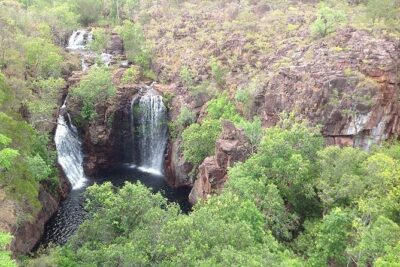
Litchfield National Park and Jumping Crocodile Cruise
Read our review →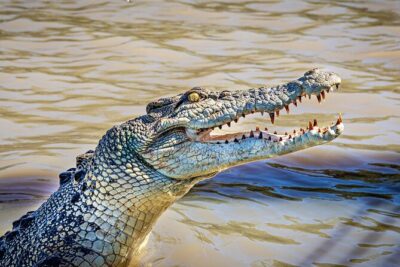
Adelaide River Cruises – Jumping Crocodile Experience
Read our review →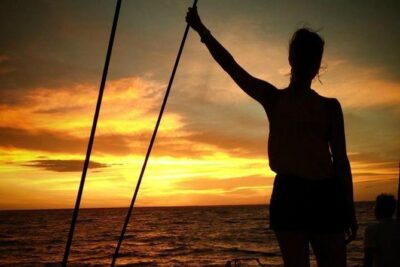
Sunset 3-Hour Cruise from Darwin with Dinner and Sparkling Wine
Read our review →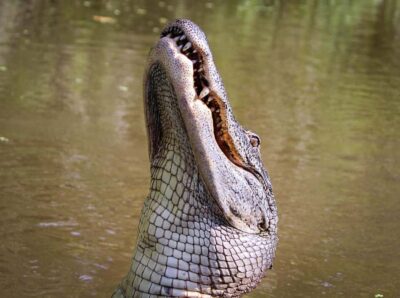
Litchfield Park Tour & Jumping Crocodile Cruise
Read our review →
Kakadu Day Tour from Darwin with Offroad Dreaming
Read our review →
Browse the lists this tour appears in