
Reviewed · CYCLING TOURS
The Best of Melbourne Bike Tour
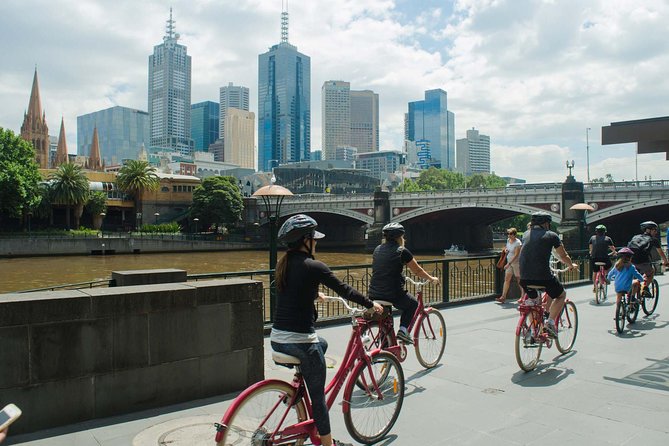
Melbourne reveals itself quickly from a bicycle. On this four-and-a-half-hour ride, you move from the Yarra River and Southbank to the Shrine of Remembrance, MCG, Fitzroy Gardens, Chinatown, and Hosier Lane without spending the day waiting at crossings or walking long blocks. Aboriginal history and Melbourne’s settler past are part of the story, not an afterthought.
I like the small maximum of 10 riders, which makes it easier for guides such as Finn, Marcus, Matt, and Max to keep an eye on the group. I also like the one-hour Fitzroy lunch break, a useful pause that gives you time to eat rather than gulp down a snack beside your bike. The main caution is city traffic: at busy points, the ride can feel more like careful urban cycling than a carefree pedal.
Key points to know before you book
- A broad city introduction: You see major sights, old neighbourhoods, public squares, sports grounds, and street art in one morning.
- A genuine history component: The route includes the Kulin Nation, Aboriginal leader William Barak, immigration, the gold rush, and Melbourne’s colonial development.
- A proper Fitzroy break: Lunch lasts about an hour, but food and drinks cost extra.
- Standard bikes and e-bikes differ: Check your booking carefully so you select the kind of bicycle you want.
- Guides shape the experience: Finn, Marcus, Matt, Max, Freddy, and Ciarán are among the named guides praised for safety, stories, and friendly company.
- Weather matters: The tour requires good weather, and cancellation for poor conditions brings a date change or full refund.
Why a bicycle is a smart way to meet Melbourne
Melbourne’s centre is compact enough to walk, but the sights on this route spread across several districts. A bike lets you connect them in a single outing, and you get more visual variety than you would from a foot tour confined to the central blocks.
You also see the city at street level. Southbank, the Yarra, Fitzroy, Carlton, Chinatown, and the lanes each feel different, and cycling helps you notice those changes as they arrive one after another. I like that the route is not simply a list of monuments. It links civic buildings, sporting culture, gardens, migration, Indigenous history, food, and street art.
The pace is designed to be relaxed. That suits anyone who wants time to look around and listen, though a strong cyclist may find parts of the ride slow. One rider described the pace as too gentle, while others appreciated having plenty of time for sightseeing. That is a fair trade on a guided city ride, especially when the group includes different abilities.
The tour begins at 10:00 a.m. at 20 Rebecca Walk and returns there after roughly four hours and 30 minutes. You get the bicycle and helmet, but not lunch, drinks, hotel pickup, or drop-off.
A few more things to do in Melbourne worth a look
- Famous Melbourne City Bike Tour
★ 5.0 · 779 reviews - From Perth: Rottnest Island Full-Day Bike and Ferry Trip
★ 4.7 · 2,548 reviews - Sydney Bike Tours
★ 5.0 · 1,125 reviews
Southbank begins with place and memory
The opening stop at Southbank sets the tone. The guide acknowledges the Kulin Nation, whose land was never ceded, before moving into the settler figures who helped shape Melbourne.
That short pause matters because it gives the city a wider frame than gold-rush wealth and grand Victorian buildings. You are not just seeing attractive riverfront architecture. You are being asked to consider whose country you are riding through and how Melbourne’s story has been presented over time.
Southbank is also a useful starting point because it places you beside the Yarra before the route turns toward the city’s major institutions. The stop is brief, about five minutes, so expect an introduction rather than a long talk.
The Shrine and the MCG show Melbourne’s public life
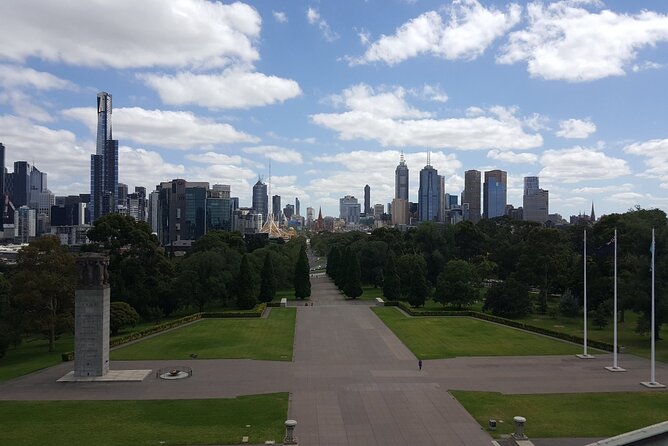
At the Shrine of Remembrance, the focus shifts to Victoria’s major war memorial and to William Barak, an Aboriginal leader, activist, cultural ambassador, educator, and advocate for Aboriginal rights.
The pairing is thoughtful. The Shrine represents a formal national memory, while the discussion of Barak points to Aboriginal leadership and continuing cultural identity. You will not spend long inside the memorial on this itinerary, but the stop adds meaning to the ride and gives you a useful name to remember when exploring Melbourne further.
Next comes the Melbourne Cricket Ground, or MCG. Even if you are not a sports fan, its scale helps explain Melbourne’s claim to being Australia’s sporting capital. The stop is short, around five minutes, so it is mainly an exterior look and a chance to understand the role of sport in local life.
If you follow cricket or Australian rules football, this may be one of the highlights. If you do not, it still breaks up the historical stops with a glimpse of the city’s modern public culture.
Fitzroy Gardens and Cook’s Cottage
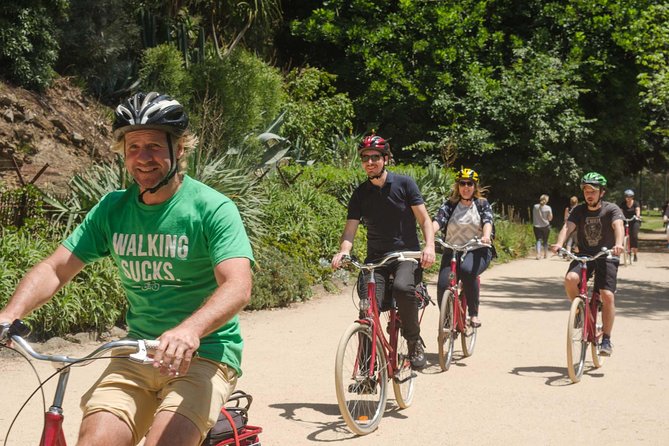
Fitzroy Gardens offers a calmer section of the route. The main talking point is Cook’s Cottage, a building shipped from England and rebuilt brick by brick in the gardens.
That detail is exactly the sort of odd historical fact that works well on a bike tour. It is easy to remember, and it shows how Melbourne sometimes turned imported objects and colonial symbols into local attractions. The gardens also provide a green pause after the Shrine and MCG.
Again, the stop lasts only about five minutes. You should see it as a guide-led introduction, not a full garden visit or cottage tour. If Cook’s Cottage is high on your personal list, plan to return later with more time.
Same base, a different sort of day:
- Great Ocean Road Small-Group Eco Tour from Melbourne
★ 5.0 · 6,607 reviews - From Melbourne: Great Ocean Road, 12 Apostles, Wildlife Tour
★ 4.7 · 6,020 reviews - Laid back, Yarra Valley Wine Tour: Wine, Cider, Gin, Beer + Choc
★ 5.0 · 4,552 reviews - Great Ocean Road Reverse Itinerary Boutique Tour – Max 11 Guests
★ 5.0 · 4,186 reviews
Parliament and the Royal Exhibition Building explain gold-rush Melbourne
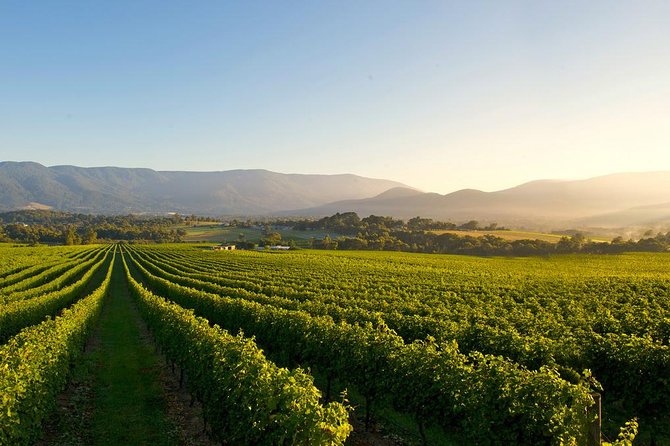
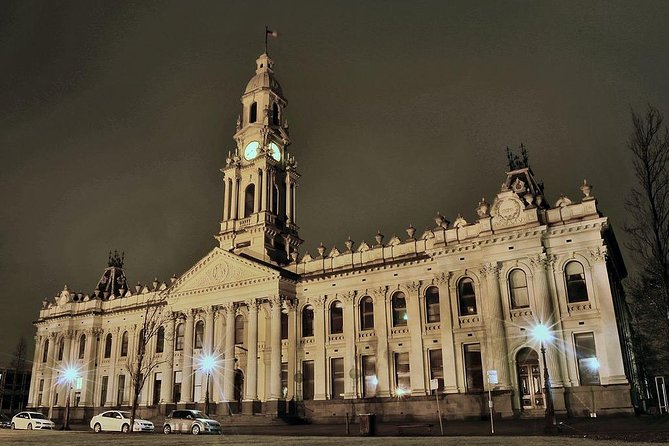
Parliament House of Victoria helps explain Melbourne’s wealth during the gold rush. The building was created to display the riches of a city that had become one of the world’s wealthiest at the time.
That context makes the grand architecture easier to understand. You are not simply looking at an impressive government building. You are seeing the physical result of a sudden boom, with money spent on civic buildings meant to signal confidence and status.
The Royal Exhibition Building continues that story through the international exhibition movement of the 19th century. Its purpose was to bring people together to exchange goods, technology, ideas, cultures, and values.
This stop adds a global angle to Melbourne’s growth. The building is an architectural highlight, but its function is just as interesting. It shows a city eager to present itself as modern, connected, and prosperous. The visit here is also brief, so anyone who wants to explore the building in detail should return independently.
Fitzroy is the tour’s useful one-hour pause
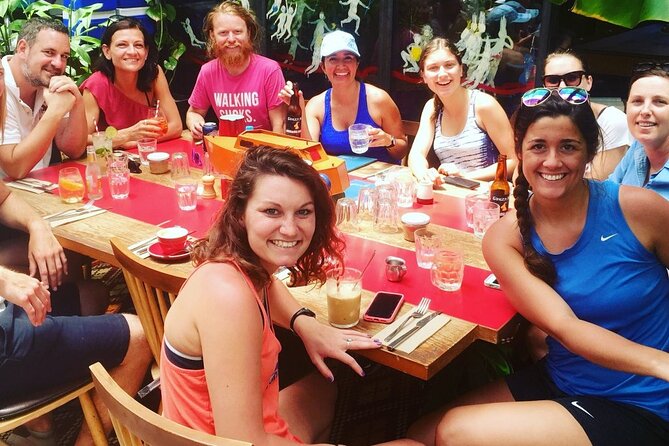
Fitzroy is where the itinerary slows down properly. You get about an hour for lunch and time in the neighbourhood, and you need to pay for your own food and drinks.
I consider this one of the strongest parts of the experience. A long bike ride without a real break can become tiring, while a full hour gives you time to eat, talk with the guide, and reset before the final stretch. The café or lunch venue can vary in appeal. Some riders found it enjoyable, while one hoped for a smaller, more distinctive café rather than a larger venue.
The important point is that lunch is built into the schedule instead of being treated as an afterthought. Fitzroy is known for its independent food and neighbourhood character, so this is also a chance to experience Melbourne outside its grand central buildings.
Bring money and allow for the fact that lunch is not included in the $78.18 tour price. If you are comparing this with a shorter sightseeing ride, the meal break adds time and comfort, but it also means you are paying for a half-day activity rather than a quick circuit.
Chinatown brings the gold rush story into the present
The Chinatown stop connects directly to Melbourne’s gold-rush past. It was established in 1851 in response to the rush and is described as the second-oldest Chinatown in the world.
The stop is only about five minutes, but the location gives the guide a chance to explain how migration helped shape the city from its early years. This is more useful than treating Chinatown as just a place for restaurants and decorative streets.
You will not have time for a meal here because lunch comes earlier in Fitzroy. Think of Chinatown as a compact historical stop and a marker of Melbourne’s continuing links with Asia.
Hosier Lane and Fed Square show modern Melbourne
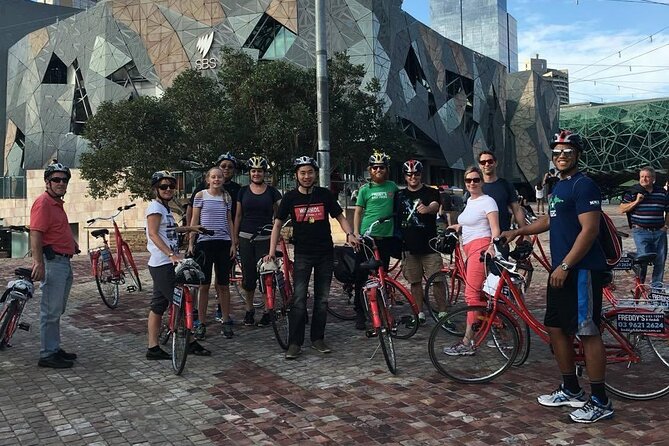
Hosier Lane offers a sharp change of mood. You pull over and look down a bluestone lane covered in street art, one of the places that helped give Melbourne its international reputation for urban creativity.
The stop works best if you take a moment to look closely rather than simply photograph the wall nearest the entrance. The art changes, and the lane feels more like an open-air gallery than a fixed monument. Since the itinerary allows about five minutes, you may want to return later if street art is a major interest.
Fed Square follows with another side of contemporary Melbourne. This public square links Flinders Street with the Yarra and sits near heritage buildings including St Paul’s Cathedral.
It is an architectural contrast to the older buildings around it, and the guide can help you read the square as part of Melbourne’s effort to create a modern civic meeting place. You get the city’s buzz without needing a long stop, then continue toward the river and Immigration Museum.
The Immigration Museum adds a human view of the city
The final listed stop overlooks the Immigration Museum and considers Melbourne through the experience of its immigrant communities. The information provided for the tour notes that immigrants make up 50 percent of the population.
That figure gives the earlier stops more depth. Melbourne’s story is not only about British settlement, gold, grand buildings, sport, and government. It is also about people arriving from elsewhere and changing the city’s food, streets, work, and culture.
The tour does not include admission to the museum, and the stop itself is brief. Still, it is a sensible final theme because it brings the city’s past into the present before you ride back to Rebecca Walk.
Bikes, e-bikes, and the reality of city riding
Blue Tongue Bikes supplies a bicycle and helmet. Both regular bicycles and e-bikes are offered, so read the booking choice carefully. One rider accidentally selected a standard bike instead of an e-bike, while other riders were upgraded and found the powered option especially comfortable.
The route is not presented as an athletic challenge, but city riding still requires attention. Some feedback describes the route as mostly flat, while another rider noted hills and recommended the e-bike option. The safest advice is simple: if you are unsure about your fitness or prefer to save energy for sightseeing, choose the e-bike if available for your departure.
You should also expect normal city obstacles. One less positive experience described riding through pedestrian traffic as an obstacle course, with too much effort spent avoiding people. That is a fair warning, not a reason to reject the tour. Melbourne is a working city, and a bike tour cannot remove every busy crossing or crowded lane.
Guides generally begin with a safety briefing and keep the pace manageable. Finn received repeated praise for safety, explanations, and a steady pace. Marcus was appreciated for his history knowledge and friendly manner, while Matt and Max were also singled out for strong guiding. Freddy was praised for making the ride informative and even adding an unexpected glimpse of tennis.
The equipment is not perfect for everyone. One rider found the bike seats uncomfortable, and another described a chain problem that the guide could not fix without help from someone in the group. These are isolated practical concerns, but they are worth knowing if you are sensitive to saddle comfort or expect a mechanically polished ride.
What the $78.18 price buys you
At $78.18 per person, this is not the cheapest way to see Melbourne’s centre. You are paying for a bicycle, helmet, guide, route planning, safety management, and a half-day schedule that links a wide range of sights.
The value is strongest if you have only a short time in Melbourne and want a broad orientation on your first day. You cover far more ground than on foot, and the guide supplies historical links that would be easy to miss when moving independently between landmarks.
The price is less compelling if you already know the city, prefer museums and interiors, or want a fast, athletic ride. Lunch and drinks cost extra, and the short stops do not replace full visits to the Shrine, Cook’s Cottage, Royal Exhibition Building, or Immigration Museum.
A rating of 4.9 from 671 reviews and a 98 percent recommendation rate point to a very consistent experience overall. I would still read those numbers alongside the practical cautions: pace can feel slow, city traffic can be awkward, seats may not suit everyone, and the standard bike is not the same as an e-bike.
Who should book this ride?
I would choose this tour for a first visit to Melbourne, especially if you like history but do not want to spend the entire morning indoors. It suits active families, couples, solo riders, and anyone who wants a friendly introduction before exploring particular neighbourhoods on their own.
It is also a good choice if you want a guide who can connect Aboriginal history, the gold rush, immigration, sport, architecture, and street art. The small group cap helps, and the named guides have a strong record of keeping the ride social and safe.
I would hesitate if you dislike cycling near pedestrians, need a very fast pace, or expect a fully guided museum experience. Check the bike type before paying, bring money for Fitzroy lunch, and leave room in your day for a slower ride than the advertised duration might suggest.
FAQ
How long is the Best of Melbourne Bike Tour?
The tour lasts approximately four hours and 30 minutes.
What time and where does the tour begin?
It begins at 10:00 a.m. at 20 Rebecca Walk, Melbourne VIC 3000, Australia.
Does the tour return to its starting point?
Yes. The activity ends back at the meeting point.
Are a bicycle and helmet included?
Yes. Use of a bicycle and helmet is included in the tour price.
Is lunch included?
No. The Fitzroy stop lasts about one hour, but food and drinks are not included. Bring money for lunch.
How many people can join the tour?
The maximum group size is 10 participants.
What happens if bad weather cancels the tour?
If poor weather causes cancellation, you can choose another date or receive a full refund. You can also cancel for a full refund if you do so at least 24 hours before the local start time.
Just added in Melbourne
- From Melbourne: 2-Day Great Ocean Road & Grampians Escape★ 4.5 · 20 reviews
- Melbourne: 12 Apostles Sunset Tour – Less Crowds★ 4.8 · 188 reviews
- Melbourne sunrise balloon flight & champagne breakfast★ 5.0 · 270 reviews
- Melbourne Sunrise Hot Air Balloon Ride with GoPro Photos★ 5.0 · 263 reviews
- Melbourne Street Art Tour★ 5.0 · 378 reviews
- Phillip Island Day Trip from Melbourne with Penguin Plus Viewing Platform★ 5.0 · 383 reviews
- From Melbourne: Penguins and Wildlife Nature Day Tour★ 4.7 · 380 reviews
- Melbourne: Melbourne Skydeck General Admission Entry Ticket★ 4.6 · 386 reviews
Cycling Tours, compared.
Browse the lists this tour appears in