
Reviewed · WHALE WATCHING
Dunsborough: Whale Watching Tour
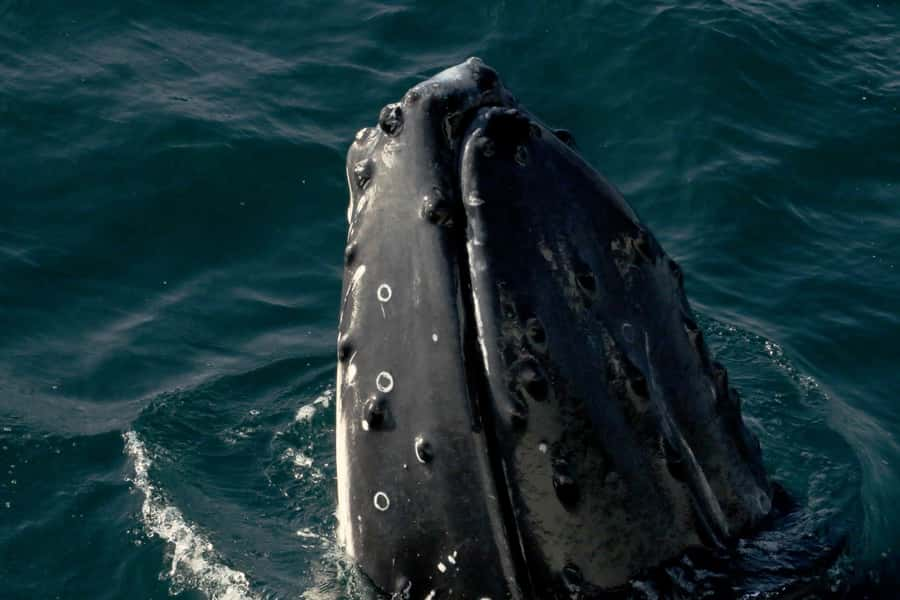
More than 35,000 humpback whales pass through Geographe Bay during their migration, and this cruise puts you in the middle of that seasonal journey. From the deck of Alison Maree, you may see mothers with calves, playful breaches, spy-hopping whales, dolphins at the bow, and, in October or November, enormous blue whales.
I like two things right away: the small modern vessel, reported at around 35 people, gives you a better chance of seeing the water without a packed viewing deck, and the onboard marine biologist turns each sighting into a lesson in whale behavior. The route also brings fine coastal views of Eagle Bay, Castle Rock, Bunker Bay, and Cape Naturaliste Lighthouse.
The main caution is simple: this is a sea trip, and seasickness is possible. You must also cross sand from the beach to board, so the tour is not suitable for people with limited mobility.
Key points to know before you book
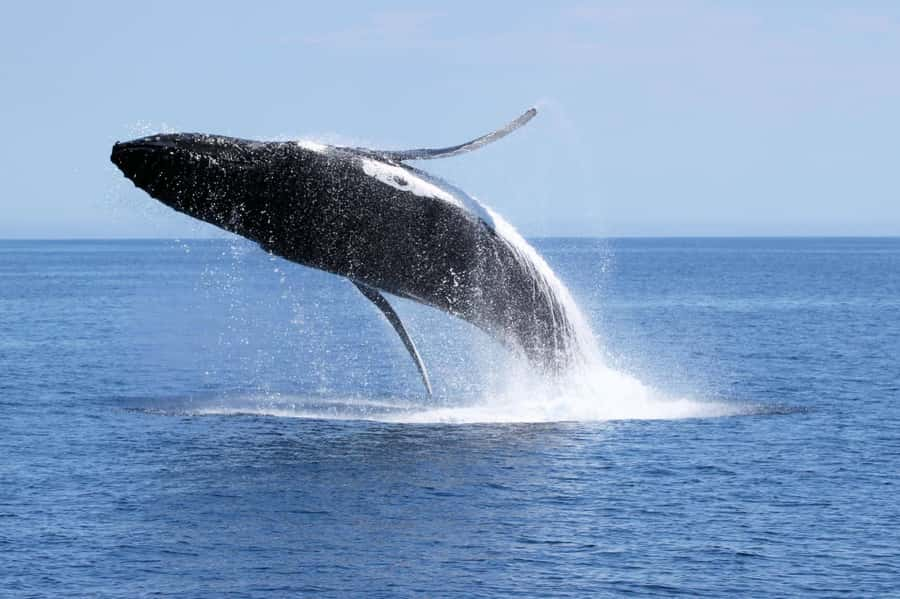
- Whales are the main event: Humpbacks are common during the migration, with calves often seen traveling south toward Antarctica.
- Blue whales are seasonal: October and November offer a chance to see the largest animal on Earth, though sightings depend on conditions and whale movement.
- Alison Maree carries about 35 people: This is a more personal setup than a large sightseeing boat, with room to move around and watch.
- The guide adds real value: A marine biologist explains migration, behavior, and the animals you are seeing.
- The cruise lasts 150 minutes: Tea and a biscuit are included during the 2.5-hour trip.
- Boarding is from the beach: Park at the gravel car park beside the Dunsborough Professional Fisherman’s Boat Ramp, then walk across the sand to the boarding ramp.
Why Geographe Bay is a fine place to watch whales
Geographe Bay offers more than open-water whale spotting. The cruise takes you through a striking stretch of southwest Western Australia, with the coast and headlands helping give shape to the trip.
As Alison Maree leaves the Dunsborough Professional Fisherman’s Boat Ramp, you settle into the rhythm of the bay. The water may look calm near shore, but conditions can change as the vessel reaches deeper water. Keep your warm layer handy, even on a sunny day.
The wider setting matters because whale watching can involve long pauses between sightings. If the animals are temporarily out of view, you still have the coast to enjoy. The route includes views toward Eagle Bay, Castle Rock, Bunker Bay, and Cape Naturaliste Lighthouse, so the cruise works as a scenic outing as well as a wildlife trip.
That said, the whale sightings remain the reason to book. No operator can control where a whale surfaces or how long it stays visible. The strong point here is the scale of migration through the bay, not a promise that every passenger will see a breach.
More whale boats leaving Busselton:
- Dunsborough Whale Watching Eco Tour
★ 5.0 · 345 reviews - Whale Watching Cruise from Busselton, Augusta or Dunsborough
★ 4.8 · 325 reviews - Whale Watching Busselton
★ 5.0 · 156 reviews
Boarding Alison Maree from the Dunsborough beach
The meeting point is at 306 Geographe Bay Road, Quindalup. Once you arrive, park in the gravel car park to the right, walk down onto the beach, and wait by the boarding ramp near the water.
This is not a standard marina boarding process. You need to cross sand before stepping aboard, so wear comfortable shoes and allow yourself time to make the walk carefully. That beach access is the key practical issue for anyone with mobility limits.
Alison Maree is described as a clean, modern vessel with space for about 35 people. That size is useful for whale watching. You are not lost in a crowd, and the crew can keep the group informed as sightings develop. One earlier trip was also praised for having enough room to sit without feeling crowded.
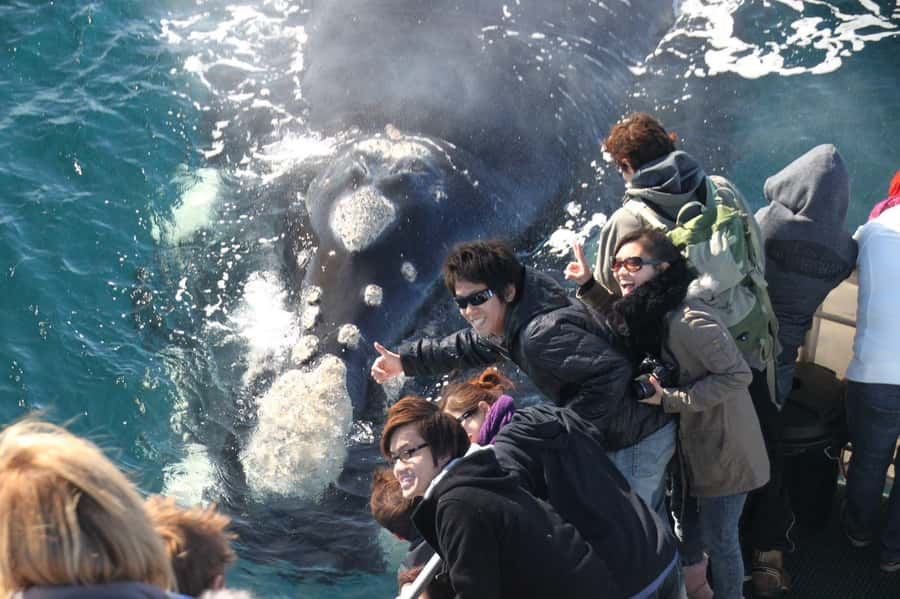
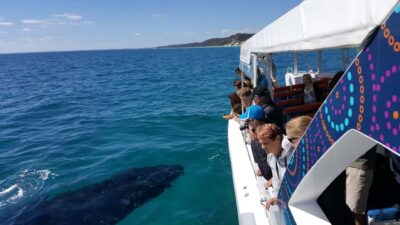
Once on board, find a position that lets you see the water rather than focusing only on the front rail. Dolphins may ride the bow, making the front of the boat a tempting place to wait, but whales can surface on either side. If you stay alert and move when the crew points out activity, you improve your chances of catching the next appearance.
The 2.5-hour route through Geographe Bay
The advertised duration is 150 minutes, or two and a half hours. The trip begins and ends at the same boat ramp, keeping the outing easy to fit into a day in the Dunsborough area.
The first part of the cruise is about getting out into the bay and watching for signs of whale activity. A blow, a dark back, a tail, or a sudden splash may be the first clue. The marine biologist explains what you are seeing, including the animals’ migration patterns and behavior.
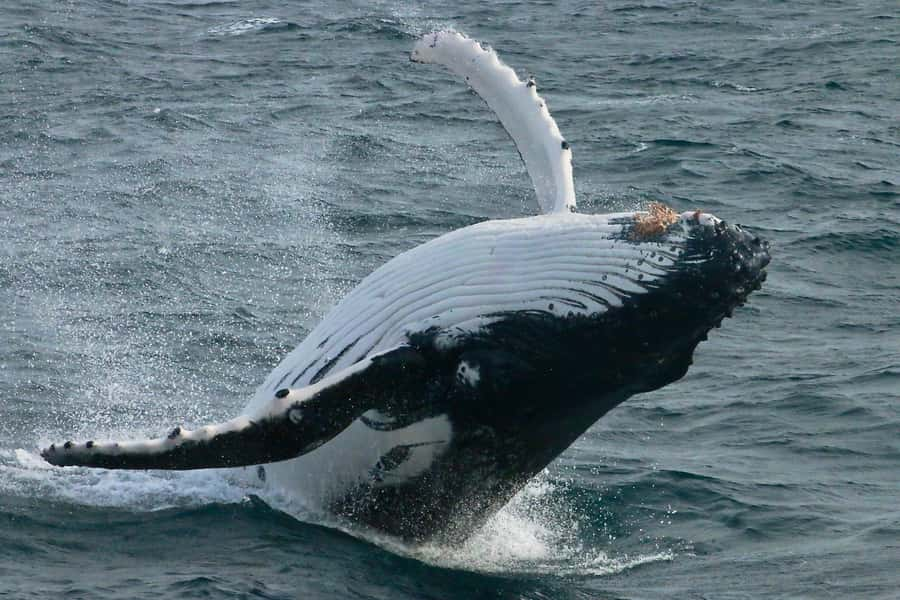
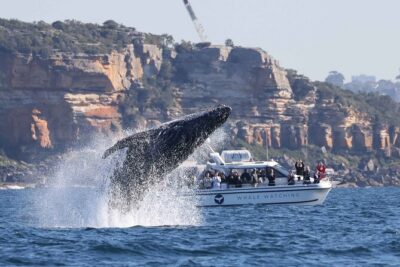
Humpback whales are the main target. They are known for active displays, and you might see a breach, spy hop, tail movement, or playful behavior at the surface. A mother and calf may remain in the area for an extended period, giving you more than a single quick glimpse.
One particularly memorable sighting involved a mother and calf remaining close to the boat for more than an hour, with the pair coming within roughly six or seven meters. That kind of encounter cannot be guaranteed, but it shows why patience matters. Whale watching is often less about chasing a string of sightings and more about waiting for a small group to settle into the bay.
The crew may stay with whales longer when the animals are active. On one outing, the vessel continued beyond the expected time so passengers could enjoy whales playing nearby. This is a welcome approach, though you should still treat the two-and-a-half-hour duration as the planned schedule rather than counting on extra time.
Humpbacks, calves, and the southbound migration
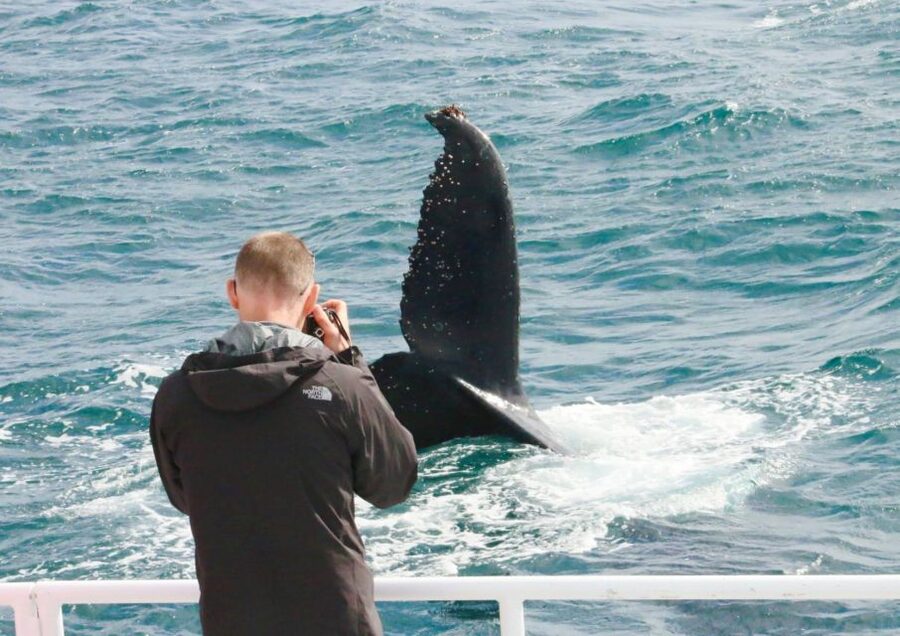
The humpback migration gives this cruise its best chance of regular sightings. The whales move through Geographe Bay with their young as they travel south toward Antarctica. Seeing an adult beside a calf adds another layer to the experience because the guide can explain the relationship and the way the animals travel together.
Humpbacks are also the species most likely to provide the dramatic moments people hope for. They may breach clear of the water, spy hop with their heads above the surface, or approach close enough that you do not need binoculars.
Still, keep your expectations sensible. You could see backs and blows without a full breach. One excellent trip included close views, spy-hopping, and other surface behavior but no breach. That is not a poor result. A calm, extended sighting can be more satisfying than one spectacular jump followed by empty water.
I would bring a phone or camera, but I would not spend the entire trip staring through a screen. Whale movements are quick, and the best moment may happen several meters away from where you are pointing. Watch first, photograph second.
Same base, a different sort of day:
- Margaret River Winery, Brewery Tour with Gourmet Lunch.
★ 5.0 · 401 reviews - Jewel Cave Fully-guided Tour (Located in Western Australia)
★ 5.0 · 363 reviews - Premium Margaret River Winery Tour with Tannin Road
★ 5.0 · 347 reviews - Nocturnal Wildlife Tour from Busselton
★ 5.0 · 218 reviews
The chance to see a blue whale in October and November
Blue whales are the seasonal prize. They are often sighted in October and November, when the animals pass along the coast. These are the largest animals on Earth, so even a distant blue whale can make a strong impression.
Recent trips have included sightings of two blue whales traveling along the coast, along with bottlenose dolphins. That is an excellent combination, but blue whale encounters remain dependent on the season and on where the animals are moving that day.
If blue whales are your main goal, plan for October or November and accept that nature sets the schedule. The tour does not promise them, and the presence of humpbacks, calves, or dolphins can still make the cruise worthwhile outside those months.
Southern right whales are also listed among the species you may see. The boat’s focus remains the migrating whales in Geographe Bay, so the exact mix changes from trip to trip.
Dolphins and the coastal scenery
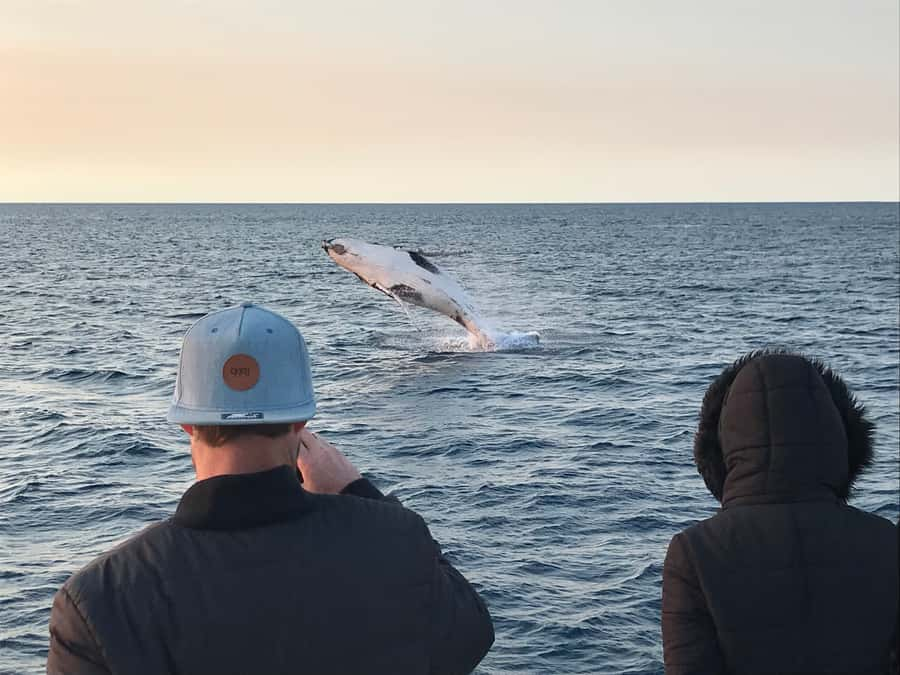
Whales get the headline, but dolphins can add a quick burst of energy to the cruise. Bottlenose dolphins are often seen riding the vessel’s bow, where they move fast and close to the surface. If the crew spots them ahead, heading forward may give you the best view.
The scenery fills the gaps between wildlife sightings. Eagle Bay, Castle Rock, Bunker Bay, and Cape Naturaliste Lighthouse are all part of the coastal route. This makes the cruise useful for people who want a broad look at the area from the water, not only a wildlife checklist.
There is a practical lesson here: choose a seat that gives you flexibility. A forward position is helpful for dolphins, while a side view may be better for whales. The crew’s directions matter, so listen for where the next sighting is developing rather than staying fixed in one spot.
The marine biologist and the value of the commentary
A marine biologist is on board to explain the animals and the migration. This is one of the strongest parts of the experience because the commentary helps you understand why the whales are in the bay and what their surface movements mean.
You learn about migratory patterns, behavior, and the difference between a quick surfacing and a longer display. The guide can also put the size of the migration into context, with more than 35,000 humpbacks passing through the region.
The crew has also been praised for being patient, friendly, and willing to answer questions. That matters on a whale cruise because passengers have different levels of interest. You can simply enjoy the view, or ask about the whales’ movements and behavior as the trip develops.
The best commentary does not compete with the wildlife. It gives you enough information to make sense of what you see, then lets you watch. This trip appears to follow that useful balance.
Tea, a biscuit, and what to pack
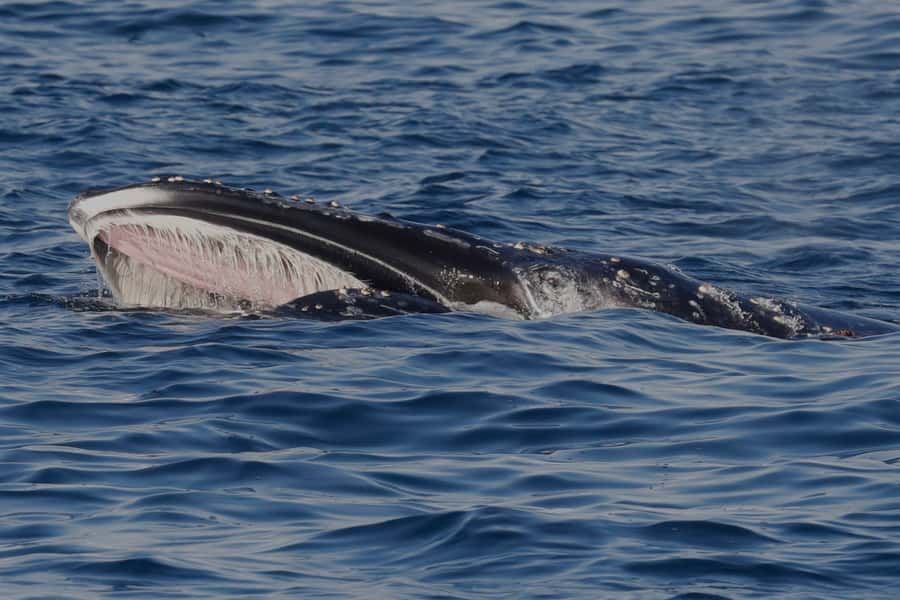
Morning or afternoon tea is included, along with a biscuit. It is a small touch, but welcome on a 150-minute outing, particularly if you have planned other activities around the cruise.
Bring warm clothing, even if the forecast looks pleasant on land. The boat’s movement creates a cooler feel, and you may spend much of the trip standing outside watching the water. Comfortable shoes are also important, both for the beach boarding and for moving around the vessel.
Seasickness is the other practical concern. The boat has been described as comfortable and safe, but even a smooth cruise can affect some people. If you know you are sensitive on the water, prepare before boarding and choose a position that helps you feel steady. The supplied information does not specify any particular seasickness remedy, so you should make your own arrangements.
Is $74 a fair price?
At $74 per person, the price is reasonable for a 2.5-hour guided cruise that includes a marine biologist, tea, and a biscuit. You are paying for a dedicated wildlife outing rather than a short coastal ride, and the duration gives the crew time to locate whales and stay with them when the animals are active.
The value improves if you see several species or spend time with a mother and calf. Blue whales and dolphins can make the day feel especially rewarding, but they should be treated as possible additions rather than guaranteed features.
The price is less appealing if you want a quick, low-cost boat ride with no risk of rough water or waiting. This is a wildlife search, not a fixed show. You are buying time on the bay, expert guidance, and a genuine chance to see migrating whales.
The current score of 4.7 out of 5 from 111 ratings supports the idea that the combination of crew, vessel, and sightings generally works well. Still, a high score cannot remove the natural uncertainty of wildlife watching.
Who will enjoy this cruise most?
I would recommend it to anyone staying around Dunsborough who wants a close look at the southwest coast and is happy to spend two and a half hours watching patiently.
It suits:
- Families and couples who want a memorable wildlife outing
- People interested in whale behavior, not just photographs
- Visitors planning a trip in September, October, or November
- Anyone who prefers a smaller boat to a very large sightseeing vessel
- Photographers who understand that wildlife moments cannot be staged
It is less suitable for people with limited mobility because boarding requires walking across sand. It may also be a poor fit if you strongly dislike boat motion or want a guaranteed close encounter.
The English-language tour is live and fully guided. That makes it straightforward for English-speaking passengers who want explanations during the cruise rather than a self-guided trip.
Should you book the Dunsborough whale cruise?
Book it if you want a well-guided, reasonably priced chance to see migrating humpbacks in a beautiful part of Western Australia. The strongest reasons are the small vessel, marine biologist, good record of close whale sightings, and the possibility of seeing calves, dolphins, or seasonal blue whales.
I would be especially keen to book in October or November for the blue whale possibility, while still treating humpbacks as the main attraction. Bring warm clothes, plan for some sea movement, and be ready to cross sand at boarding.
If you need step-free access or cannot manage a beach boarding point, choose another activity. For everyone else, this is a solid half-day addition to a Dunsborough visit, with enough time on the water to make the $74 fare feel justified.
FAQ
How long is the Dunsborough whale watching tour?
The cruise lasts 150 minutes, or 2.5 hours. It leaves from and returns to the Dunsborough Professional Fisherman’s Boat Ramp.
Where do I meet the boat?
Meet at 306 Geographe Bay Road, Quindalup, Western Australia 6281. Park in the gravel car park to the right, then walk down to the beach and wait by the boarding ramp near the water.
Which whales might I see?
The cruise focuses on migrating humpback whales and may also include Southern Right and Blue Whales. Humpbacks and calves are a key feature, while blue whale sightings are often possible in October and November.
Are dolphins seen on the cruise?
Yes. Dolphins, including bottlenose dolphins, are often seen riding near the bow of the vessel.
Is tea included?
Yes. Morning or afternoon tea and a biscuit are included during the cruise.
Is the tour suitable for people with limited mobility?
No. Boarding takes place from a beach, and you need to walk across sand to reach the vessel. The tour is not recommended for people with mobility impairments.
Just added in Busselton
- Whale Watching Dunsborough★ 5.0 · 26 reviews
- Whale Watching from Augusta in Western Australia★ 5.0 · 124 reviews
- Whale Watching Busselton★ 5.0 · 156 reviews
- Margaret River Coastal and Wildlife Eco Trip from Busselton or Dunsborough★ 5.0 · 107 reviews
- Margaret River Wine and Sights Discovery Tour from Busselton or Dunsborough★ 5.0 · 155 reviews
- Self-Guided Ngilgi Cave Ancient Lands Experience★ 4.5 · 154 reviews
- Margaret River Beer & Wine Adventure (departs Dunsborough/Busselton)★ 5.0 · 80 reviews
- Augusta Whale Watching Eco Tour★ 5.0 · 137 reviews
Whale Watching, compared.

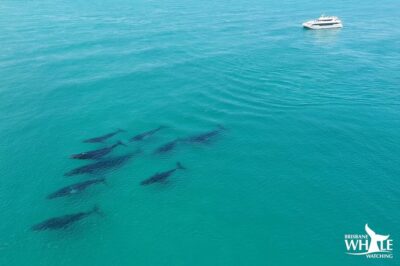
Brisbane Whale Watching Cruise from Redcliffe or Sunshine Coast
Read our review →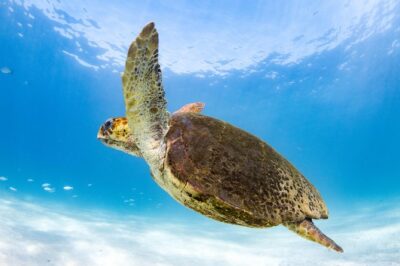
Swim with Whale Sharks in the Ningaloo Reef: 3 Island Shark Dive
Read our review →
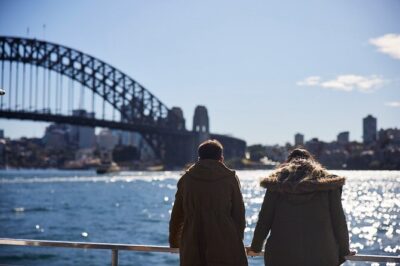
Sydney Whale-Watching Cruise Including Lunch or Breakfast
Read our review →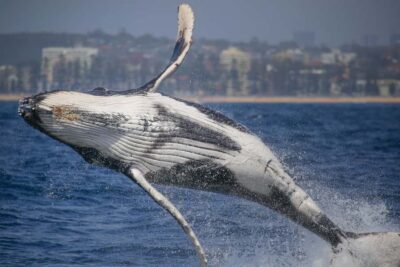
Browse the lists this tour appears in