
Reviewed · OUTBACK & 4WD ADVENTURES
From Darwin: 3-Day Kakadu and Litchfield 4WD Camping Tour
Kakadu’s ancient rock art, crocodile country, and broad floodplains make this three-day 4WD trip from Darwin a strong choice when you want to see a lot without driving yourself. The tour also adds Litchfield’s waterfalls and swimming holes, so you get two very different sides of the Top End.
I like the mix of Aboriginal culture and wild scenery, especially Ubirr, the Bowali Visitor Center, and the chance to learn about the places from guides such as Bec, Tom, Tim, Naomi, and Rick. I also like the practical pace: long drives, yes, but with wetlands, rock pools, walks, and sunset stops breaking up the road time.
The main trade-off is comfort. You cover about 1,070 kilometres in three days, walk over rough and sometimes steep ground, and sleep in basic camp accommodation. This is not a soft sightseeing coach trip, and the most remote waterfall stops depend on weather and road conditions.
Key points to know before booking
- Ubirr at sunset: See one of Kakadu’s best-preserved rock art areas, then look across the Nadab Floodplain as the day cools.
- Cahills Crossing: Watch for crocodiles and barramundi at a famous crossing between Kakadu and Arnhem Land, when conditions allow.
- Wetlands by boat: A Corroboree Billabong cruise gives you a calmer wildlife experience before the rougher 4WD sections.
- Waterfall choice changes: Motor Car Falls, Moline Rockhole, Maguk, or Jim Jim Falls may feature on day two, depending on access and conditions.
- Simple camping: Choose a permanent tent or a canvas bush swag, with shared bathroom facilities at Jabiru Campground.
- A demanding but rewarding schedule: Expect roughly 9.5 kilometres of walking across three days, including rocky sections, heat, humidity, and direct sun.
Why this three-day route works
The smart thing about this trip is its range. In a short window, you see wetlands, floodplains, rock art, waterfalls, termite mounds, and monsoon forest. These are not interchangeable postcard stops. Each shows you a different part of the Top End.
The tour also saves you the trouble of planning Kakadu’s distances and changing road conditions. An accredited driver-guide handles the route, park access, off-road travel, and daily walks. That matters in Kakadu, where the best places are spread far apart and some roads or swimming areas may close after rain.
You leave Darwin at 6:30 a.m. from outside The Leea Darwin on Cavenagh Street. Arrive early. There is no hotel pickup or drop-off, and the vehicle has limited storage, so you can bring one travel bag up to 15 kilograms and one day bag up to 5 kilograms.
The published price is $810 per person. That is a lot for three days, but it includes transport, park fees, two nights of camping, meals, the wetland cruise, and the guide. You are paying for access to a large and sometimes difficult region without hiring a 4WD, paying park fees separately, or working out the route yourself. It is better value if you want a compact Kakadu and Litchfield visit and would otherwise need to arrange a car, accommodation, food, and activities.
Other outback runs from Darwin:
- 4-Hour Outback Gourmet Food & Aboriginal Art Tour
★ 4.5 · 91 reviews - 3-Day Kakadu & Litchfield 4WD Camping Adventure from Darwin
★ 5.0 · 69 reviews - 3 Day Kakadu & Litchfield 4WD Expedition
★ 4.5 · 61 reviews
Day one: Corroboree Billabong, Bowali, and Ubirr
The first day covers about 420 kilometres, so settle in for a long road day. The air-conditioned 4WD helps, but you should still bring a refillable water bottle, sun protection, and a small daypack within easy reach.
Your first major stop is the Corroboree Billabong Wetland Cruise. This is a useful opening to the Top End because you see the wetland at water level rather than from the roadside. Keep watch for birds and other wildlife, and listen to the guide explain the setting as the boat moves through the billabong.
The cruise is also a good contrast to the rest of the day. After it, the route continues toward Kakadu, with more time in the vehicle and a visit to the Bowali Visitor Center. Bowali introduces Kakadu’s wildlife, geology, and cultural setting, giving you some background before the rock art and floodplain stops.
Later, the group heads toward Cahills Crossing, if conditions permit. This is a famous and potentially dangerous crossing at the edge of Kakadu and Arnhem Land. The attraction is not a guaranteed animal show. It is the chance to look for crocodiles and barramundi in a genuinely wild setting, while respecting the safety limits set by the guide.
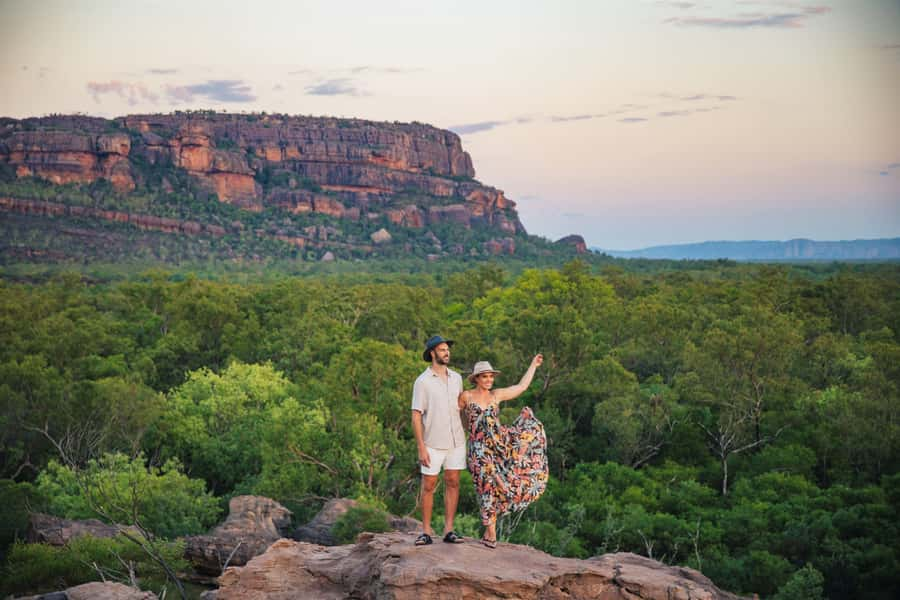
Ubirr is the day’s big cultural stop. A short loop walk, listed at about one kilometre and graded 2 to 3, leads through a collection of Aboriginal rock art sites. The paintings and engravings are valuable not just because they are old, but because they connect the rocks, animals, stories, and continuing Aboriginal culture of the area.
Your guide’s commentary can make a major difference here. Guides including Bec and Tim have been praised for explaining local culture with care and respect, while Tom has been noted for making complex Northern Territory history easy to follow. Guide assignments can change, but this is the kind of interpretation to expect from a strong trip leader.
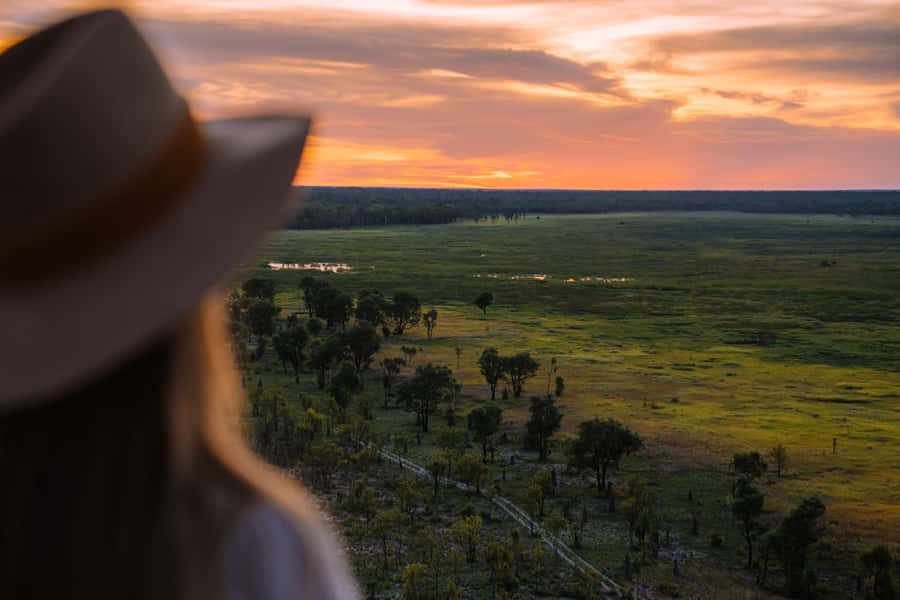
The day ends with sunset views over the Nadab Floodplain. This is one of the tour’s best-timed moments. The heat often softens, the open view gives you a sense of Kakadu’s scale, and the rock art stop feels more complete when you see the country around it.
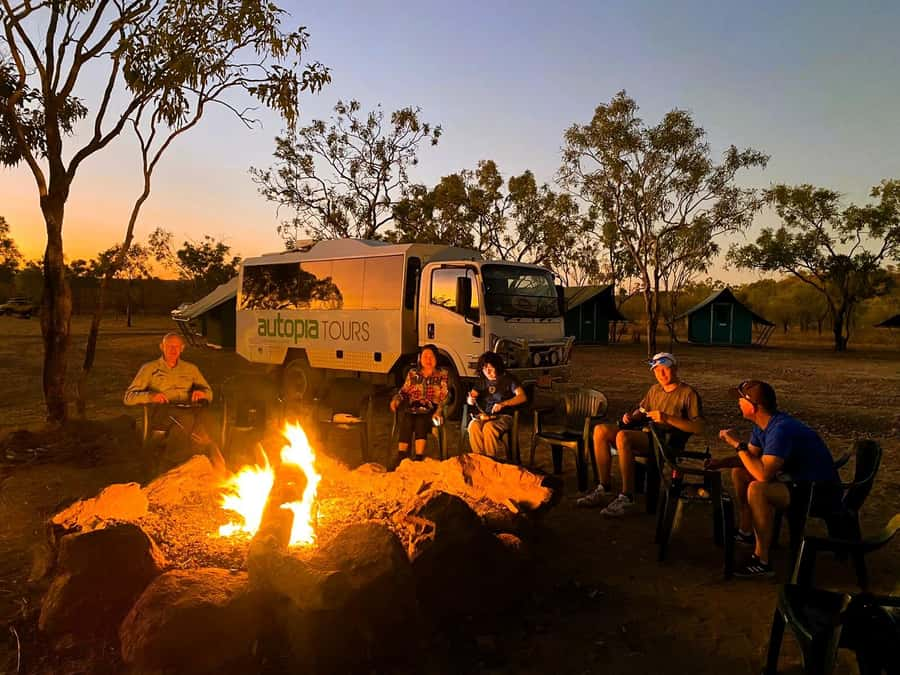
Back at Jabiru Campground, you help prepare dinner and settle into the camping setup. You can sleep in a permanent tent or use an Australian bush swag, a canvas-covered bed roll. Shared bathrooms keep things manageable, but do not expect private hotel facilities.
Day two: Kakadu waterfalls and rough walking
Day two shifts from culture and wetlands to water, rock, and forest. The driving distance is shorter, around 150 kilometres, but the walking can be harder. Depending on conditions, the group may visit Motor Car Falls, Moline Rockhole, Maguk, also called Barramundi Gorge, or Jim Jim Falls.
This flexibility is important. The exact waterfall stop is not fixed because Top End weather affects access, water levels, and road conditions. You should view that as sensible trip planning rather than a failure to follow a promise. It also means the day can differ from one departure to another.
The walks range from about 1.5 to 4 kilometres and may be graded as high as Grade 5. Expect steep rocky sections, heat, humidity, and exposed ground. You need proper walking shoes, comfortable clothing, water, and enough fitness to keep moving over uneven surfaces.
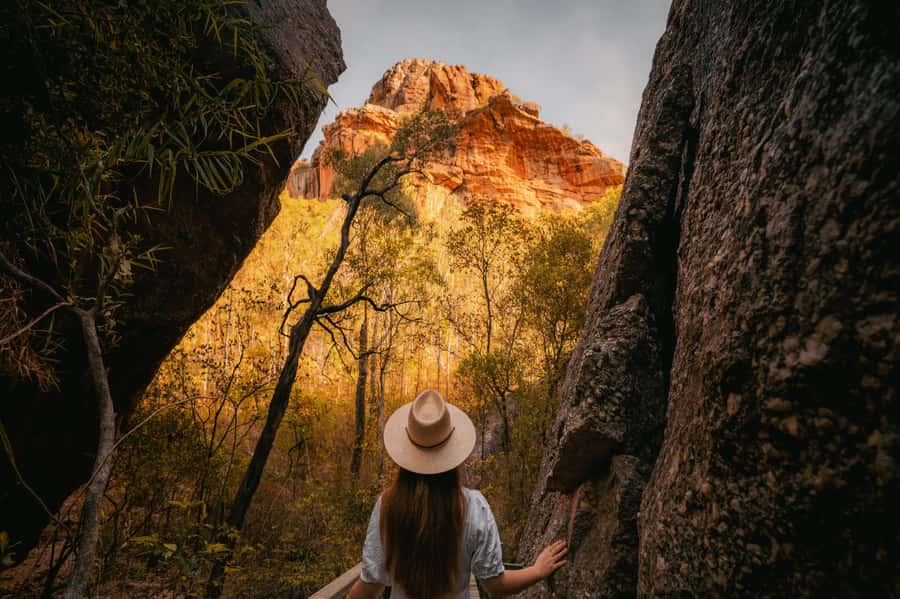
The reward is a more physical side of Kakadu. You may walk through monsoon forest, cross rocky ground, and reach a plunge pool or gorge framed by steep sandstone. Swimming is possible at selected sites when conditions allow, but the guide makes the final call for safety.
Jim Jim Falls has been a particular highlight for some departures, and it is easy to understand why. The setting combines tall escarpments, rough access, and a strong feeling of being far from town. Still, do not book this tour solely for one waterfall. The exact stop may change, and the whole day works best when you value the walk and the setting as much as the final pool.
If time allows, Nourlangie adds another cultural layer. Archaeological evidence at the site includes rock art dating back more than 20,000 years. The stop helps you see Kakadu as a place shaped by long human use, changing environmental conditions, and living Aboriginal culture, not simply as a collection of scenic swimming holes.
After another dinner at camp, you return to the same Jabiru accommodation. Two nights in one place is a small but useful comfort. You do not need to repack every morning, and the second night gives the group more time to settle into the bush routine.
Day three: Litchfield waterfalls and the road back
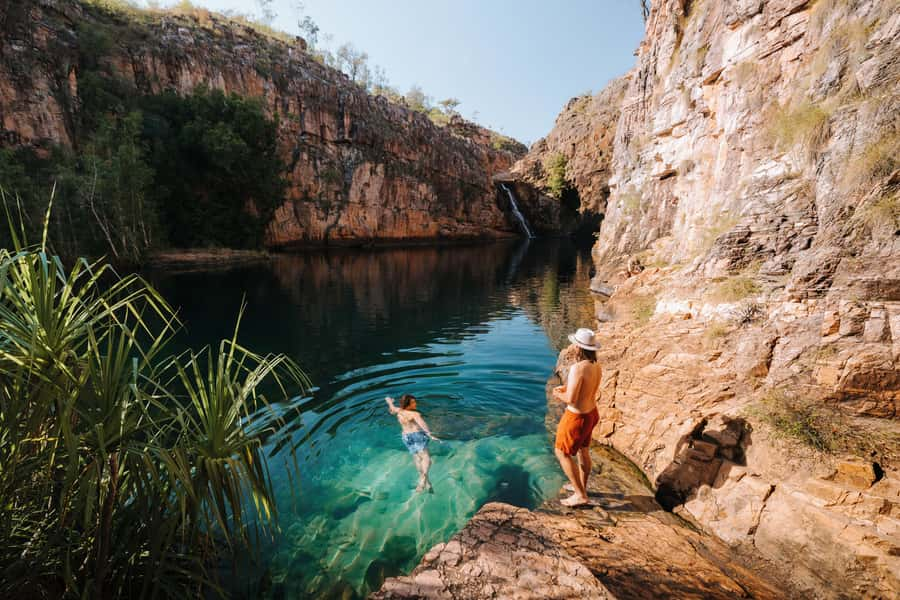
The final day takes you out of Kakadu and toward Litchfield National Park. The driving distance is about 500 kilometres, with the tour reaching Darwin at roughly 7 p.m. This makes day three another long one, so do not plan an evening flight or a fixed dinner reservation immediately after arrival.
Litchfield changes the mood. Instead of Kakadu’s huge floodplains and extensive cultural sites, you get a more compact collection of waterfalls, spring-fed streams, sandstone formations, and swimming areas.
Possible stops include Buley Rockholes, Wangi Falls, and Florence Falls. These locations offer the chance to cool off in rock pools or near waterfalls, subject to safety and conditions. Bring swimwear and a towel, but do not assume every swimming stop will be open or available on every departure.
Florence Falls is particularly suited to the classic waterfall experience, while Buley Rockholes offer a series of smaller pools. Wangi Falls gives you a broader scenic stop. The tour may use one or more of these places depending on the day’s timing and access.
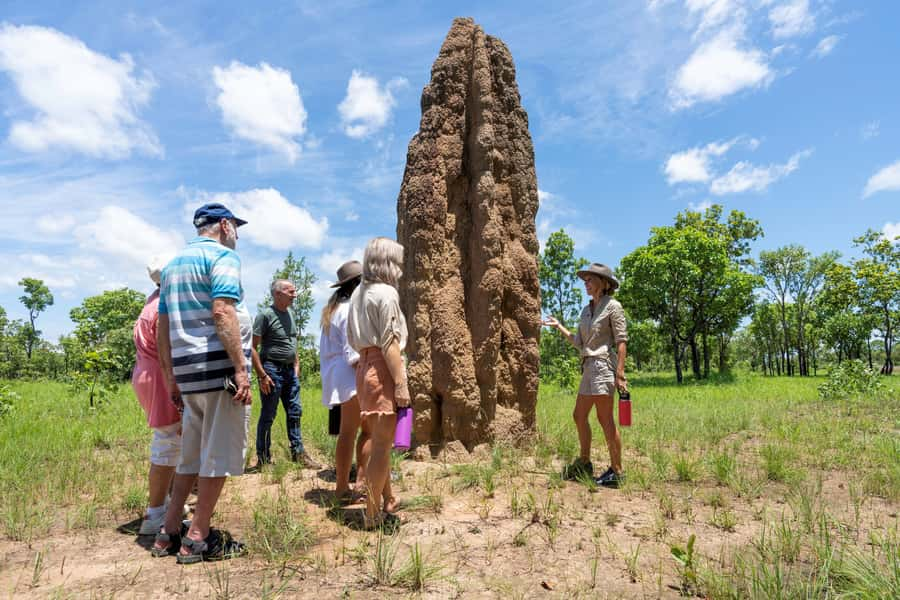
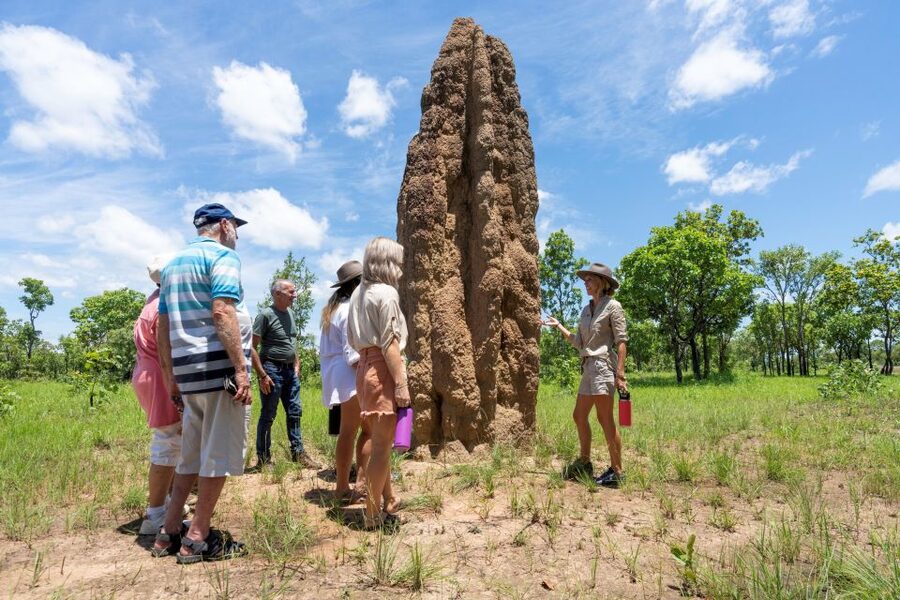
You also see Litchfield’s magnetic and cathedral termite mounds. These are not minor roadside curiosities. They show how insects shape the Top End environment, and the two mound types give the final day a simple but memorable natural-history lesson.
The Litchfield section is a good reason to choose this tour over a Kakadu-only trip. Kakadu brings ancient culture, wetlands, and vast open country. Litchfield brings easier-to-grasp swimming and waterfall stops. You get a fuller picture of the region, though the price is more time on the road.
A few more things to do in Darwin worth a look
- Dingos 3 Day K’Gari (Fraser Island) 4WD Tag-Along Tour
★ 5.0 · 939 reviews - Rainbow Beach: 3-Day K’gari (Fraser Island) 4WD Adventure
★ 4.8 · 635 reviews - Adelaide: 3-Day Kangaroo Island Adventure Tour with Camping
★ 4.6 · 86 reviews - Dreamworld, WhiteWater World & SkyPoint 3-Day Ticket
★ 4.1 · 82 reviews
Guides, group feel, and transport
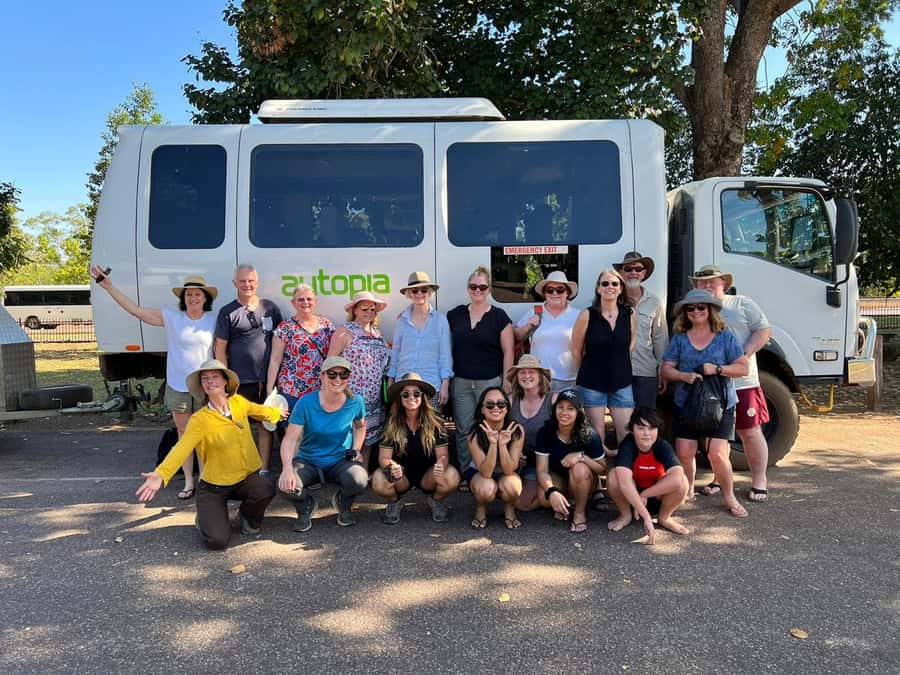
The quality of the guide matters greatly on a trip like this. You spend many hours together, rely on the driver across long distances, and need clear instructions at water and walking sites.
The guides associated with this departure have included Bec, Tom, Tim, Naomi, Rick, Emily, and Becks. The strongest praise has focused on clear commentary, safe driving, humor, and respectful treatment of Aboriginal culture. Rick has also been noted for taking photos for the group, while Naomi was praised for keeping a small group friendly and energetic.
One practical point is that the vehicle can suffer delays. One departure experienced a breakdown early in the trip and arrived late for the wetland cruise. That is not typical enough to define the tour, but it shows why you should keep your schedule flexible and avoid making a same-day connection after the trip.
Transport receives a 90 percent perfect score from the available rating breakdown, and the overall experience is rated 4.8 from 57 ratings. Those figures point to a strong record, but the basic realities remain: long drives, limited luggage space, and rough roads in parts of the parks.
Camping, meals, and what to pack
The tour includes two breakfasts, three lunches, and two dinners. Additional food and drinks are not included, so bring money or supplies for anything extra you want, along with a reusable water bottle.
You need to choose between a permanent tent and a bush swag. Safari tent bedding includes a mattress, pillow, case, and top and fitted sheets. A sleeping bag is not included, but you can hire one for $40 through the operator.
Pack light and pack for heat. Your useful kit includes:
- Closed-toe hiking shoes
- Breathable clothing and quick-dry swimwear
- Hat, sunglasses, sunscreen, and insect repellent
- Towel, toiletries, and a flashlight
- Rain gear and weather-appropriate layers
- Personal medication and a charged phone
- Power bank and small daypack
The tour is not suitable for children under eight, people with mobility impairments, or anyone with a low level of fitness. Children aged eight to 17 must stay with an adult or legal guardian. People over 70 need a doctor’s certificate 30 days before travel.
You should be comfortable with two to four kilometres of walking on some days, often over rocks and in direct sun. The total walking distance is about 9.5 kilometres, though the guide can change the walks to protect the group.
Who should book this tour?
I would choose this trip if you have three days in Darwin, want both major national parks, and prefer a guided route to self-driving. It suits active adults who enjoy walking, swimming, basic camping, Aboriginal rock art, wildlife, and long days outdoors.
I would not choose it if you need hotel comfort, private bathrooms, a slow pace, or guaranteed access to one particular waterfall. The $810 price is fair only if you use the included transport, meals, park access, cruise, guide, and camping. If you already have a capable 4WD and several extra days, independent travel may give you more freedom.
For a short, active visit, I think the combination is convincing. Ubirr and the wetland cruise provide the cultural and wildlife core, Kakadu’s waterfalls add the physical adventure, and Litchfield gives you a final chance to cool off before returning to Darwin. Pack light, arrive early, keep your evenings free, and book this one for the country rather than for comfort.
FAQ
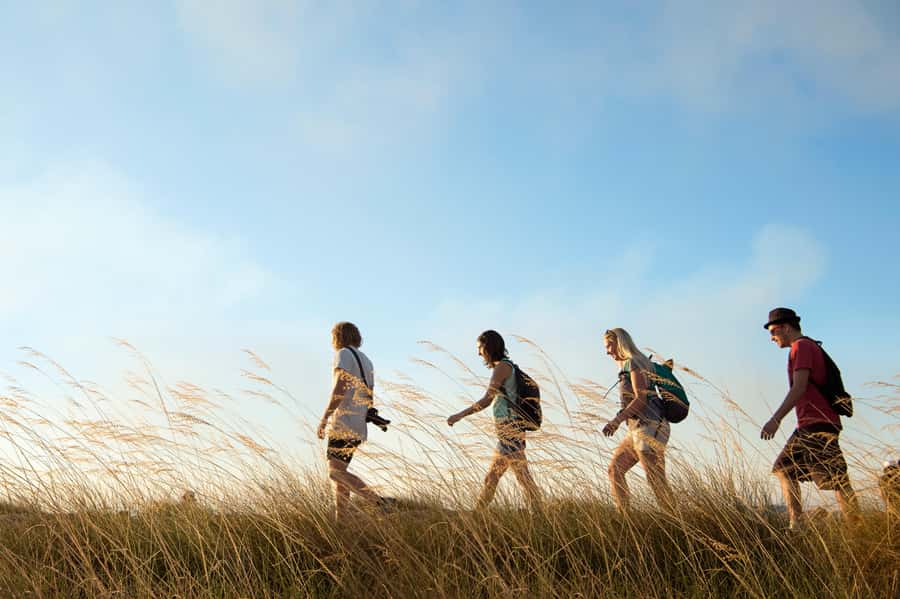
Where does the tour meet in Darwin?
The meeting point is outside the front gates of The Leea Darwin at 64 Cavenagh Street, Darwin City. Departure is at 6:30 a.m., and you should arrive before departure.
Is hotel pickup included?
No. Hotel pickup before the tour and drop-off after the tour are not included.
What type of accommodation is provided?
You spend two nights at Jabiru Campground in either a permanent tent or an Australian bush swag. Bathroom facilities are communal.
Is a sleeping bag included?
No. A sleeping bag is not included, but you can hire one through the operator for $40.
How much walking is involved?
The tour includes about 9.5 kilometres of walking in total. Individual walks range from about one to four kilometres and can include steep, rocky sections in heat and humidity.
Can children join the tour?
Children under eight cannot join. Children aged eight to 17 must be accompanied by an adult or legal guardian at all times.
Just added in Darwin
- Bombing of Darwin World War II Tour with Harbour Cruise★ 4.5 · 219 reviews
- 1-Hour Thunderball WWII Adventure Jet Skiing in Darwin★ 5.0 · 70 reviews
- Tiwi Islands Cultural Experience from Darwin Including Ferry★ 4.0 · 97 reviews
- Darwin Combo: The Bombing of Darwin Experience & Darwin Harbour Cruise★ 4.5 · 123 reviews
- Litchfield Park & Jumping Crocodile Cruise★ 5.0 · 37 reviews
- Royal Flying Doctor Service Tourist Facility: Two Iconic Territory Stories★ 5.0 · 256 reviews
- ETHICAL ADVENTURES – 1 Day premium Litchfield tour, small group★ 5.0 · 178 reviews
- Litchfield National Park Waterfalls & Wildlife Adventure Tour★ 5.0 · 30 reviews
Outback & 4WD Adventures, compared.
Daintree Rainforest & Cape Tribulation 4WD Tour
Read our review →
Dingos 3 Day K’Gari (Fraser Island) 4WD Tag-Along Tour
Read our review →
Drover’s Sunset Cruise includes Smithy’s Outback Dinner and Show
Read our review →
Rainbow Beach: 3-Day K’gari (Fraser Island) 4WD Adventure
Read our review →
Uluru (Ayers Rock) Sunset + Outback Barbecue Dinner & Star Talk
Read our review →
Pinnacles, Koalas, 4WD & Sandboarding Tour from Perth
Read our review →Browse the lists this tour appears in