
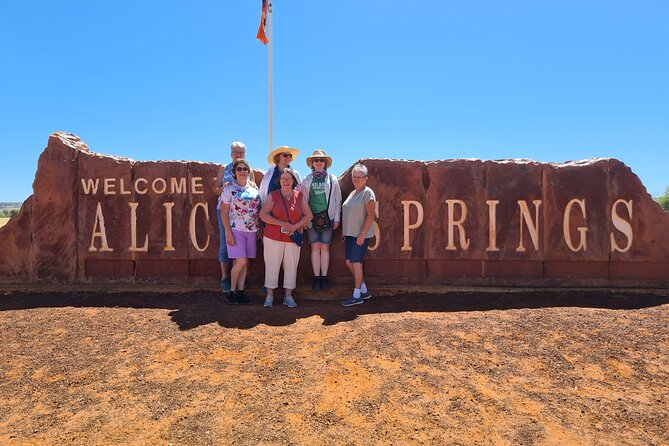
Reviewed · TOURS IN ALICE SPRINGS
Alice Town and Country Half Day Sunset Tour -Small Group
The best part of this 5.5-hour Alice Springs tour is its change of pace. You begin with art and local stories in town, then head into the East MacDonnell Ranges before ending with sunset views from Anzac Hill. I like that the day connects modern outback life with Aboriginal culture and the region’s dramatic setting.
I also like the human detail: the School of Air explains how children study across huge distances, while the Royal Flying Doctor Service shows why remote medical care matters. The main drawback is that the schedule packs several stops into one afternoon, so you should expect introductory visits rather than long, unhurried time at each place.
Key points to know before booking
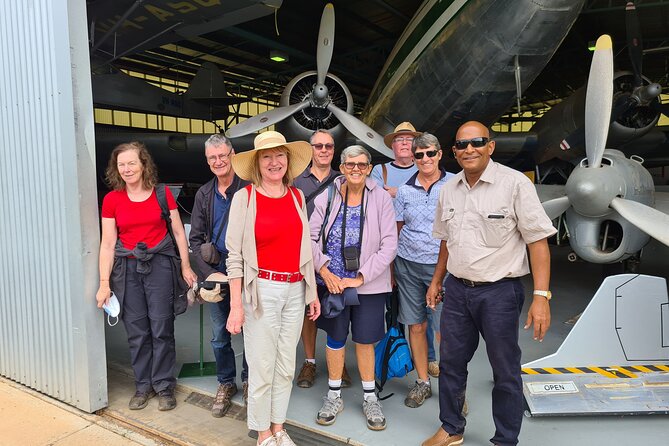
- Sunset at Anzac Hill: Finish above Alice Springs with wide views toward the MacDonnell Ranges.
- Three useful town visits: See Aboriginal and Australian art, learn about distance education, and explore the Royal Flying Doctor Service.
- Sacred Eastern Arrernte sites: Emily Gap and Jessie Gap bring an important cultural layer to the outing.
- Mahesh has earned strong praise: He is described as warm, funny, professional, and full of useful local stories.
- Good value at $138: Entry fees, transport, hotel pickup within 10 kilometres, tea, and coffee are included.
- Pack for changing temperatures: Wear walking shoes, carry sunscreen and a hat, and bring a jacket for the cool sunset.
A smart first look at Alice Springs
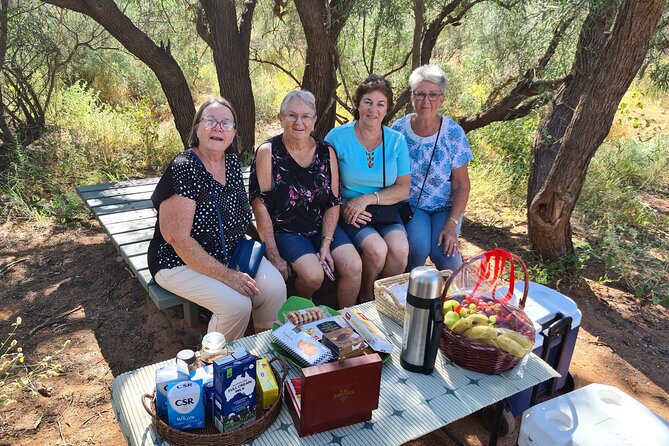
This tour works well as a broad introduction to Alice Springs. You are not simply driven around town for photo stops. The afternoon shows how art, education, emergency medicine, Aboriginal culture, military memory, and desert scenery all connect here.
The experience lasts 330 minutes, or five and a half hours. That is long enough to get beyond a quick city circuit, but short enough to fit around a morning activity or a later evening meal. Pickup and drop-off are provided at hotels, caravan parks, and private residences within 10 kilometres of Alice Springs Town Centre.
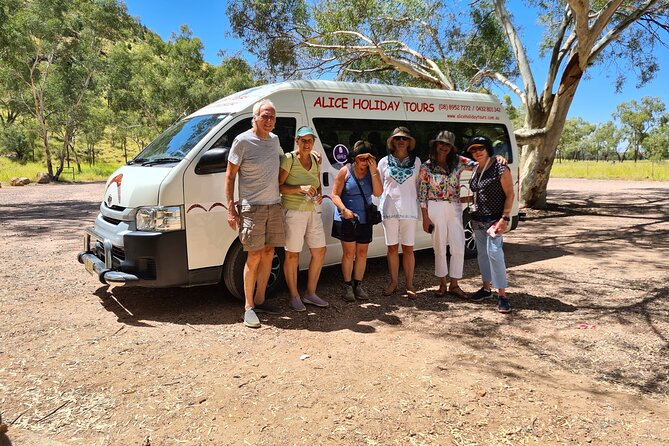
Transport is by air-conditioned bus, with an English-speaking guide. The small-group format should make it easier to hear explanations and ask questions than on a large coach outing, though the exact group size is not given.
I would treat this as a context-building tour, not a wilderness expedition. The countryside sections are scenic, but the strongest value comes from the mix of institutions and cultural sites. You leave with a clearer idea of how Alice Springs functions, not just a collection of photographs.
Other trips people book in Alice Springs:
- From Alice Springs: Day Trip to Uluru with BBQ Dinner
★ 4.6 · 761 reviews - Ayers Rock Day Trip from Alice Springs Including BBQ Dinner
★ 4.5 · 639 reviews - Early Morning Ballooning in Alice Springs
★ 5.0 · 426 reviews
Araluen Arts Centre and the story of Central Australian art
The first stop is Araluen Arts Centre, an important place to begin because it gives you a visual introduction to Central Australia. The collection includes work by Aboriginal artists and other Australian artists, with particular attention to the region’s natural setting and artistic traditions.
Albert Namatjira is a key name here. You have the chance to look closely at his work and consider how he portrayed the country around the West MacDonnell Ranges. His paintings are useful for helping you read the country with greater attention, especially the shape of ridges, the tones of rock, and the changing light.
The centre also follows the development of local art practice. It is not only a display of attractive paintings. The collection aims to preserve a lasting record of art made in Central Australia, so you get a sense of how artists have responded to place over time.
I like this stop because it gives the rest of the afternoon more meaning. When you later see the ranges from the road or Anzac Hill, you have already encountered the way artists have interpreted them. Allow for a museum-style visit rather than expecting an outdoor Aboriginal cultural performance.
Please follow the centre’s rules carefully. The tour information asks you not to touch or photograph Aboriginal art where restrictions apply. That is a small but important part of visiting respectfully.
Alice Springs School of Air: education across huge distances
The School of Air Experience explains a very practical part of life in remote Australia. Children who live far from conventional schools can take part in lessons across great distances, using broadcasting and other communication methods.
The visit includes a film and a guided presentation about the school’s development. It also covers the techniques that allow remote students to join classes despite distance and isolation. This is one of the tour’s most distinctive stops because it shows the everyday side of outback life rather than focusing only on scenery.
You might be able to watch a teacher conduct a live lesson in one of the five broadcasting studios. Live teaching is not guaranteed, though. On some departures, a pre-recorded lesson replaces it, so keep your expectations flexible.
I find this stop especially useful for families and anyone curious about how communities operate outside Australia’s major cities. The point is not simply that the school is far away. It is that education has had to adapt to the size of the region.
The visit is indoors and explanatory, which gives you a break from the heat and sun. It also adds a human scale to the trip. Instead of viewing Central Australia as empty country, you see how children, teachers, and families build daily routines across it.
Royal Flying Doctor Service and the practical outback lifeline
The Royal Flying Doctor Service facility focuses on the medical network that serves remote communities. Through displays and technology, you learn about the service’s beginnings and its growth into a major part of outback life.
This is a popular type of visit in Alice Springs because it explains something you cannot easily understand from the road. Distance affects nearly every service in Central Australia, and medical care is one of the clearest examples. A flight can be the link between an isolated community and urgent treatment.
The facility uses technology to tell these stories, making the stop more than a simple museum display. You can expect an educational visit that explains the people, aircraft, and systems involved.
The tradeoff is time. The itinerary includes several indoor attractions, and some people may prefer more time at the Aboriginal sites or in the countryside. One piece of feedback suggested reducing the time devoted to the flying doctor material in favor of another Aboriginal-life experience. That is worth considering if cultural interpretation is your main reason for booking.
Still, I would not dismiss this stop. It helps explain why Alice Springs matters as a service centre for a vast region. It also gives the afternoon a useful balance between art, schooling, health care, and culture.
Same base, a different sort of day:
- Alice Springs Camel Tour
★ 4.5 · 404 reviews - West MacDonnell Ranges Day Trip from Alice Springs
★ 4.5 · 364 reviews - Alice Springs: Early Morning Hot Air Balloon Flight
★ 4.9 · 243 reviews - Uluru, Kata Tjuta and Kings Canyon Camping Safari from Alice Springs
★ 5.0 · 162 reviews
Emily Gap and Jessie Gap in the East MacDonnell Ranges
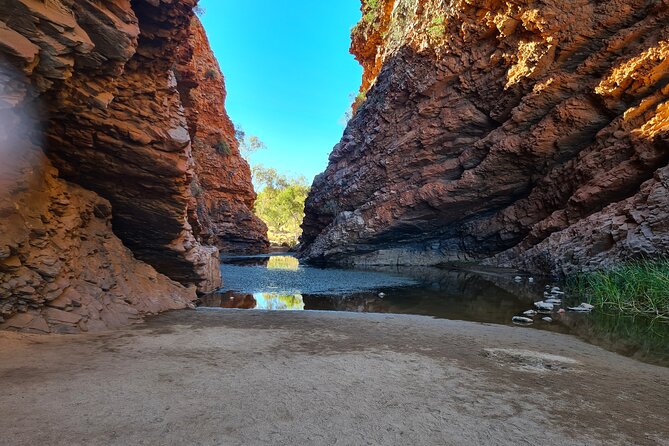
After the town visits, the bus travels about 16 kilometres into the countryside to Emily Gap and Jessie Gap. These two openings in the Heavitree Range are spiritually important to the Eastern Arrernte people.
The guide shares the Indigenous caterpillar dreaming story connected with the gaps. This is a short visit, but it carries more cultural weight than an ordinary scenic stop. The rock formations are striking, and the setting helps you understand how stories, land, and identity are linked.
You should approach these places with care. The traditional owners ask visitors not to climb the rocks, and you should respect that request. Do not treat the gaps as a playground or simply as a backdrop for photographs.
The gaps are also a good point in the tour to put the earlier museum visits into practice. At Araluen, you encountered art connected to country. Here, you experience the physical setting and hear a story associated with it.
Do not expect a long bush walk. The supplied details describe visits to the gaps, not an extended hiking program. Wear comfortable shoes, but think of this as a brief cultural and scenic stop rather than a demanding trek.
Anzac Hill at sunset
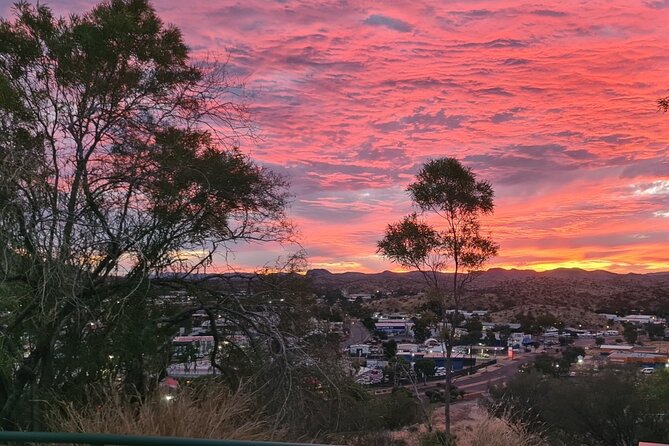
The final stop is Anzac Hill, the local lookout above Alice Springs. It is also a memorial to Australians who served in the defence forces during international wars.
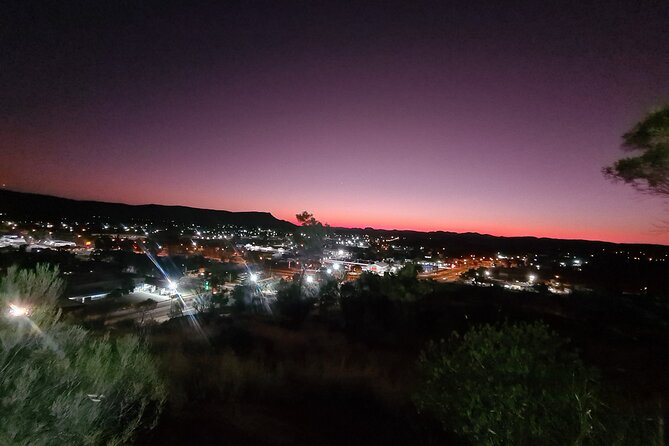
The timing is the payoff. As the sun drops, you can look across Alice Springs and toward the MacDonnell Ranges. The elevated position gives you the broadest view of the town on this tour, and the late light adds a fitting close to an afternoon spent learning about the region.
Bring a jacket. One departure in April included a reminder that the temperature can fall quickly after sunset, even after a warm afternoon. A hat and fly net can also be useful, along with sunscreen during the earlier stops.
Anzac Hill is not just a lookout. The memorial gives the view a second layer, so take a moment to read the site and consider its purpose. The tour ends here before returning you to your hotel or caravan park.
This final stop is one of the reasons the route makes sense in the afternoon. A morning departure would not provide the same light or the same quiet finish.
What the $138 price includes
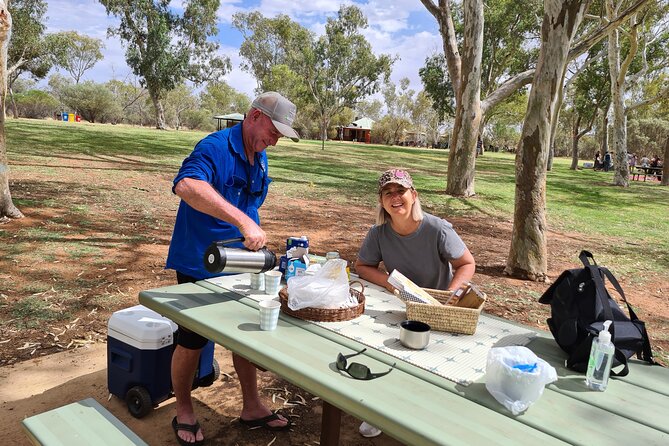
At $138 per person, this is not the cheapest way to see Alice Springs, but the price covers several costs that can add up separately. You get:
- Hotel, caravan park, or private residence pickup and return within 10 kilometres of the town centre
- Air-conditioned bus transport
- Entrance fees
- An experienced English-speaking guide
- Tea and coffee
Food beyond the included tea and coffee is not provided. Eat before pickup or bring an appropriate snack if you need one, but remember that large bags and luggage are not allowed.
The value is strongest if you want the attractions handled in one organized afternoon. Buying separate admissions and arranging transport to Emily and Jessie Gaps could take more effort, and you would lose the guide’s explanations between stops.
The value is weaker if you want long visits at one museum, a serious bush walk, or a more focused Aboriginal cultural program. This is a sampler. It gives you several useful introductions, then finishes with a scenic view.
Timing, comfort, and what to pack
Pickup instructions are simple: wait in your hotel lobby or at the entrance at least 10 minutes before the scheduled time. The service covers locations within 10 kilometres of Alice Springs Town Centre, so check your address before booking if you are staying farther out.
Wear comfortable clothes and shoes. The day includes indoor venues, bus travel, and stops in open country. Sunscreen, a sun hat, and a camera are sensible choices.
A jacket matters most. Alice Springs can feel warm earlier in the day, but the temperature may drop as you wait for sunset at Anzac Hill. One useful packing list also includes a fly net, particularly for the outdoor sections.
Infants must sit on an adult’s lap because no child car seat is supplied. Pets and large bags are not allowed. The tour is not suitable for wheelchair users, so contact the operator before booking if mobility is a concern.
Free cancellation is available up to 24 hours before departure, and you can reserve now and pay later. Those terms give you some flexibility, but they do not change the need to check the pickup area and physical requirements.
Who will get the most from this tour?
I would recommend it to a first-time visitor who wants a solid overview of Alice Springs without hiring a car. It also suits people with limited time who want both town attractions and a taste of the East MacDonnell Ranges.
Families may enjoy the School of Air, while art lovers will appreciate the Araluen Arts Centre. Anyone interested in remote medicine will find the flying doctor visit useful. The final lookout makes the tour appealing to photographers, though you should not expect a dedicated photography excursion.
The tour is less suitable if your priority is extensive Aboriginal cultural contact, long walks, or a slow museum visit. The afternoon covers a lot of ground, and the stops are designed to give you a clear introduction rather than a specialist study.
Guide quality can shape the day. Mahesh has been praised for his humor, kindness, professionalism, and local stories, so if he leads your departure, expect a warm and informative style. Guides can vary, but the route gives a good host plenty to work with.
Should you book the Alice Springs sunset tour?
Book it if you want a practical first look at Alice Springs, appreciate a well-filled afternoon, and like finishing with a strong sunset viewpoint. The combination of Araluen Arts Centre, the School of Air, the Royal Flying Doctor Service, Emily and Jessie Gaps, and Anzac Hill covers more ground than a simple city sightseeing trip.
Skip it if you want a slower cultural visit or a longer walk in the ranges. At $138, the tour makes the most sense when you value transport, entry fees, and a guide’s commentary as much as the scenery.
For many visitors, it is a sensible way to get your bearings before choosing more specialized day trips. Pack a jacket, respect the sacred sites, and keep your schedule open enough to enjoy the final light from Anzac Hill.
FAQ
How long does the Alice Springs sunset tour last?
The tour lasts 330 minutes, which is five and a half hours.
What places does the tour visit?
The route includes Araluen Arts Centre, Alice Springs School of the Air Experience, the Royal Flying Doctor Service Alice Springs facility, Emily Gap, Jessie Gap, and Anzac Hill.
Is hotel pickup included?
Yes. Pickup and drop-off are included for hotels, caravan parks, and private residences within 10 kilometres of Alice Springs Town Centre.
What language is the tour conducted in?
The tour has a live English-speaking guide.
Are entrance fees included in the price?
Yes. Entrance fees are included, along with tea and coffee.
Is food included?
No. Food and drinks other than the included tea and coffee are not included.
What should I bring?
Bring comfortable shoes, a sun hat, sunscreen, a camera, comfortable clothes, and a jacket. A fly net may also be useful for the outdoor stops.
Can wheelchair users join the tour?
No. The experience is not suitable for wheelchair users.
Just added in Alice Springs
- West MacDonnell Ranges & Standley Chasm Day Trip from Alice Springs★ 5.0 · 67 reviews
- Uluru, Kata Tjuta and Kings Canyon Camping Safari from Alice Springs★ 5.0 · 162 reviews
- West MacDonnell Ranges Day Trip from Alice Springs★ 4.5 · 364 reviews
- Alice Springs to Uluru (Ayers Rock) Coach Transfer★ 4.5 · 39 reviews
- 1 Day Alice Explorer★ 4.5 · 80 reviews
- Alice Springs Desert Park Nocturnal Tour★ 5.0 · 45 reviews
- Alice Springs Desert Park General Entry Ticket★ 5.0 · 150 reviews
- Alice Town And Country Half Day Sunset Tour – Small Group★ 4.5 · 24 reviews
Tours in Alice Springs, compared.

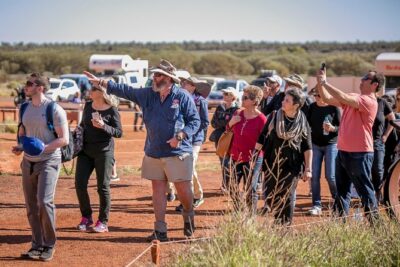
Ayers Rock Day Trip from Alice Springs Including BBQ Dinner
Read our review →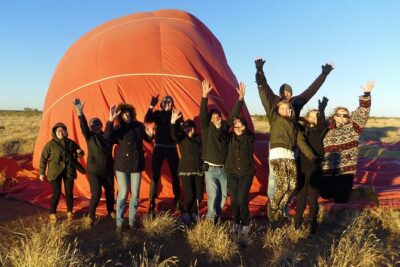
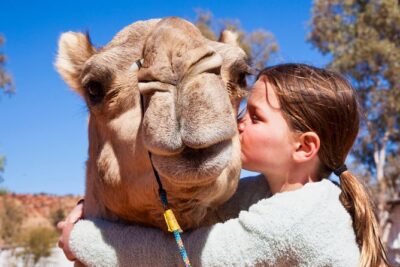
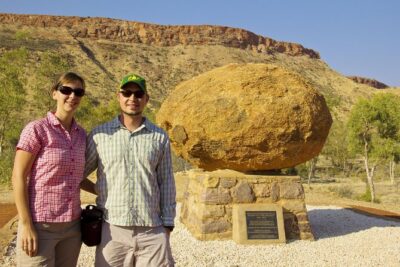
West MacDonnell Ranges Day Trip from Alice Springs
Read our review →
Uluru, Kata Tjuta and Kings Canyon Camping Safari from Alice Springs
Read our review →
Browse the lists this tour appears in