
Reviewed · CRUISES & BOAT TOURS
Darwin Harbour Bombing of Darwin Cruise
Darwin’s wartime story is easiest to grasp from the water, where the wreck sites, naval base, wharfs, and harbour approaches fit into one view. This one-hour cruise traces the places hit during the Japanese attacks of 19 February 1942, when Darwin faced a scale of destruction far greater than many Australians were taught at school.
I like the live commentary, which gives the cruise its real purpose, and I like the chance to sit above the wreck sites of USS Peary and SS Neptuna. The shaded, open-sided boat also catches a cooling breeze, a useful comfort in Darwin’s heat. The trade-off is simple: at $46.62 per person, you are paying mainly for the guide’s storytelling rather than a long boat ride or a large number of physical exhibits.
Key points to know before you book
- The cruise focuses on 19 February 1942: Learn how Japanese aircraft attacked Allied ships and wartime facilities in Darwin Harbour.
- You pass two important wreck sites: The boat travels over the remains of USS Peary and SS Neptuna.
- The guide makes the difference: Commentary from guides including Kerry, Adrian, and Jim has been praised for its detail, warmth, humour, and real-life stories.
- The boat is shaded and open-sided: You get harbour views and some air movement, though Darwin’s heat still matters.
- It lasts about one hour: This makes it easy to fit around museums, meals, or other Darwin plans.
- The group is limited to 22 people: That is small enough for a more personal presentation than a large sightseeing boat.
Why Darwin Harbour is the right classroom
The attack on Darwin can seem abstract in a museum display. From the harbour, it becomes a matter of distance and position. You can look across the water and understand why ships anchored here were exposed, why wharfs mattered, and how much depended on the harbour as a military and supply centre.
On 19 February 1942, Japanese aircraft attacked Allied ships and facilities in and around Darwin. The cruise does not treat this as a quick list of dates. It links the sites you pass with the people caught in the raids, the damage caused, and the wider fear that Australia’s northern coast might face an invasion.
That context is one of the strongest reasons to take the trip. Many Australians learned plenty about the war in Europe but little about the attacks on Australian soil. The cruise helps correct that gap without requiring you to spend half a day in a museum.
You will hear about the number and force of the raids, not just the simplified version of one or two bombs falling on Darwin. The story includes the destruction around the harbour and the danger faced by people working aboard ships and on shore. Guides have also used stories of survival and personal loss, which give the military events a human scale.
Other trips people book in Darwin:
- Litchfield National Park and Jumping Crocodile Cruise
★ 5.0 · 2,119 reviews - Adelaide River Cruises – Jumping Crocodile Experience
★ 5.0 · 997 reviews - Sunset 3-Hour Cruise from Darwin with Dinner and Sparkling Wine
★ 5.0 · 980 reviews
Setting out with Sea Darwin
The experience begins with Sea Darwin and lasts about an hour. The supplied details list one cruise stop, so think of this as a continuous harbour circuit rather than a tour with shore visits or long walks between locations.
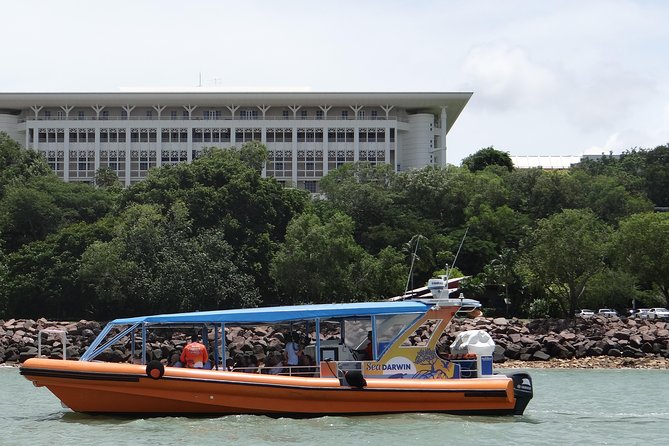
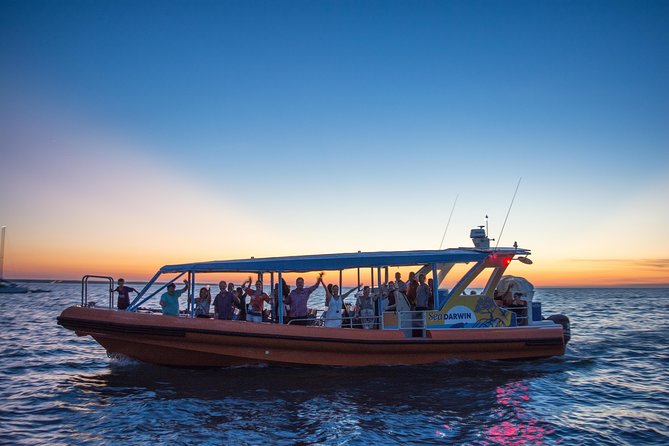
The boat is shaded and open-sided. That design suits Darwin well: you remain protected from direct sun while still having open views and some breeze across the water. It also means the ride feels more like a working harbour outing than a sealed sightseeing bus transferred onto water.
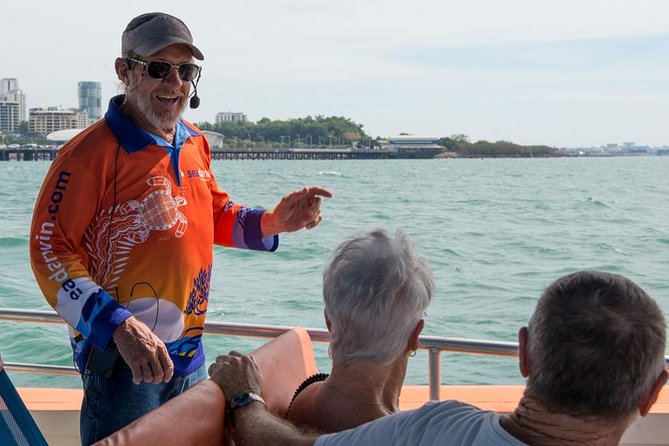
The layout matters for the commentary. You are moving slowly past sites while the guide explains what happened there. Guides such as Kerry, Adrian, and Jim have been noted for different strengths: Kerry for engaging historical storytelling, Adrian for commentary that felt personal rather than simply recited, and Jim for clear enthusiasm and passion for the subject.
You should expect the guide to be the main attraction. The wrecks and installations are historically important, but they are not presented as a collection of large shore exhibits. Some remains are underwater or visible only as traces and locations. Listen closely, and use the harbour views to place the story in your mind.
Sitting above USS Peary and SS Neptuna
The cruise takes you over the wreck sites of USS Peary and SS Neptuna. This is a powerful part of the trip because the boat gives you a direct position over places tied to the attack, rather than talking about them from a distant museum room.
USS Peary was an Allied warship lost during the bombing. SS Neptuna was a merchant vessel also destroyed in Darwin Harbour. The cruise presents these sites as part of the wider attack on shipping, not as isolated wreck stories.
Do not expect a dramatic underwater viewing experience. The value comes from knowing what lies beneath the boat and hearing how the ships fitted into Darwin’s wartime role. If you are interested in military history, that combination of location and commentary can be worth more than a longer ride with only general sightseeing information.
The shipwreck sites also show why this tour is different from a standard harbour cruise. You still get water views, but every turn has a historical reference. The scenery is not just decoration. It helps explain how the harbour functioned and why it was such an important target.
Historic wharfs, luggers, and naval waters
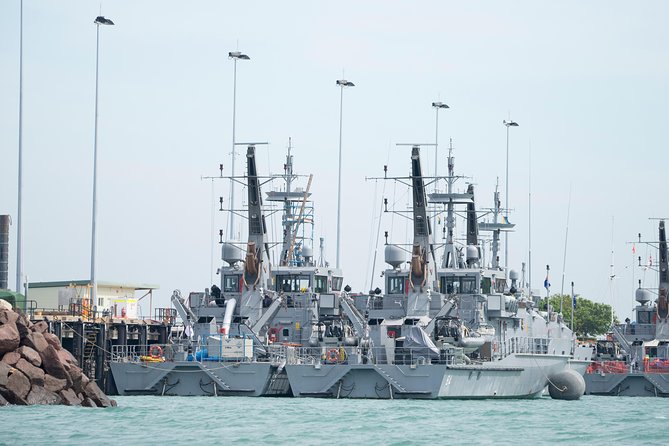
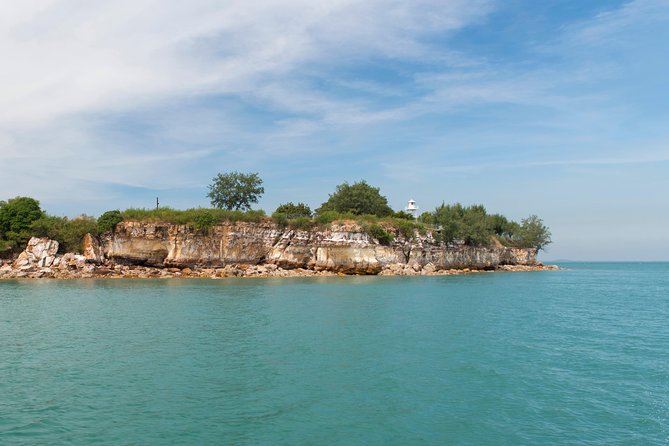
The route also passes historic wharfs, pearling luggers, Darwin’s naval base, and other maritime locations. These sights broaden the trip beyond the bombing itself.
The wharfs help you picture the harbour as a place of loading, unloading, repair, and military movement. The luggers connect the modern harbour to Darwin’s pearling past, while the naval base points to the continuing defence role of the area.
This part of the cruise will suit you if you want more than a single war story. You get a short introduction to how Darwin’s waterfront developed and how the harbour served different purposes before, during, and after the attacks.
At the same time, the route is not a full maritime history tour. The bombing of Darwin remains the centre of the presentation. The other sights add setting and variety, but do not expect a detailed account of every wharf, vessel, or naval operation.
Same base, a different sort of day:
- From Darwin: Litchfield Park Tour & Jumping Crocodile Cruise
★ 4.9 · 829 reviews - Charles Darwin Dinner Cruise
★ 4.5 · 820 reviews - Kakadu Day Tour from Darwin with Offroad Dreaming
★ 5.0 · 776 reviews - Cape Adieu Darwin Sunset Dinner Cruise
★ 5.0 · 750 reviews
The quality of the commentary
The strongest praise for this cruise centres on the guides. The presentation has been described as informative, clear, entertaining, and easy to follow, even for someone starting with little knowledge of the subject.
That last point matters. War history can quickly become a blur of names, dates, and military terms. Here, the commentary appears designed to explain the story in plain language, with enough detail to make the events meaningful without turning the hour into a lecture.
The best guides add humour carefully. The subject includes death, destruction, and fear, so a lighter moment can help keep the presentation human. But the humour does not replace the difficult parts of the story. The most effective balance is information first, with warmth and personality around it.
You may hear about the strategic information available to the Japanese before the attacks, the weakness of Darwin’s defences at the time, and the scale of the damage. These points help explain why the bombing was not a minor incident and why its place in Australian history deserves more attention.
If your guide is Kerry, Adrian, or Jim, you can expect a strong personal delivery based on the praise attached to their presentations. Guide assignments can change, so book this for the subject and format rather than a guaranteed individual host.
Is one hour enough?
For a first look at Darwin’s wartime story, yes. The one-hour length keeps the cruise focused and makes it easy to pair with other attractions.
You will not cover every detail of the 1942 attacks in one hour. You will get a guided overview tied to real places in the harbour, along with a better sense of the ships, wharfs, and installations involved. That is enough to make a later museum visit more rewarding, especially if you want documents, photographs, or personal accounts.
The short duration also suits a hot day. You are not committing to a long open-water outing, yet you still get time away from the shore and a cooling breeze. Several aspects of the trip depend on conditions, though. The boat is open-sided, and Darwin can be very hot, so bring water, use sun protection, and choose light clothing.
The cruise requires good weather. If poor conditions force a cancellation, you are offered another date or a full refund. That is sensible for a small harbour boat, but it means you should avoid scheduling it as the one fixed activity on a tightly packed final day.
What the $46.62 price buys you
At $46.62 per person, the price is fair if you value guided local history and a different view of Darwin. You receive the cruise, a local guide, and live onboard commentary. There is no hotel pickup or drop-off, so you need to make your own way to the departure point near public transport.
I would compare the price with the cost of a basic sightseeing boat ride, but the real comparison is not only time on the water. You are paying for the interpretation of sites that could otherwise pass without meaning. The wreck locations, wartime wharfs, and naval areas are much easier to understand when someone explains what happened there.
The value is weaker if you want a long scenic cruise or a ride packed with visible attractions. One hour passes quickly, and much of the experience depends on listening. One person specifically found the commentary the best part but did not feel the overall outing was strong value. That is a fair warning: if history is not your main interest, you may prefer a more general harbour cruise.
The small maximum group of 22 works in the tour’s favour. It should be easier to hear the guide than on a large boat, and the presentation can feel more direct. Still, the details of seating and the clearest viewing position are not specified, so do not book expecting a formal auditorium-style setup.
Who will get the most from this cruise?
I would recommend it first to anyone interested in World War II, Australian military history, or the story of Darwin. It is also a good choice if you have already visited museums and want to place what you saw on a real harbour route.
Families can take part, but children must be accompanied by an adult. Older children with an interest in history may appreciate the wreck sites and the personal stories, while very young children may find an hour of spoken commentary less engaging.
This is also a smart pick for visitors who have only one free hour. You see Darwin from the water, learn about an important event, and still have most of the day available for other plans.
I would be more cautious if you dislike history talks, struggle in hot weather, or expect to see clearly preserved wreckage from the boat. The cruise is not a dive trip, museum visit, or beach outing. It is a moving history lesson with harbour scenery.
Pairing it with other Darwin sights
The cruise works well before or after other history-focused activities. One useful option mentioned alongside it is the virtual reality bombing experience and the Flying Doctor museum. Those are separate attractions unless you purchase a combined arrangement, so check exactly what your booking includes.
The boat gives you location and scale. A museum or virtual reality presentation can then add photographs, objects, and a closer look at the people involved. Taking both approaches may help you understand why the attacks were so shocking and how Darwin responded.
After the cruise, you can also pause for a meal or coffee near the harbour. That gives you time to think through the route while the details are still fresh. The harbour views are part of the appeal, but the historical information is the reason I would put this activity on a Darwin schedule.
Booking, weather, and practical details
You receive a mobile ticket, and confirmation is provided at booking. The cruise is near public transportation, but hotel pickup and drop-off are not included.
Most people can participate, and children must have an adult with them. The group maximum is 22 people. Since the activity is on an open-sided boat, plan for sun and heat even with shade onboard.
You can cancel for a full refund up to 24 hours before the start time. Cancellations made less than 24 hours before departure are not refunded, and changes within that period are not accepted. The same 24-hour timing applies to the local cut-off, so do not leave changes until the last moment.
The operator may cancel if the weather is unsuitable or if the minimum number of participants is not reached. In either case, you are offered another date or experience, or a full refund.
Should you book the Darwin Harbour Bombing cruise?
Book it if you want the story of Darwin’s wartime attack tied to real harbour locations. The wreck sites of USS Peary and SS Neptuna, the view toward the naval base, and the commentary from guides such as Kerry, Adrian, and Jim give the hour a clear purpose.
I especially recommend it to first-time Darwin visitors who know little about the bombing. The cruise corrects the common impression that only a small raid took place and shows how serious the danger was.
Skip it if you want a purely scenic boat ride, a long excursion, or close views of intact wrecks. At $46.62, the value depends on your interest in the subject and your willingness to listen.
For the right person, this is a useful, compact introduction to one of Australia’s least understood wartime chapters, with a pleasant harbour ride wrapped around it.
FAQ
How long is the Darwin Harbour Bombing cruise?
The cruise lasts approximately one hour.
What does the cruise focus on?
It focuses on the Japanese bombing of Darwin Harbour in February 1942, along with wartime sites, ships, wharfs, and installations around the harbour.
Will the cruise pass over shipwreck sites?
Yes. The route includes the wreck sites of USS Peary and SS Neptuna.
Is live commentary included?
Yes. A local guide provides live onboard commentary during the cruise.
Is the boat covered?
The boat is shaded and open-sided.
Is hotel pickup included?
No. Hotel pickup and drop-off are not included, though the activity is near public transportation.
Can children join the cruise?
Yes, but children must be accompanied by an adult.
What happens if bad weather cancels the cruise?
You are offered a different date or a full refund if the experience is canceled because of poor weather.
Just added in Darwin
- Bombing of Darwin World War II Tour with Harbour Cruise★ 4.5 · 219 reviews
- 1-Hour Thunderball WWII Adventure Jet Skiing in Darwin★ 5.0 · 70 reviews
- Tiwi Islands Cultural Experience from Darwin Including Ferry★ 4.0 · 97 reviews
- Darwin Combo: The Bombing of Darwin Experience & Darwin Harbour Cruise★ 4.5 · 123 reviews
- Litchfield Park & Jumping Crocodile Cruise★ 5.0 · 37 reviews
- Royal Flying Doctor Service Tourist Facility: Two Iconic Territory Stories★ 5.0 · 256 reviews
- ETHICAL ADVENTURES – 1 Day premium Litchfield tour, small group★ 5.0 · 178 reviews
- Litchfield National Park Waterfalls & Wildlife Adventure Tour★ 5.0 · 30 reviews
Cruises & Boat Tours, compared.
Great Barrier Reef Snorkeling and Diving Cruise from Cairns
Read our review →
Great Barrier Reef Cruise by Premium Catamaran
Read our review →
Whitehaven Beach and Hill Inlet Lookout Snorkeling Cruise
Read our review →
Big Bus Hop-On Hop-Off Tour with Optional Cruise
Read our review →
Passions of Paradise Great Barrier Reef Cruise by Catamaran
Read our review →
Litchfield National Park and Jumping Crocodile Cruise
Read our review →
Browse the lists this tour appears in