
Reviewed · ULURU & KATA TJUTA TOURS
From Alice Springs/Yulara: 2 Day Uluru Kata Tjuta Rock Tour
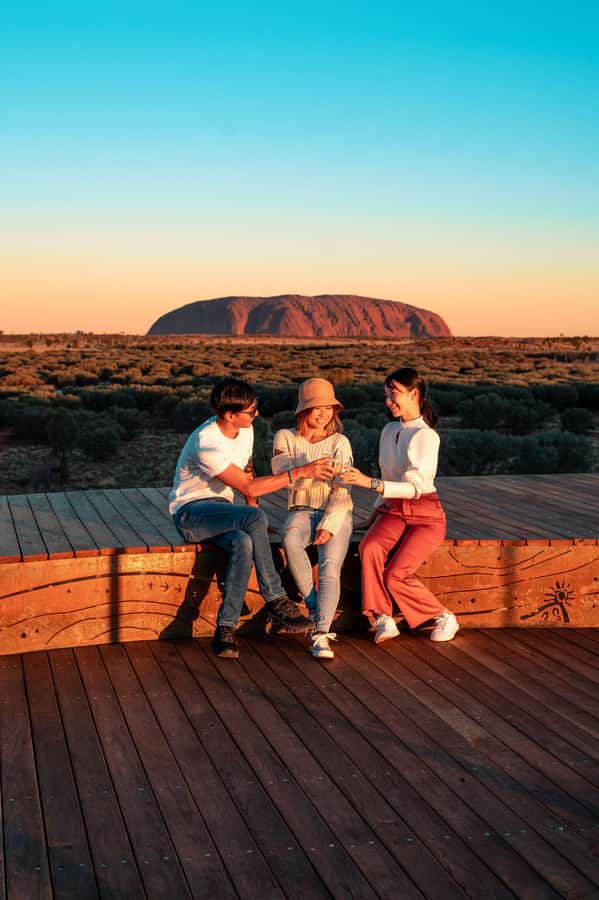
Uluru is most powerful when you see it change by the hour, from a huge red wall in the afternoon to a dark silhouette at sunrise. This tour gives you time for the base, Mutitjulu Waterhole, sacred rock art, Kantju Gorge, and an evening meal under the outback sky.
I like the smart timing, which can put your group at key stops before the crowds. I also like the mix of Aboriginal stories, short driving stops, guided walks, and a night in a permanent campsite instead of rushing back to town.
The main caution is physical and practical: the walks can be demanding, the sleeping setup is basic, and this is a one-way trip to Yulara. If you need a soft bed, long rest breaks, or a return to Alice Springs, this is not the right fit.
Key points at a glance
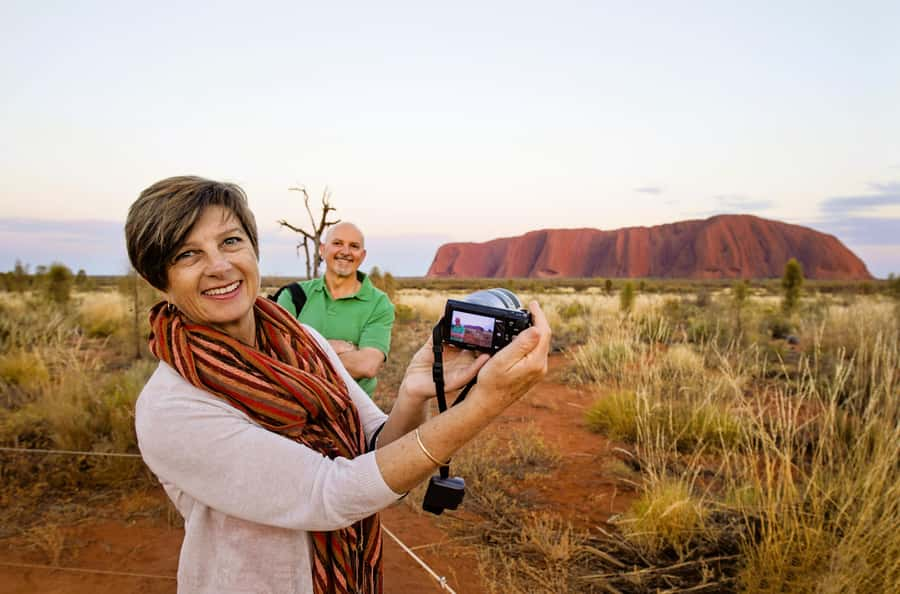
- Uluru from several angles: Walk to Mutitjulu Waterhole and Kantju Gorge, then watch sunset from an Uluru lookout.
- A useful early start: Leave Alice Springs early, or arrange pickup at Ayers Rock Airport or Ayers Rock Campground.
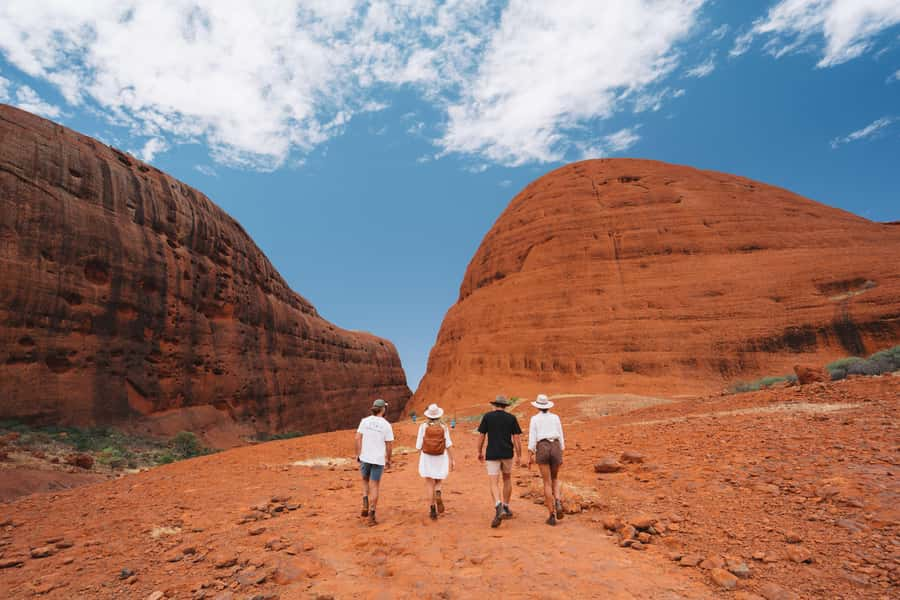
- Kata Tjuta walking choice: Take the Valley of the Winds or Walpa Gorge route, depending on conditions and ability.
- Cultural context matters: Visit the cultural centre and learn about Kuniya Piti, creation stories, rock art, and local significance.
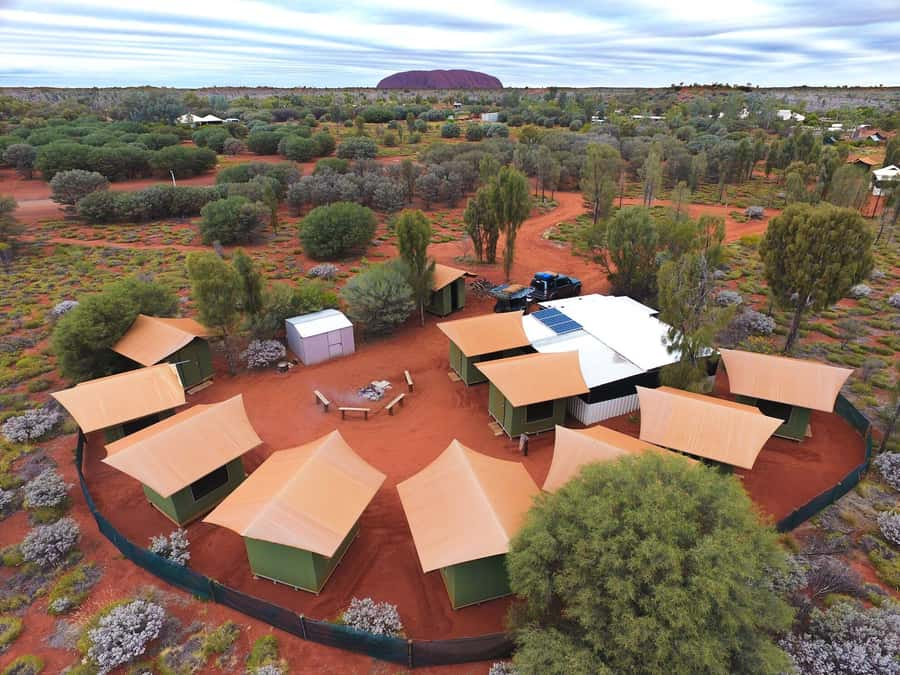
- Simple outback camping: Spend one night at a permanent campsite with a bush swag or safari tent bedding.
- One-way convenience: The tour finishes in Yulara around midday on Day 2 and does not return to Alice Springs.
Why two days works better than a quick Uluru visit
At $421 per person, this is not the cheapest way to see Uluru. The value comes from combining transport, park entry, a guide, walks, meals, camping equipment, and both sunset and sunrise into one trip. You are paying for a carefully packed Red Centre experience rather than a single lookout stop.
The route covers a lot of ground, but it does not feel like a sightseeing checklist if you use the walks well. You get time at the base of Uluru, a chance to understand why particular places are sacred, and a second day focused on the very different rock forms of Kata Tjuta.
I especially like the overnight stay. Uluru at sunset is memorable, but the next morning gives you another mood entirely. The rock can appear as a broad shadow at first light, then gradually take on color as the sun rises. That extra night also removes the need to make the long return drive to Alice Springs immediately after sunset.
The tradeoff is that this is a packed 36-hour schedule. Some time will be spent waiting between activities, especially when the group is being moved, fed, or prepared for a walk. One recent departure was praised for arriving five to ten minutes before other groups, while another found the gaps between activities longer than expected. Your experience will depend on timing, weather, and the pace of the group.
Other trips to the rock and the domes from Alice Springs:
- From Alice Springs: Day Trip to Uluru with BBQ Dinner
★ 4.6 · 761 reviews - Ayers Rock Day Trip from Alice Springs Including BBQ Dinner
★ 4.5 · 639 reviews - Uluru, Kata Tjuta and Kings Canyon Camping Safari from Alice Springs
★ 5.0 · 162 reviews
The Alice Springs drive and Mt Connor stop
If you begin in Alice Springs, expect an early start. The first section is a long outback transfer toward Uluru, with a stop at Mt Connor, often called false Uluru, and a break at Curtin Springs.
Mt Connor is useful because it gives you a first sense of the region’s scale without confusing it with Uluru. It is a broad, striking formation in its own right, and the lookout breaks up the drive. Curtin Springs provides a practical toilet stop before you reach camp.
If you start in Yulara, you skip the long Alice Springs transfer and can join the tour at Ayers Rock Airport or Ayers Rock Campground. This makes the trip much easier to fit into a wider Uluru holiday, but check the pickup option carefully because the meeting point depends on the booking choice.
The bus is air-conditioned and described as small-group transport. That matters in the Red Centre, where heat and distance can make a basic transfer tiring. Bring water, even though drinking water is carried onboard, and keep your daypack easy to reach.
Uluru base walk, Mutitjulu Waterhole, and rock art
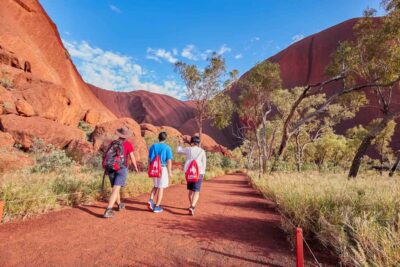
After lunch at camp, the focus shifts from driving to Uluru itself. The base walk section leads toward Mutitjulu Waterhole, with stops connected to Aboriginal creation stories and the cultural meaning of the site.
Mutitjulu Waterhole is one of the most important places on the route. It is not simply a pretty pool at the foot of a large rock. Your guide explains how the waterhole, nearby caves, and rock surfaces connect to traditional stories and living cultural practice.
You also visit Aboriginal rock art sites included within the Uluru-Kata Tjuta World Heritage area. The value here is the interpretation. Without a guide, it is easy to see marks on a rock and move on. With context, the site becomes a record of teaching, ceremony, travel, and connection to country.
Kuniya Piti is another named site covered during the tour. Expect the guide to explain its place in the local cultural story rather than treat it as just another photo stop. You should listen closely and follow instructions about where to stand and what not to photograph.
The guided walks are listed at around five kilometers overall, but the practical information gives a broader range of two to 15 kilometers depending on the route and fitness level. That is a big difference. Ask your guide early which sections you will walk and how much time you will spend on uneven ground.
Kantju Gorge and Uluru at sunset
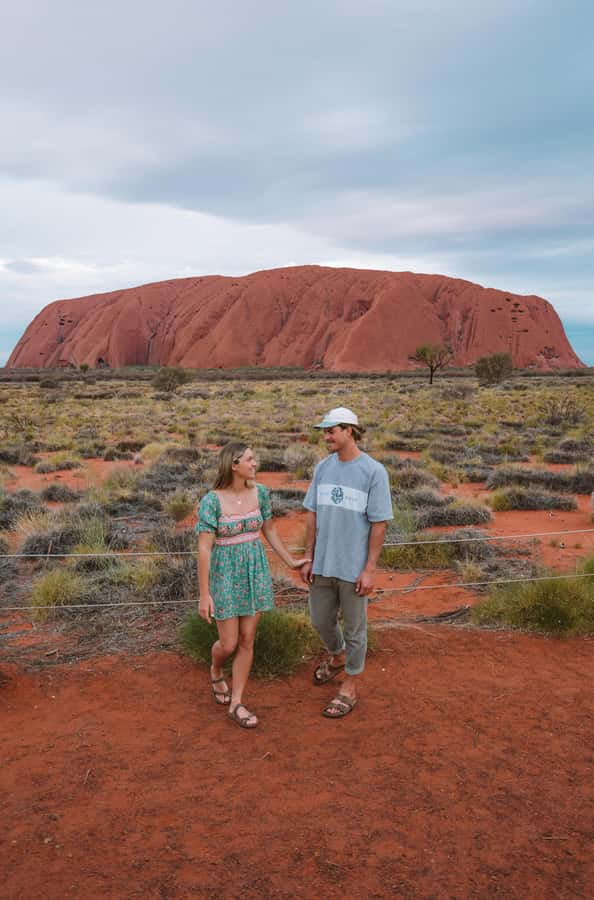
Kantju Gorge gives the Uluru visit a quieter, more enclosed setting. The gorge is associated with an elders’ cave and Central Australia’s highest waterfall, though water flow depends on conditions. Do not assume you will see a running waterfall in a dry period.
This part of the route shows why a base visit is worth more than a distant photograph. Uluru is not one flat rock face. Its caves, grooves, overhangs, waterholes, and shaded sections give it a much more varied character when you walk beside it.
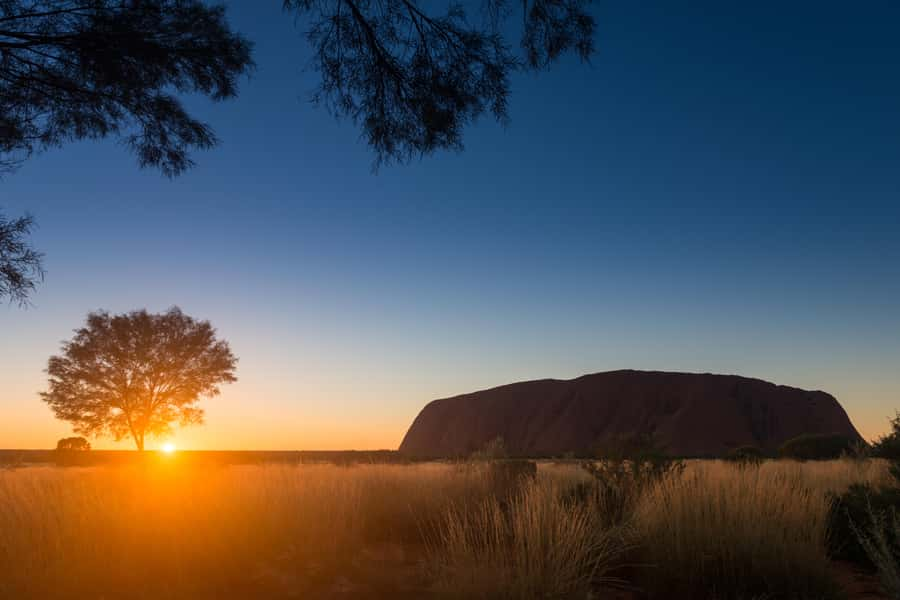
The day ends at an Uluru lookout for sunset, followed by dinner. Timing is one of the tour’s strengths. A guide who knows the road and viewing points can help the group arrive before the busiest period, and recent departures led by Donk were noted for using weather and timing well.
Do not expect complete solitude. Uluru is one of Australia’s major sights, and the lookout is a popular place. Still, the combination of an informed guide, a prepared meal, and a full day of walking makes the sunset feel like the end of a proper outing rather than a quick stop between bus transfers.
A few more things to do in Alice Springs worth a look
- K’gari (Fraser Island) Explorer 2-Day Tour
★ 5.0 · 1,027 reviews - Airlie Beach: Whitsunday Islands 2-Day Sailing Tour
★ 4.5 · 452 reviews - 2 Day & 2 Night Whitsunday Islands Sailing Adventure on Condor
★ 5.0 · 302 reviews - Cairns: 2-Day Great Barrier Reef & Daintree Rainforest Tour
★ 4.7 · 216 reviews
Camp life, bush swags, and dinner
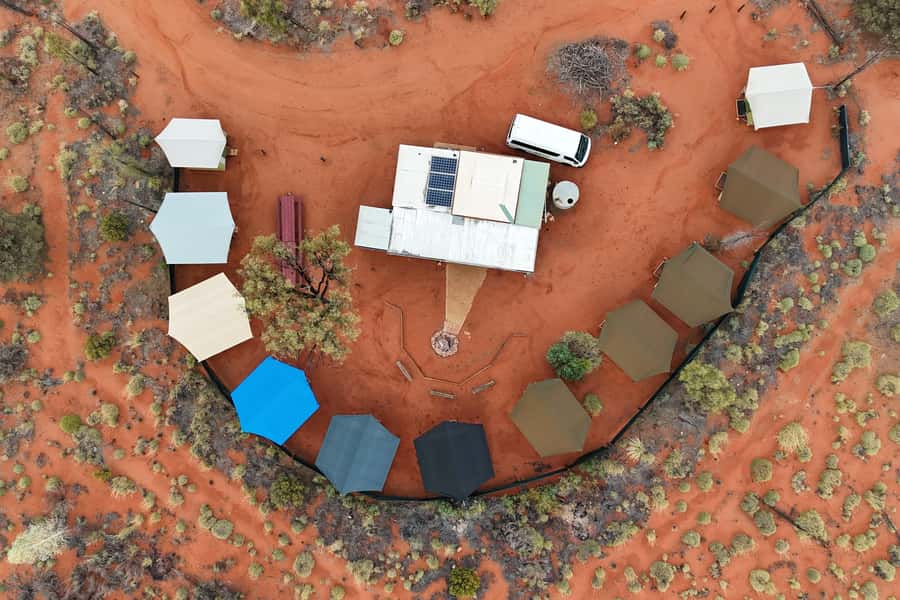
The overnight stay is at a permanent outback campsite near Uluru. You can choose a bush swag, which is a canvas-covered bed roll, or a safari tent option with a mattress, fitted and top sheets, pillow, and pillowcase.
The word camping covers a range of comfort levels here. This is not a hotel room, and the setup can feel spartan. One practical complaint from a recent departure was that bedding was not fully prepared and the sleeping area needed more attention. Another noted a lack of sheets, so confirm exactly what is included with your chosen sleeping option.
A sleeping bag can be hired onboard for $40 AUD, including cleaning, or you can bring your own. Payment goes directly to the operator. A flashlight, toiletries, outdoor clothing, and a power bank are sensible additions because campsite facilities and charging access may be limited.
Meals include breakfast, two lunches, and dinner. The food is part of the value, since buying meals in remote areas can quickly add up. Recent menus were described as varied and adequate, with camel mentioned as one unusual item. If that does not appeal to you, or if you have strict dietary needs, bring snacks and advise the operator in advance.
You are expected to help with meals and camp setup. I see that as a fair part of a small outback group, but it is worth knowing before you book. This is not a fully catered luxury camp with staff handling every task.
Kata Tjuta at sunrise
Day 2 begins early with a light breakfast and a drive into Uluru-Kata Tjuta National Park. The goal is sunrise over Kata Tjuta, whose rounded domes look very different from Uluru’s single monolith.
The early start can be hard after a warm night in camp, but it is worthwhile. The first light gives the rock formations a changing outline and makes the morning feel distinct from the previous evening. You also avoid using your only full morning for sleeping late and packing.
After sunrise, you choose between a walk in the Valley of the Winds or through Walpa Gorge. The route can be affected by weather, park rules, and the group’s fitness. Make sure you understand which walk is available before setting out, since the two options are not identical in length or effort.
Valley of the Winds or Walpa Gorge
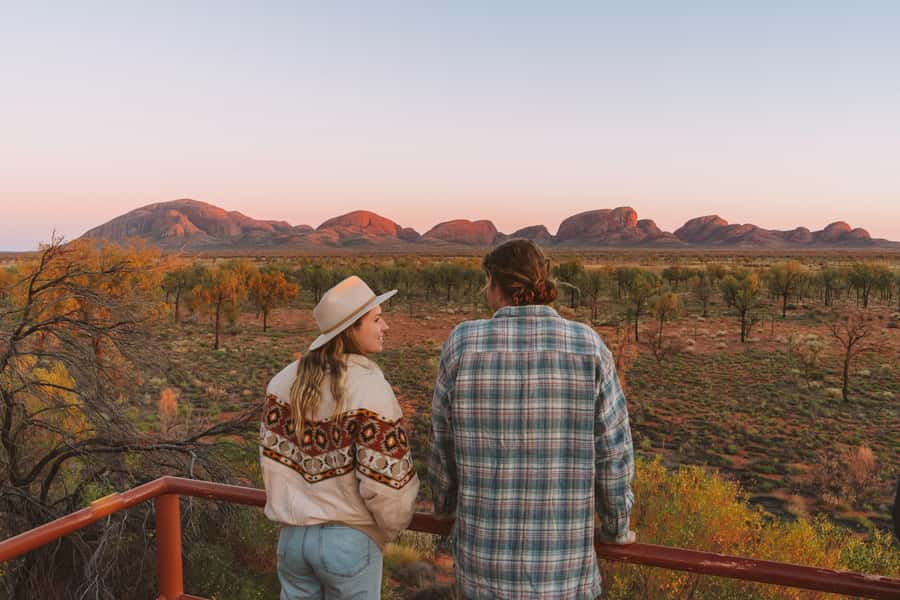
The Valley of the Winds route is the more demanding choice. It involves exposed walking and uneven ground, and the supplied guidance calls for moderate to high fitness. The reward is a closer look at Kata Tjuta’s huge conglomerate domes and a stronger sense of the area’s scale.
Walpa Gorge is another impressive option, with a path leading between towering rock formations. It can suit a group that needs a shorter or more manageable walk, though you should not treat it as effortless. Heat, rough surfaces, and the early start still matter.
The published guidance gives walks from two to 15 kilometers depending on the route and conditions, while the included description refers to guided walks of around five kilometers. Ask for a clear distance and difficulty briefing before leaving the bus. One person had to turn back after finding the walk harder than expected, which is exactly why you should not rely only on a general fitness label.
Wear closed-toe shoes, hiking pants, a hat, sunglasses, and clothing suitable for outdoor conditions. Carry a reusable water bottle and use the supplied drinking water. Insect repellent is also recommended, preferably biodegradable.
Guide quality and the small-group pace
The guide can make or break this kind of trip. You spend long periods on the road, then rely on the guide for cultural explanation, safety information, timing, and practical help at camp.
Recent departures included guides named Donk, Aaron, and Uel. Donk was praised for mixing humor with strong local knowledge and for adjusting the schedule around weather. Aaron was credited with sharing information that added lasting meaning to the scenery, while Uel was described as attentive and effective.
Those names are useful indicators of the kind of service available, but guide assignments can change. The key point is that this tour depends heavily on the person leading it. A good guide keeps the group moving without turning every stop into a rushed lecture.
The small-group bus is another advantage. It should be easier to hear commentary and easier for the driver-guide to adjust timing than on a large coach. Still, a group tour has limits. You may wait for slow walkers, meal preparation, or an activity to open up.
Who will get the most from this tour
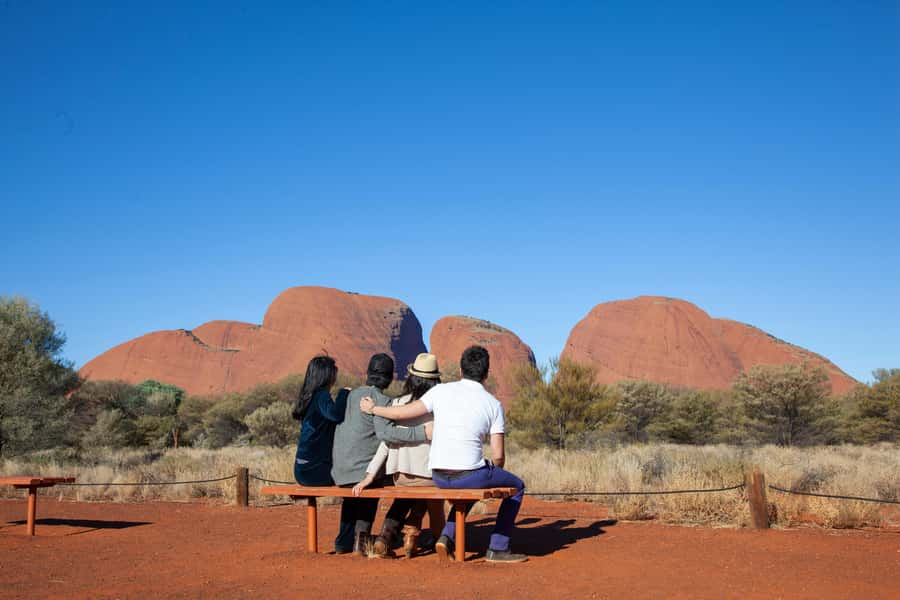
I would choose this trip if you want to see both Uluru and Kata Tjuta but do not want to organize park entry, transport, meals, and a campsite yourself. It suits active adults who are comfortable walking several kilometers and sleeping simply for one night.
It also works well if your wider trip begins in Alice Springs and ends around Uluru. The one-way route saves you from returning north, but it means you must arrange your next step from Yulara. The estimated drop-off is around midday on Day 2.
This is not suitable for children under seven, pregnant women, wheelchair users, people recovering from recent surgery, or anyone over 95. A doctor’s note is required for people over 70, and you should disclose medical conditions before departure.
Pack light: one bag up to 15 kilograms and one daypack up to five kilograms. Keep your water bottle, sunscreen, hat, medication, camera, and warm layer in the daypack. Smoking is not allowed in the vehicle or indoors, and unaccompanied minors cannot join.
The tour has free cancellation up to 14 days before departure for a full refund. Check the exact start time and pickup point when booking because both can vary by option and date.
Is the $421 price fair?
The price is reasonable if you use nearly everything included. Park entry, an accredited guide, air-conditioned transport, two lunches, breakfast, dinner, a night of camping, guided walks, and sleeping equipment would be difficult to arrange separately without spending time and money.
The value is weaker if you dislike group schedules or will not walk. You are paying for access to a carefully timed two-day program, not just a ride to Uluru. Long waits, basic bedding, and shared camp duties may feel like poor value if your priority is comfort.
The strongest value comes from the cultural interpretation and the two signature viewing times: sunset at Uluru and sunrise at Kata Tjuta. Those are the parts I would struggle to organize as efficiently on my own without renting a car and planning around park access.
Should you book this Uluru and Kata Tjuta tour?
Book it if you want a practical, active introduction to the Red Centre with a guide who can connect the rock formations to Aboriginal stories and local meaning. The schedule gives you far more than a distant photo of Uluru, and the overnight stay lets you experience both evening and morning light.
Think twice if you need a comfortable bed, a private schedule, or a return to Alice Springs. Also ask about the exact walk, bedding setup, dietary arrangements, and pickup point before paying.
For an energetic visitor with limited time, the mix of Uluru, Kata Tjuta, cultural sites, meals, and transport makes the $421 worthwhile. Pack light, prepare for basic camping, and treat the walks as the heart of the trip rather than an optional extra.
FAQ
How long does the tour last?
The experience runs for up to 36 hours across two days. Start times vary, so check availability for the date you want.
Where does the tour start?
You can select pickup in Alice Springs, or pickup at Ayers Rock Airport or Ayers Rock Campground, depending on the option booked.
Where does the tour finish?
The tour finishes in Yulara, also called Ayers Rock, around midday on Day 2. It does not return to Alice Springs.
What walks are included?
The program includes guided walking at Uluru, including Mutitjulu Waterhole and Kantju Gorge, plus a walk at Kata Tjuta through either the Valley of the Winds or Walpa Gorge. Walk length and difficulty can vary.
What meals are included?
The tour includes one breakfast, two lunches, and one dinner. Special dietary needs should be provided in advance, and extra snacks are recommended because food choices are limited in the outback.
Do I need to bring a sleeping bag?
You can bring your own sleeping bag or hire one onboard for $40 AUD, including cleaning. A bush swag is available, while the safari tent option includes a mattress, fitted and top sheets, pillow, and pillowcase.
How fit do I need to be?
Moderate to high fitness is required. The stated walks can range from two to 15 kilometers depending on the route and conditions. Closed-toe shoes, outdoor clothing, a daypack, and a reusable water bottle are recommended.
Just added in Alice Springs
- West MacDonnell Ranges & Standley Chasm Day Trip from Alice Springs★ 5.0 · 67 reviews
- Uluru, Kata Tjuta and Kings Canyon Camping Safari from Alice Springs★ 5.0 · 162 reviews
- West MacDonnell Ranges Day Trip from Alice Springs★ 4.5 · 364 reviews
- 1 Day Alice Explorer★ 4.5 · 80 reviews
- Alice Springs to Uluru (Ayers Rock) Coach Transfer★ 4.5 · 39 reviews
- Alice Springs Desert Park General Entry Ticket★ 5.0 · 150 reviews
- Alice Springs Desert Park Nocturnal Tour★ 5.0 · 45 reviews
- Alice Town And Country Half Day Sunset Tour – Small Group★ 4.5 · 24 reviews
Uluru & Kata Tjuta Tours, compared.

Ayers Rock Day Trip from Alice Springs Including BBQ Dinner
Read our review →
Kings Canyon: Full-Day Tour from Ayers Rock Resort
Read our review →
Uluru & Kata Tjuta 25-Minute Helicopter Experience
Read our review →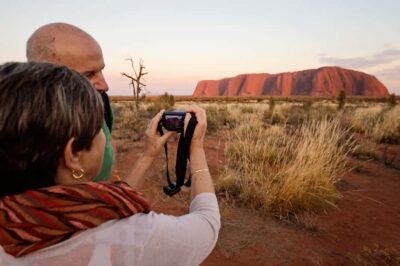
Sacred Sites & Sunset Tour with Wine & Cheeseboard
Read our review →Browse the lists this tour appears in