
Reviewed · WALKING TOURS
Darwin: Small Group 2-Hour Heritage Walk
Darwin’s story is easiest to grasp on foot, where bomb damage, cyclone recovery, old civic buildings, tropical plants, and new public art all appear within a compact city-center walk. This tour with local guide John links those pieces into a clear account of how Darwin has changed.
I like the small group limit of 10, which gives you a real chance to ask questions. I also like the leisurely pace and local focus. John’s explanations cover WWII, Cyclone Tracy, Darwin’s changing culture, and his own lived knowledge of the city. The main catch is the tropical heat: you need a fair level of fitness, and there are not many places to sit or rest.
Key things to know before you book
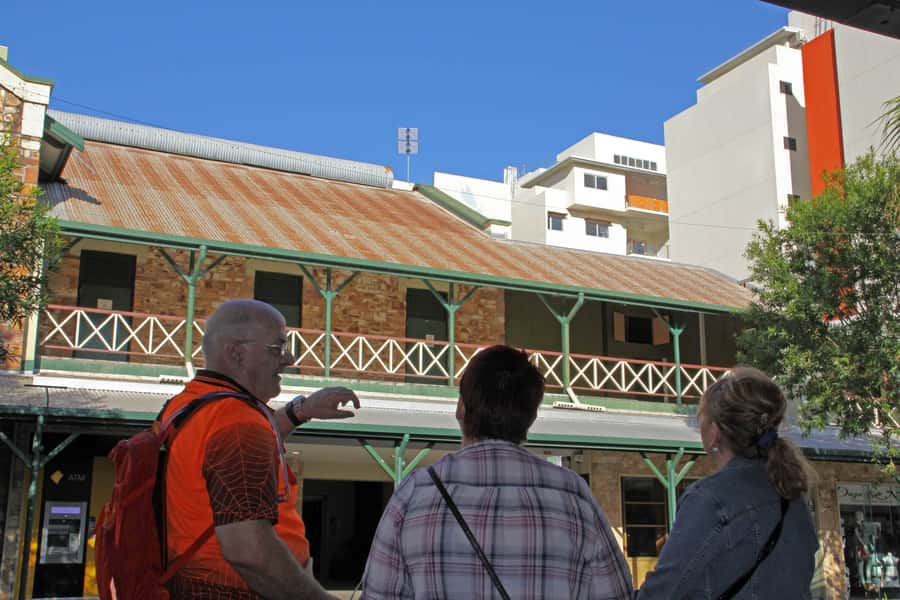
- John’s local storytelling: Guide John explains Darwin’s past and present with personal insight, clear detail, and plenty of time for questions.
- A walking-only view of Darwin: The route reaches historic buildings, public art, tropical plants, and small details that a bus tour can pass by.
- A compact two-hour introduction: The pace is designed to be manageable rather than hurried, making this useful early in your Darwin stay.
- A city shaped by disaster: WWII bombing and Cyclone Tracy are central to the story, along with the careful rebuilding that followed.
- Small groups matter: The tour requires at least two paying guests and accepts no more than 10 people.
- Come prepared for sun: Bring water, sunscreen, a hat, and a camera. The tour is in English and is not suitable for children under 10.
Starting beneath John McDouall Stuart’s statue
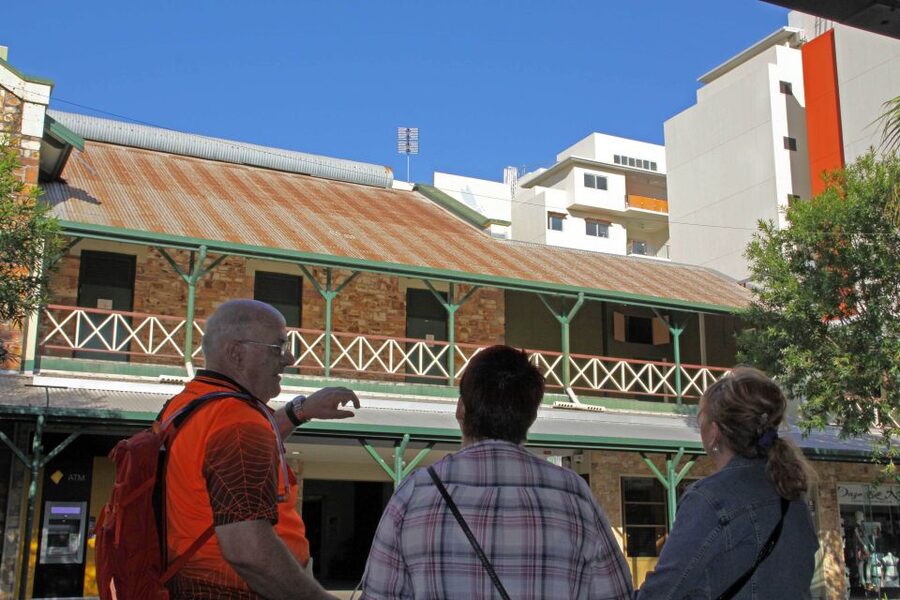
Meet your guide beneath the John McDouall Stuart statue in Raintree Park. Look for the bright orange shirt, a helpful marker in a city where a meeting point can otherwise be easy to miss.
The opening location fits the tour’s theme. John McDouall Stuart was an important explorer of inland Australia, and the statue gives you an immediate connection to the people who helped put Darwin and the Northern Territory on the map. From there, the walk heads through central Darwin and follows the paths of the city’s early pioneers.
This is not a tour built around long transfers or a string of distant attractions. You spend the two hours moving between city landmarks on foot. That gives John room to explain why each place matters rather than simply point at it as you pass.
Bring your water before you arrive. You will be outdoors for the full tour, and the activity notes warn that there are few opportunities to stop, sit, and rest. A hat, sunscreen, comfortable walking shoes, and light clothing make good sense. Bare feet are not allowed, and smoking and pets are not permitted, although assistance dogs are allowed.
A few more things to do in Darwin worth a look
- Bombing of Darwin WWII Heritage Tours
★ 5.0 · 261 reviews - Darwin History and Wartime Experience Tour
★ 5.0 · 144 reviews - Darwin Heritage Walk
★ 4.5 · 101 reviews
Darwin’s difficult wartime chapter
World War II is one of the key subjects on the walk. Darwin was bombed during the war, and John uses the city streets to explain how that event changed the town and its place in Australia’s story.
This part gives the tour much of its purpose. A quick city stroll can make Darwin look like a modern regional capital with tropical weather and broad civic spaces. The wartime story reminds you that this was also a strategically important northern outpost that faced direct attack.
You will hear spoken commentary in English as you walk, rather than receiving a long lecture at one fixed site. That format keeps the history connected to the buildings and streets around you. If you want to ask how the bombing affected the city or how Darwin developed afterward, a small group makes that easier than a large coach tour.
The tour does not promise a museum visit or a collection of indoor exhibits. Its strength is the connection between place and explanation. You see the city while John provides the context that can be hard to pick up on your own.
Cyclone Tracy and the work of rebuilding
Cyclone Tracy is another major chapter in Darwin’s story. The cyclone struck on Christmas Day in 1974 and caused enormous damage, making rebuilding a defining part of the city’s development.
The walk helps you understand Darwin as a place that has had to start again more than once. The wartime bombing and Cyclone Tracy are not isolated historical facts. Together, they explain why older buildings are mixed with newer construction and why restoration has such importance here.
John’s approach, based on the available tour information and past guest feedback, is conversational and unhurried. He has been praised for explaining how Darwin evolved and for answering questions rather than rushing through a script. That matters on a subject like Cyclone Tracy, where the human effect can easily be lost in a list of dates and statistics.
Do not expect a disaster-history tour from start to finish. The route also covers government buildings, theater, public art, and Darwin’s current multicultural character. The disasters form an important thread, not the whole program.
Restored buildings in the historic center
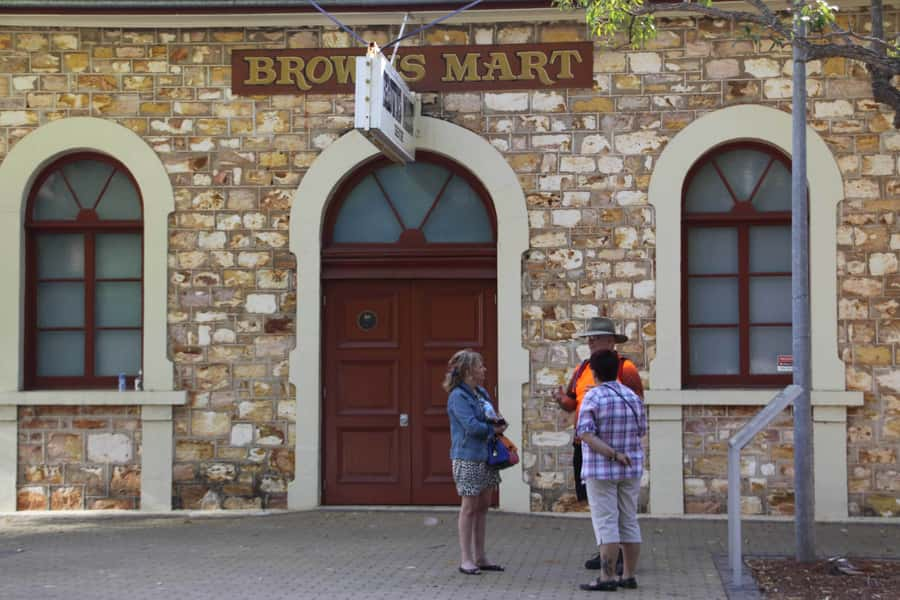
Several remaining buildings give the walk a physical link to early Darwin. These include the old courthouse and police station, Brown’s Mart Theatre, and the ruins of Palmerston Town Hall.
The old courthouse and police station help show how the town was governed and policed in its early years. Brown’s Mart Theatre adds a cultural angle, with a building that still connects Darwin’s past to public performance and community life.
The Palmerston Town Hall ruins are especially useful for understanding how little of the early town survived intact. The ruins have been painstakingly reconstructed, so you are not simply looking at untouched remnants. You are seeing a site that has been cared for and interpreted as part of Darwin’s continuing story.
I like this part of the walk because it avoids treating historic buildings as isolated photo stops. John can explain what they were used for, why they matter, and how reconstruction fits into a city repeatedly affected by war and extreme weather.
The trade-off is that the route does not provide long indoor visits at each building. If you want extensive interior access or detailed architectural study, this may feel too brief. If you want an orientation to Darwin’s historic core, the walking format works well.
Same base, a different sort of day:
- Litchfield National Park and Jumping Crocodile Cruise
★ 5.0 · 2,119 reviews - Adelaide River Cruises – Jumping Crocodile Experience
★ 5.0 · 997 reviews - Sunset 3-Hour Cruise from Darwin with Dinner and Sparkling Wine
★ 5.0 · 980 reviews - From Darwin: Litchfield Park Tour & Jumping Crocodile Cruise
★ 4.9 · 829 reviews
Government House, Parliament House, and the Supreme Court
The route also takes in Government House, Parliament House, and the Supreme Court of the Northern Territory. These buildings shift the focus from early settlement to the institutions that run the territory today.
Government House gives you a sense of official Darwin. Parliament House represents the Northern Territory’s political life, while the Supreme Court brings the legal side of government into view. Seeing these places together helps you read the city as more than a collection of old buildings and memorials.
You are not booking an inside tour of government offices. The value is in seeing the buildings as part of the street plan and hearing why they belong in Darwin’s civic story. John’s commentary gives the landmarks a purpose, which is helpful if you have limited time in town and want more than a photo with a sign.
The route ends around Knuckey Street and the Esplanade in Darwin City. That finish leaves you in a useful central area, though the tour does not include hotel pickup or drop-off. Plan your own way to Raintree Park at the start and allow a little time to find the statue.
Public art, tropical plants, and small city details
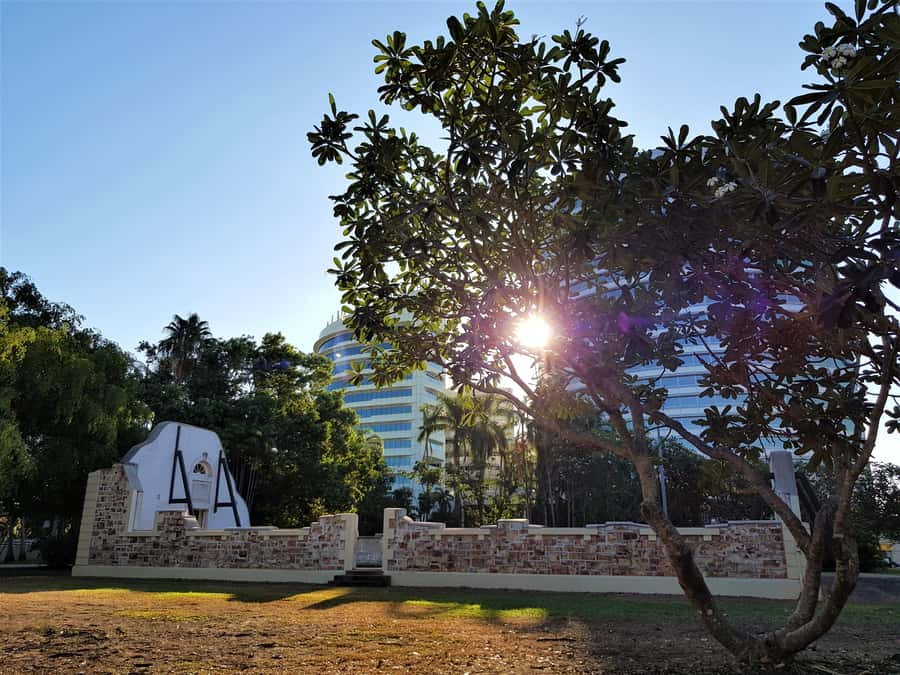
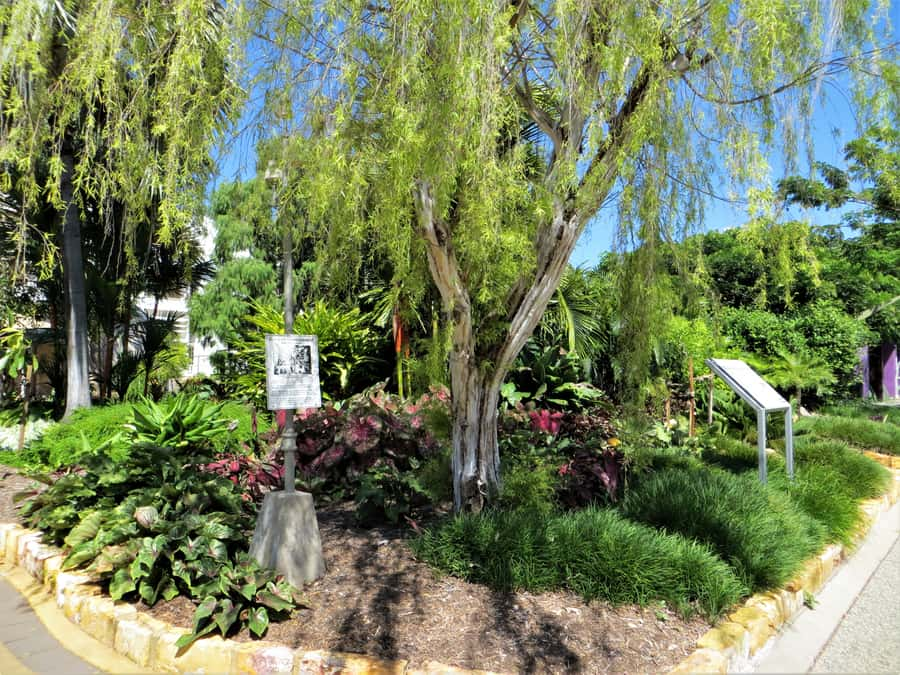
A good walking tour notices the details a vehicle cannot. Along the route, you have opportunities to photograph public artworks, architecture, historic structures, tropical plants, and wildlife.
The information does not specify every artwork or animal you will see, so you should not book this expecting a fixed wildlife encounter. Instead, think of these elements as part of the streetscape. Darwin’s tropical setting is present in the plants and outdoor spaces, while public art adds a more current layer to the older civic buildings.
This mix is one of the tour’s strongest features. You move from colonial-era or early civic sites to modern public life, then back to stories about war and natural disaster. That variety keeps two hours from becoming a single long history lesson.
It also makes the tour useful for photographers. Bring a camera, but remember that the walk is guided first and photographic second. You will have chances to take pictures, yet the group will continue moving at the guide’s pace.
Why the small group changes the experience
The maximum group size is 10, and the tour needs at least two paying guests to operate. A small group is particularly helpful on a walking tour because you can hear the guide without standing in a tight crowd or waiting for a large group to cross each street.
John’s style has been described as personable, enthusiastic, and generous with answers. One past booking had only two participants, which made the outing feel close to a private tour. You should not assume you will have a two-person group, but the cap of 10 keeps the experience from becoming a mass sightseeing procession.
The size also affects the questions you can ask. Darwin’s story has several layers, from wartime history to Aboriginal and multicultural influences, government, reconstruction, and local daily life. A smaller group gives you more room to ask for clarification or follow a subject that interests you.
The commentary is English only. If you are comfortable following spoken English outdoors while walking, that should be straightforward. If you need another language or a slower interpretive format, this is not the right match.
A sensible pace, with real heat to manage
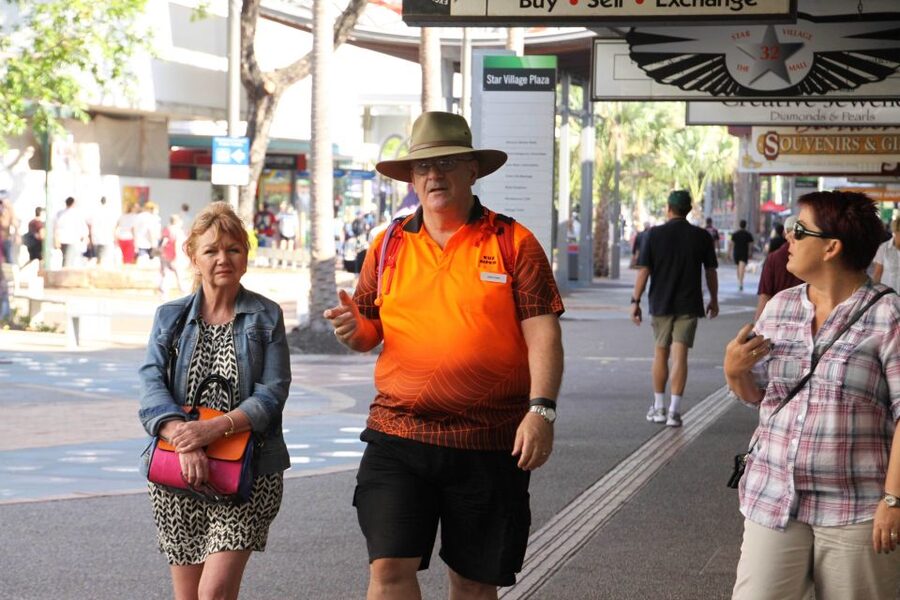
The walk lasts two hours and is described as leisurely paced. Several past bookings specifically valued the sensible speed and manageable length. That makes it a good choice if you want a city introduction without committing to a full-day activity.
Still, leisurely does not mean effortless. The tour requires a level of fitness, and there are few places to stop, sit, and rest. You should be able to walk for two hours in warm outdoor conditions, with enough energy to remain attentive while standing.
Drink water before the start and carry your own supply. Sunscreen and a hat are essential, and hand sanitizer or tissues are recommended items. The supplied guidance does not give a specific distance or accessibility rating, so anyone with mobility concerns should consider the lack of regular seating before booking.
Children under 10 are not suitable for this activity. Older children may still need to enjoy history and walking to get much from it, though the stated restriction only rules out those under 10.
Is $41 a fair price?
At $41 per person, the tour sits in a sensible range for a two-hour guided city walk. The price includes the guide and spoken commentary, but not food, drinks, transport, or hotel pickup.
The value comes from the interpretation. You can walk around central Darwin for free, but it is harder to understand why the old courthouse, police station, Brown’s Mart, Palmerston Town Hall ruins, Government House, Parliament House, and the Supreme Court belong in one story. John’s local perspective turns separate sights into a useful framework.
It is also a good use of limited time. One past booking used the tour as a first introduction to Darwin, and that is how I would position it. Take it near the beginning of your stay, then return to the places that caught your attention.
The price is less appealing if you want entry tickets, refreshments, private transportation, or a long indoor program. None of those are included. You are paying for a focused local walk, not a full sightseeing package.
Who should book this Darwin walk?
I would recommend it most strongly to first-time visitors who want to understand Darwin before exploring on their own. It suits solo visitors, couples, and small groups who prefer conversation and context to a large coach tour.
It is also a good fit if you enjoy city walks in new places. The route gives you a practical orientation while covering major parts of Darwin’s civic and historic center. The two-hour length leaves room in your day for other activities.
You may want to skip it if you dislike outdoor walking in heat, need frequent places to sit, or want an attraction-by-attraction tour with long indoor visits. It is not suitable for children under 10, and its English-only format will not work for everyone.
Book with the weather in mind and arrive ready to walk. Free cancellation is available up to 24 hours before the activity for a full refund, and you can reserve now and pay later, which helps if your Darwin plans are still taking shape.
Should you book the Walk Darwin Heritage Walk?
Book this tour if you want Darwin explained by a local rather than viewed from a bus window. John’s strongest subjects are the city’s wartime bombing, Cyclone Tracy, reconstruction, civic buildings, and present-day multicultural character.
At $41, it offers good value for a compact introduction, especially if you have only a short time in Darwin. Just bring water, sun protection, and comfortable shoes, and be honest about your fitness. If those basics suit you, this is a smart first activity for getting your bearings and seeing why Darwin looks the way it does.
FAQ
How long is the Darwin Heritage Walk?
The walking tour lasts two hours.
Where does the tour begin?
It begins beneath the John McDouall Stuart statue in Raintree Park.
How will I recognize the guide?
Your guide will be wearing a bright orange shirt.
Where does the walk finish?
The tour finishes at Knuckey Street and the Esplanade in Darwin City, Northern Territory.
Who leads the tour?
The tour is provided by Walk Darwin, and the guide identified for the experience is John.
What language is the tour conducted in?
The live commentary is in English only.
How large is the group?
The group is limited to 10 participants, and at least two paying guests are needed for the tour to operate.
Is hotel pickup included?
No. Hotel pickup and drop-off are not included, so you need to make your own way to the meeting point.
What should I bring?
Bring water, sunscreen, a sun hat, a camera, and hand sanitizer or tissues. Comfortable walking gear is also sensible because the activity takes place outdoors and requires a level of fitness.
Just added in Darwin
- Bombing of Darwin World War II Tour with Harbour Cruise★ 4.5 · 219 reviews
- 1-Hour Thunderball WWII Adventure Jet Skiing in Darwin★ 5.0 · 70 reviews
- Tiwi Islands Cultural Experience from Darwin Including Ferry★ 4.0 · 97 reviews
- Darwin Combo: The Bombing of Darwin Experience & Darwin Harbour Cruise★ 4.5 · 123 reviews
- Litchfield Park & Jumping Crocodile Cruise★ 5.0 · 37 reviews
- Royal Flying Doctor Service Tourist Facility: Two Iconic Territory Stories★ 5.0 · 256 reviews
- ETHICAL ADVENTURES – 1 Day premium Litchfield tour, small group★ 5.0 · 178 reviews
- Litchfield National Park Waterfalls & Wildlife Adventure Tour★ 5.0 · 30 reviews
Walking Tours, compared.
Sydney Opera House Official Guided Walking Tour
Read our review →
Blue Mountains Tour with Waterfall Walk & Lunch
Read our review →

Ultimate Melbourne Walking Tour: History, Laneways & Culture
Read our review →
Great Ocean Road Tour Plus Koalas, Forest Walk and Morning Tea
Read our review →
Blue Mountains Small Group Tour with Waterfall Walk & Fresh Lunch
Read our review →
Maria Island Cruise and Guided Walk Day Tour with Lunch and Drinks
Read our review →Browse the lists this tour appears in